-left_01.jpg&width=800)





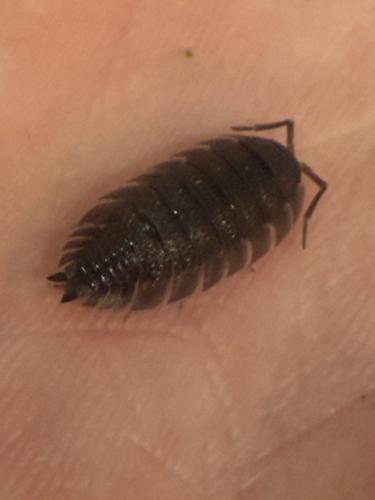
Common Rough Woodlouse
porcellio scaber
The Common Rough Woodlouse is a tiny creature that looks like a little armored bug! It loves to hide under rocks and in damp places, where it can scurry around safely.
Habitat: Common Rough Woodlice are often found in gardens, forests, and under logs or stones.
The Common Rough Woodlouse is a small, oval-shaped crustacean with a distinctly bumpy, greyish-brown segmented body. It has seven pairs of legs and two visible antennae, making its textured back different from smoother woodlice.
Category
InvertebrateRarity
Common
Danger
0/5 · No known danger
Snaps
15
Female woodlice carry their babies in a special pouch, just like a kangaroo!
They are crustaceans, related to crabs and lobsters, not insects!
They can survive for months without food if conditions are just right!
Woodlice drink water by sucking it up through their rear end, like a tiny straw!
Common Rough Woodlouse has a tough, segmented exoskeleton that helps protect it from drying out and hungry predators.
Common Rough Woodlouse can release a foul-tasting liquid because it's stored in glands, deterring predators with a bad flavor.
Common Rough Woodlouse can detect humidity changes because specialized sensors help them find damp, dark places to survive.
These tiny recyclers munch on decaying plants and fungi, helping to clean up the environment!

Dysdera crocata
This spider hunts woodlice specifically with its large fangs.
Lithobius forficatus
A speedy predator that ambushes woodlice in damp places.
Bufo bufo
An opportunistic amphibian predator that often dines on woodlice.

Sorex araneus
A small mammal that forages for invertebrates like woodlice.
Social animals live in organized groups, cooperating for survival benefits such as foraging, defense, and raising offspring.
Burrowing animals dig tunnels and chambers in the ground, using these subterranean structures for shelter, hunting, or breeding.
This trait characterizes organisms whose diet consists entirely or primarily of plant material.
Describes organisms that break down dead organic material, recycling nutrients back into the ecosystem.

Diurnal animals are primarily active during daylight hours, typically resting or sleeping at night.
Danger
0/5 · No known danger
No special safety notes yet.
The easiest way to identify Common Rough Woodlouse is to use the Snappit nature identifier app.
1.7 cm
0.1 g
3 years
These tiny recyclers munch on decaying plants and fungi, helping to clean up the environment!
Common Rough Woodlice are often found in gardens, forests, and under logs or stones.
Foraging
50
Zoom in to split clusters and explore where this object has been snapped.
May 28, 2026
Cushman DamPhoto attribution
no rights reserved
License: CC0 1.0 ↗
Image may be shown cropped inside the card frame.
Massachusetts, US
You might spot Eastern White Pine and Common Eastern Bumble Bee.
View guide →

California, US
You might spot White Globe Lily, Rose Campion, and Pipevine Swallowtail.
View guide →

Rhode Island, US
You might spot Common Eastern Bumble Bee and Asian Lady Beetle.
View guide →

Virginia, US
You might spot Eastern Tiger Swallowtail, Fowler's Toad, and Monarch.
View guide →

Kentucky, US
You might spot Bird's-Eye Speedwell and Barn Swallow.
View guide →

Washington, US
You might spot Barrow's Goldeneye and Pacific Banana Slug.
View guide →
Take the discovery with you
Snap it with Snappit to identify it, learn what makes it special, and add the discovery to your collection.