





Tiger Centipede
Scolopendra subspinipes
The Tiger Centipede has a striking look with bold stripes! They are great at hunting insects and love to explore.
Habitat: Tropical forests and grasslands
The Tiger Centipede has an elongated body with segments ranging from reddish-brown to black, often highlighted by vibrant yellow or orange bands across its body and legs. Its flattened form and many powerful legs make it look formidable and distinct from other smaller centipedes.
Category
InsectsRarity
Common
Danger
2/5 · Low
Snaps
3
Its powerful venom can even take down creatures much larger than itself!
They use tiny hairs on their bodies to feel vibrations and find hidden prey!
This amazing centipede can regrow lost legs after a battle or accident!
Tiger Centipedes are super speedy runners, darting across the forest floor!
Tiger Centipede can inject potent venom using modified front legs called forcipules that helps them quickly subdue prey.
Tiger Centipede has a streamlined body and many legs that help them move with surprising speed to chase down prey.
Tiger Centipede has poor eyesight but excellent chemical and tactile senses that help them hunt for food in the dark.
A fierce hunter, it eats many small animals it catches with its venomous bite.

Rattus rattus
Occasionally preys on small rodents.

Gekko gecko
Small lizards are a common prey item.

Periplaneta americana
Common insect prey in its habitat.
Ophiophagus hannah
One of its known natural predators.
Wildlife encompasses all undomesticated animal and plant life existing in their natural habitats.
Marked with parallel bands or lines of color.
This habitat trait refers to species found in tropical rainforests, characterized by high annual rainfall, high biodiversity, and dense tree cover.
This trait identifies organisms whose diet consists entirely or primarily of animal tissue.

This trait identifies organisms that exhibit exceptional swiftness in movement for hunting, escape, or travel.

Nocturnal animals are primarily active during the nighttime hours, typically resting or sleeping during the day.

Venomous organisms produce toxins that are injected into another animal, typically through a bite or sting.
Danger
2/5 · Low
Do not touch or pick up. Some insects sting or bite. Ask an adult for help.
The easiest way to identify Tiger Centipede is to use the Snappit nature identifier app.
100-200 mm
730-1825 days
A fierce hunter, it eats many small animals it catches with its venomous bite.
Tropical forests and grasslands
Pursuit
42
Zoom in to split clusters and explore where this object has been snapped.

Hawaii, US
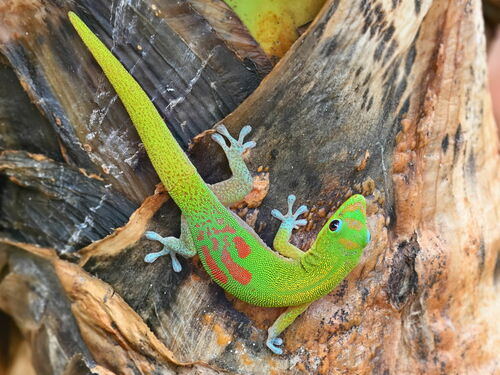
You might spot Gold Dust Day Gecko, Yellow Tang, and Black Triggerfish.
View guide →
Hawaii, US
You might spot Gold Dust Day Gecko, Sea Turtle, and Brown Anole.
View guide →
Take the discovery with you
Snap it with Snappit to identify it, learn what makes it special, and add the discovery to your collection.










.jpg&width=800)




