





tree-clubmosses
Dendrolycopodium
Tree clubmosses are special plants that look like tiny trees! They have green, needle-like leaves and grow in cool, shady places. These plants are very old and have been around for millions of years.
Habitat: Forests
The tree-clubmosses has stiff, branching stems covered in tiny, scale-like or needle-like leaves, giving it a miniature evergreen tree appearance. Its vibrant green foliage often forms dense carpets on the forest floor, visually distinct from true mosses or ferns by its upright, woody texture.
Category
PlantsRarity
Common
Danger
1/5 · Very low
Snaps
Be the first to snap!
Believe it or not, ancient relatives of tree-clubmosses grew into giant trees during the dinosaur age!
Some tree-clubmosses create a dense mat on the ground, acting like a natural living carpet!
These plants have been on Earth for over 400 million years, making them older than most dinosaurs!
Wow! Tree-clubmoss spores are so tiny and oily, they used to be fire starters for magic tricks!
Tree-clubmosses can release millions of microscopic spores into the wind, helping them spread far and wide to new habitats.
Tree-clubmosses keep their green foliage all year, allowing them to photosynthesize even in winter, helping them grow steadily.
Tree-clubmosses have a special connection with fungi in their roots that helps them absorb vital nutrients to survive.
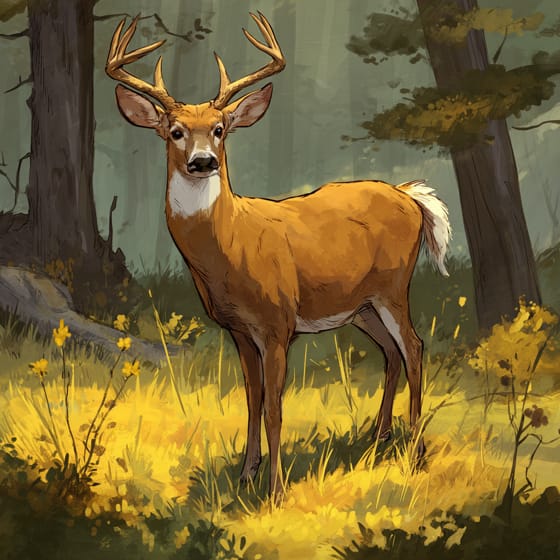
Odocoileus virginianus
browses on its evergreen foliage
Rhizophagus irregularis
aids in nutrient absorption for roots
Sorex cinereus
hides from predators in dense mats
Grass-like plants are herbaceous plants that visually resemble true grasses, typically having long, narrow leaves.
Evergreen plants retain their foliage throughout the year, never shedding all their leaves at once.
Spore-producing organisms reproduce by releasing small, often single-celled, reproductive units called spores.
This trait signifies organisms belonging to a very old evolutionary group with ancestors dating back millions of years.

Forest habitats are terrestrial environments dominated by dense tree cover, supporting a high diversity of plant and animal life.

This trait characterizes organisms with an exceptionally long lifespan compared to others of their kind.
No aliases listed yet.
Danger
1/5 · Very low
Always look but don't touch plants unless a grown-up says it's okay.
The easiest way to identify tree-clubmosses is to use the Snappit nature identifier app.
10-100 cm
10-50 cm
No
None
Perennial
Forests
Zoom in to split clusters and explore where this object has been snapped.
Recent snaps will appear here as new observations are added.
Take the discovery with you
Snap it with Snappit to identify it, learn what makes it special, and add the discovery to your collection.








.jpg&width=800)



_001.jpg&width=800)


