.JPG&width=800)





turkey tangle frogfruit
Phyla nodiflora
Turkey tangle frogfruit is a small, low-growing plant with tiny flowers. It loves to grow in sunny spots and can often be found in gardens and fields.
Habitat: Urban areas
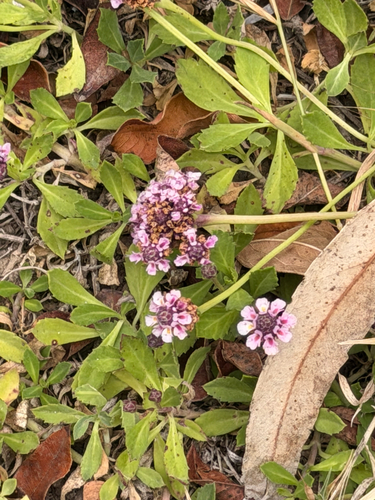
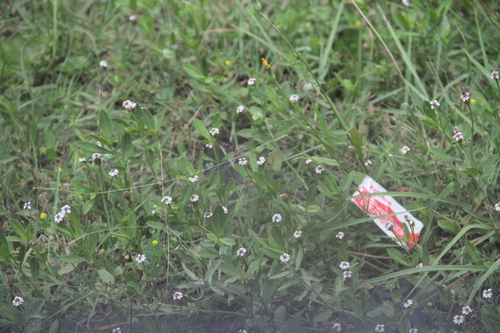
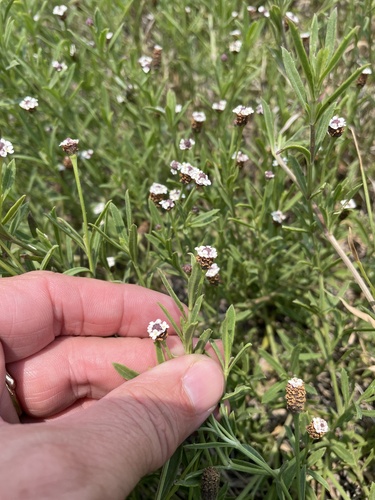
The turkey tangle frogfruit is a low-growing plant with creeping stems that form a dense mat of small, slightly toothed green leaves. It produces tiny, clustered flowers, typically white to pale lavender, with a yellow center, making them appear like miniature pom-poms.
Category
PlantsRarity
Common
Danger
1/5 · Very low
Snaps
18
Its tiny flowers are actually a bunch of even tinier flowers packed together!
Some folks call it "matchweed" because its flower stalks look like matchsticks!
This plant is super tough and can even grow where people often walk!
You can munch on its leaves, which have a surprising peppery flavor!
Turkey tangle frogfruit spreads roots from its stems, forming a dense mat that helps hold soil in place, preventing erosion.
Turkey tangle frogfruit has tough leaves that conserve water, helping it survive long dry periods when others wilt.
Turkey tangle frogfruit produces nectar-rich flowers that attract busy bees and butterflies, providing them with a vital food source.
Apis mellifera
collects nectar and pollen from flowers
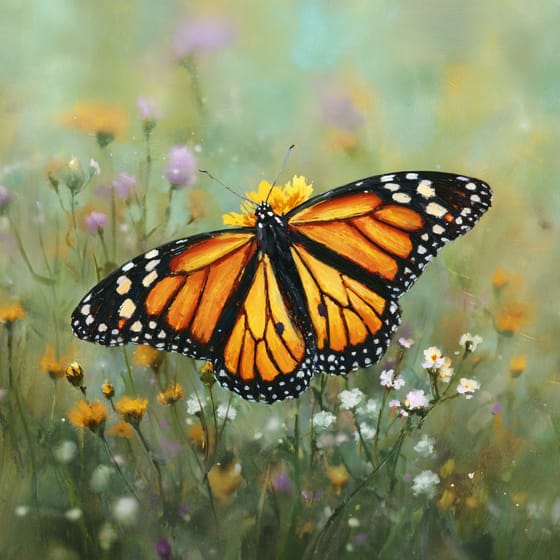
Danaus plexippus
sips nectar from the small white flowers
Bombus impatiens
visits flowers for nectar and transfers pollen
Flowering plants are any plants that produce flowers as part of their reproductive cycle.
Groundcover plants are low-growing vegetation that spreads horizontally to cover the ground, often suppressing weeds and preventing soil erosion.
Medicinal plants possess chemical compounds that can be used for therapeutic purposes to treat illnesses or maintain health.
Describes plants that are particularly attractive and beneficial to a wide range of pollinating organisms.

Rapid growing plants exhibit accelerated growth rates, quickly increasing in size and biomass within a short period.

This habitat trait indicates species that can coexist with humans in urban and suburban environments, utilizing man-made structures and green spaces.
No aliases listed yet.
Danger
1/5 · Very low
Always wash your hands after touching plants, just to be safe!
The easiest way to identify turkey tangle frogfruit is to use the Snappit nature identifier app.
2-15 cm
30-90 cm
0.3-0.8 cm
Year-round
Yes
None
Perennial
Zoom in to split clusters and explore where this object has been snapped.
Jun 5, 2026
Birch AquariumPhoto attribution
(c) TonyT, some rights reserved (CC BY)
License: CC BY 4.0 ↗
Image may be shown cropped inside the card frame.
May 31, 2026
Bear Creek Pioneers ParkPhoto attribution
(c) Texas Bird Family, some rights reserved (CC BY)
License: CC BY 4.0 ↗
Image may be shown cropped inside the card frame.
May 28, 2024
King RanchPhoto attribution
(c) Sam Kieschnick, some rights reserved (CC BY)
License: CC BY 4.0 ↗
Image may be shown cropped inside the card frame.

South Carolina, US
You might spot Brown Pelican, Boat-Tailed Grackle, and Great Egret.
View guide →

Texas, US
You might spot Eastern Fox Squirrel and Great-Tailed Grackle.
View guide →

Oklahoma, US
You might spot Hoary Vervain, Buffalo Gourd, and Pond Slider.
View guide →

Florida, US
You might spot American Beautyberry and Brown Anole.
View guide →

US
You might spot Brown Pelican, Boat-Tailed Grackle, and Great Egret.
View guide →

Florida, US
You might spot Brown Anole, Monarch, and Eastern Lubber Grasshopper.
View guide →
Take the discovery with you
Snap it with Snappit to identify it, learn what makes it special, and add the discovery to your collection.








.jpg&width=800)



_001.jpg&width=800)




