





Urial
Ovis vignei
Urials are wild sheep that live in the mountains and grasslands. They have long, curved horns and beautiful reddish-brown fur. These animals are great climbers and can jump high to escape danger!
Habitat: Mountain regions
The Urial has a reddish-brown coat that often darkens in winter, with a white belly. Males boast impressive, large, curled horns that sweep backward, and a distinctive dark ruff on their chest.
Category
MammalsRarity
Common
Danger
2/5 · Low
Snaps
Be the first to snap!
Male Urials grow a long, dark throat ruff that becomes even more impressive in winter!
The large, curled horns of a male Urial can weigh more than its entire skull!
They communicate across vast distances using whistles and snorts to alert each other!
Urial lambs can stand and follow their mothers just a few hours after they are born!
Urial can climb incredibly steep, rocky slopes because of their strong, agile legs and specialized hooves for grip.
Urial has sharp eyesight and hearing that helps them spot predators from far away in open mountain habitats.
Urial can digest tough, dry grasses and shrubs thanks to their robust digestive system, thriving in arid lands.
Urials munch on grasses, herbs, and leaves found in their dry mountain homes to get energy.
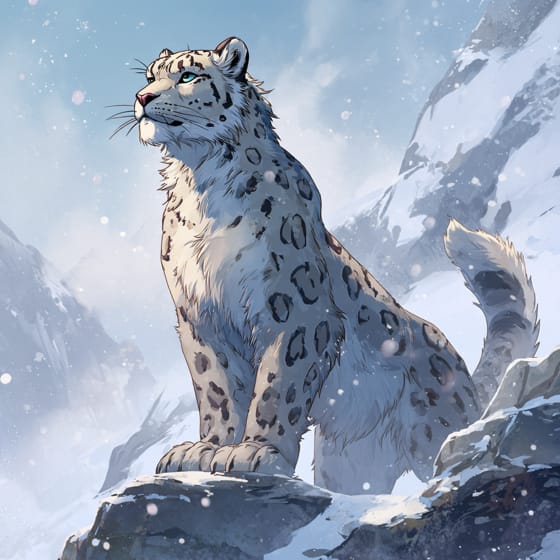
Panthera uncia
Snow Leopards hunt Urials in their mountain habitats.
Canis lupus
Wolves are a primary predator, hunting Urials in packs.

Aquila chrysaetos
Golden Eagles occasionally prey on young Urial lambs.

Poa pratensis
Urials graze on various wild grasses for food.
Furry describes animals possessing a dense covering of soft hair or fur.
Social animals live in organized groups, cooperating for survival benefits such as foraging, defense, and raising offspring.
Characterized by having one or more hard, permanent, pointed projections on the head.
Grassland habitats are terrestrial biomes dominated by grasses and herbaceous plants, supporting a variety of grazing animals.

This trait characterizes organisms whose diet consists entirely or primarily of plant material.

This habitat trait identifies species found in mountainous regions, characterized by high elevation, steep slopes, and varying climate zones.

Describes a species whose presence and role have a disproportionately large effect on its environment.

This trait identifies organisms that exhibit exceptional swiftness in movement for hunting, escape, or travel.

Threatened status denotes a species likely to become endangered in the foreseeable future without effective conservation interventions.
No aliases listed yet.
Danger
2/5 · Low
Always watch from a distance and never try to touch wild animals.
The easiest way to identify Urial is to use the Snappit nature identifier app.
110-190 cm
25-90 kg
8-12 years
55 km/h
Urials munch on grasses, herbs, and leaves found in their dry mountain homes to get energy.
Mountain regions
Grazing
Zoom in to split clusters and explore where this object has been snapped.
Recent snaps will appear here as new observations are added.
Take the discovery with you
Snap it with Snappit to identify it, learn what makes it special, and add the discovery to your collection.




.jpg&width=800)



.JPG&width=800)

.jpg&width=800)
