





Virginia chainfern
Woodwardia virginica
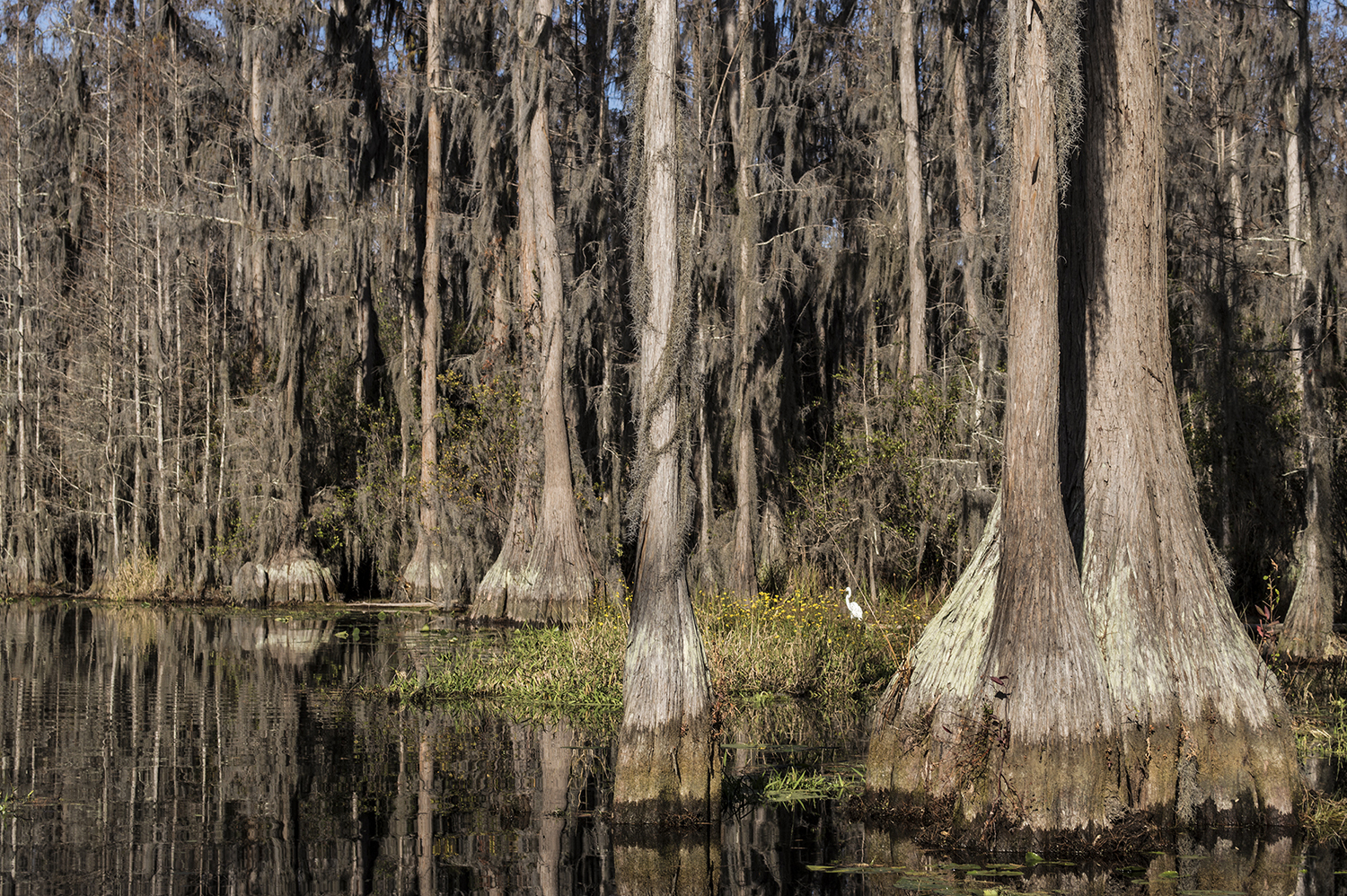
The Virginia chainfern is a beautiful green plant that grows in wet places like swamps and forests. Its long, feathery leaves look like chains and can be fun to touch and explore!
Habitat: Wetlands
The Virginia chainfern has upright, bright green fronds with a slightly leathery texture. Its leaflets feature distinct chain-like patterns formed by the veins and elongated spore cases, making it visually unique among ferns.
Category
PlantsRarity
Common
Danger
1/5 · Very low
Snaps
1
Its 'chains' are actually rows of tiny spore cases, neatly arranged like beads!
The fronds often turn a beautiful bronze or reddish color as colder weather arrives!
This ancient plant existed on Earth long before the first dinosaurs appeared!
You might find this fern growing near carnivorous plants like pitcher plants in bogs!
Virginia chainfern can reproduce without seeds by launching tiny spores from special cases on its fronds.
Virginia chainfern has a tough root system that helps it thrive in waterlogged, acidic swamp and bog soils.
Virginia chainfern can spread underground using special stems, allowing it to form dense colonies in wetlands.
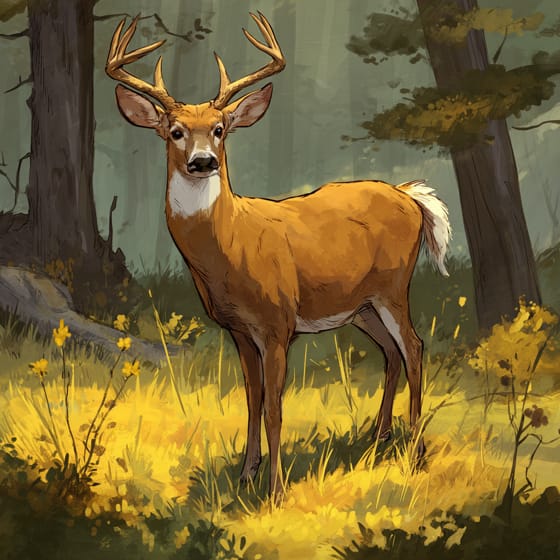
Odocoileus virginianus
Occasionally browses on its fronds.
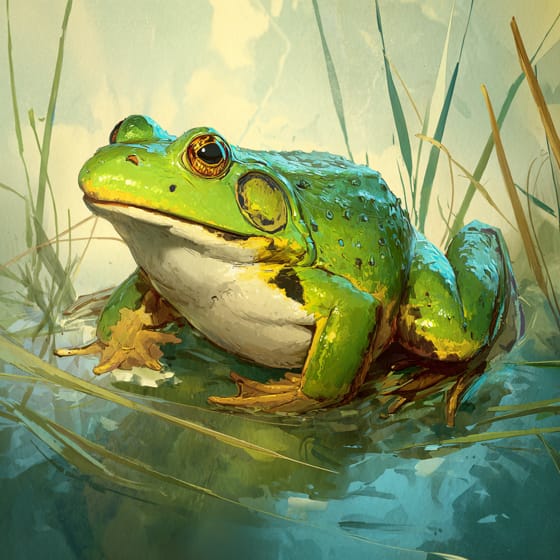
Rana clamitans
Hides among its dense fronds near water.
Thamnophis sirtalis
Finds refuge within its thick wetland growth.
Feathered describes animals, primarily birds, possessing a covering of feathers.
Grass-like plants are herbaceous plants that visually resemble true grasses, typically having long, narrow leaves.
Shade tolerant plants are adapted to grow and thrive in areas with low light levels, requiring less direct sunlight.
Evergreen plants retain their foliage throughout the year, never shedding all their leaves at once.

Spore-producing organisms reproduce by releasing small, often single-celled, reproductive units called spores.

Describes organisms that break down dead organic material, recycling nutrients back into the ecosystem.

Forest habitats are terrestrial environments dominated by dense tree cover, supporting a high diversity of plant and animal life.

This habitat trait identifies species found in wetlands, which are areas of land saturated with water, either permanently or seasonally, including marshes, swamps, and bogs.
No aliases listed yet.
Danger
1/5 · Very low
Always look but don't touch plants unless you know they are safe.
The easiest way to identify Virginia chainfern is to use the Snappit nature identifier app.
30-90 cm
30-60 cm
No
None
Perennial
Wetlands
Zoom in to split clusters and explore where this object has been snapped.
Take the discovery with you
Snap it with Snappit to identify it, learn what makes it special, and add the discovery to your collection.









.jpg&width=800)



_001.jpg&width=800)


