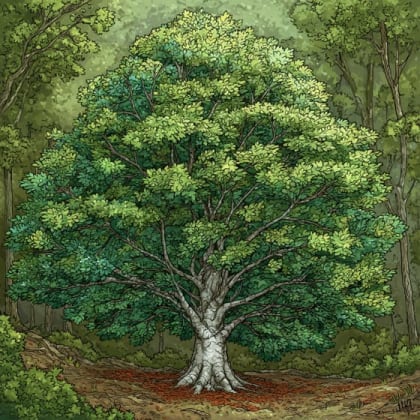





American Beech

Step into a living postcard of New England history in the South Glastonbury Historic District.
Step into a living postcard of New England history in the South Glastonbury Historic District. This charming area, nestled in Glastonbury, Connecticut, preserves the essence of a colonial village through its remarkably intact historic streetscapes and diverse architectural treasures. Recognized on the National Register of Historic Places, the district offers a unique opportunity to wander amidst centuries-old homes, churches, and former commercial buildings that tell the story of a vibrant past.
As you explore, you'll encounter a captivating array of architectural styles, from the elegant simplicity of Colonial homes and robust Georgian structures to the distinctive columns of Greek Revival and the intricate details of Queen Anne and Carpenter Gothic designs. Key landmarks like the Welles-Shipman-Ward House, dating back to 1755, and the c. 1731 Tryon House stand as testaments to the early settlement. The scenic Roaring Brook, which once powered the village's grist and saw mills, adds a touch of natural beauty to the historical setting, especially evident where it flows through the nearby Cotton Hollow Preserve.
Visiting South Glastonbury Historic District is like stepping back in time, offering a peaceful and enriching experience for history enthusiasts and casual explorers alike. It's a place where every corner reveals a glimpse into the lives of early American settlers and industrialists, making it an ideal destination for photography, leisurely strolls, and a deeper appreciation of Connecticut's heritage. The blend of architectural grandeur, tranquil surroundings, and historical narrative creates a truly memorable outing. Turn your visit into a safari! Use the Snappit app to scan and log wildlife sightings here.
The South Glastonbury Historic District began its life in the 17th century when the fertile river meadows were utilized as farmland by proprietors from Wethersfield, one of Connecticut's earliest colonial settlements. By 1693, sufficient permanent settlement led to Glastonbury's incorporation as a separate town. The development of the village was significantly influenced by the Rocky Hill–Glastonbury ferry, which was the only river crossing at the time, establishing High Street as the oldest road in Glastonbury. Throughout the 18th and 19th centuries, the village flourished, driven by grist and saw mills on Roaring Brook, followed by textile mills and other industries. This industrial growth fostered a vibrant community, leading to the construction of numerous residences, civic buildings, and churches that showcase a wide range of architectural styles. The district was officially recognized for its historical and architectural significance when it was listed on the National Register of Historic Places in 1984, with an expansion in 2009 to include more contributing properties. Today, while no 17th-century houses remain, the district proudly features many structures from the 18th, 19th, and 20th centuries, reflecting centuries of evolution.
Take a self-guided architectural tour, photograph the historic homes and churches, learn about the area's industrial past at Cotton Hollow, and, during open seasons, take a guided tour of the Welles-Shipman-Ward House. Consider visiting the nearby Rocky Hill–Glastonbury Ferry, the nation's oldest continuously operating ferry, which played a crucial role in the district's early development.
Gardens at the Welles-Shipman-Ward House are typically in bloom during spring and summer. The fall brings vibrant foliage. Winter offers a quiet, often picturesque, experience, though some tours or outdoor activities might be limited by weather.
While the district's open-air nature allows for general exploration, many historic buildings may have limited accessibility. The Welles-Shipman-Ward House, for example, has two steps to the front door and a steep staircase to the upper floor, though its Eastbury Barn and Tobacco Shed are accessible without steps. Visitors with mobility concerns should contact specific sites beforehand for detailed accessibility information. Sidewalks are present, but the terrain can vary.
A meticulously preserved 1755 Georgian mansion, offering insights into 18th-century life, featuring a large colonial-era hearth fireplace, herb garden, and a historic tobacco shed.
The oldest surviving building in the district, dating back to circa 1731.
A charming 1828 building now serving as the local library.
An impressive Carpenter Gothic structure from 1878.
Each card links to a full Explore page with photos, traits, and fun facts.
Start with the big picture, then zoom in to explore individual wildlife observations around this place.
Wear comfortable shoes
The best way to experience the district is on foot, so be prepared for walking on sidewalks and potentially uneven historical terrain.
Bring a camera
The diverse architectural styles and picturesque streetscapes offer abundant photography opportunities.
Check historical society hours
If you plan to visit the Welles-Shipman-Ward House or other specific sites, confirm their operating hours and tour availability in advance, especially during off-peak seasons.
Combine with nature
Integrate your visit with a trip to the Cotton Hollow Preserve to see Roaring Brook and its historic mill ruins, offering a complementary natural and industrial history experience.
Explore the village center
Take time to observe the commercial buildings and the triangular layout of Main, High, and Water Streets, which form the historic heart of the village.
Consider the ferry
If time allows, experience the Rocky Hill–Glastonbury Ferry, located nearby, for a unique historical perspective on early transportation that shaped the district.
May 18, 2026
Photo attribution
(c) florawhite, some rights reserved (CC BY)
License: CC BY 4.0 ↗
Image may be shown cropped inside the card frame.
May 18, 2026
Photo attribution
(c) florawhite, some rights reserved (CC BY)
License: CC BY 4.0 ↗
Image may be shown cropped inside the card frame.
May 18, 2026
Photo attribution
(c) florawhite, some rights reserved (CC BY)
License: CC BY 4.0 ↗
Image may be shown cropped inside the card frame.
May 18, 2026
Photo attribution
(c) florawhite, some rights reserved (CC BY)
License: CC BY 4.0 ↗
Image may be shown cropped inside the card frame.
May 18, 2026
Photo attribution
(c) florawhite, some rights reserved (CC BY)
License: CC BY 4.0 ↗
Image may be shown cropped inside the card frame.

Maryland, US
You might spot White-Tailed Deer and Eastern Gray Squirrel.
View guide →
.jpg)
District of Columbia, US
You might spot Eastern Gray Squirrel, Duck, and House Sparrow.
View guide →

Illinois, US
You might spot American Robin, Canada Goose, and House Sparrow.
View guide →

Virginia, US
You might spot Spotted Lanternfly and Northern Cardinal.
View guide →
Take the discovery with you
Identify the wildlife you spot, learn as you go, and keep a collection of the adventure.