





Virginia creeper
Parthenocissus quinquefolia
Virginia creeper is a climbing plant with beautiful green leaves that turn bright red in the fall. It loves to grow on walls and fences, making it look like a green blanket!
Habitat: Forests
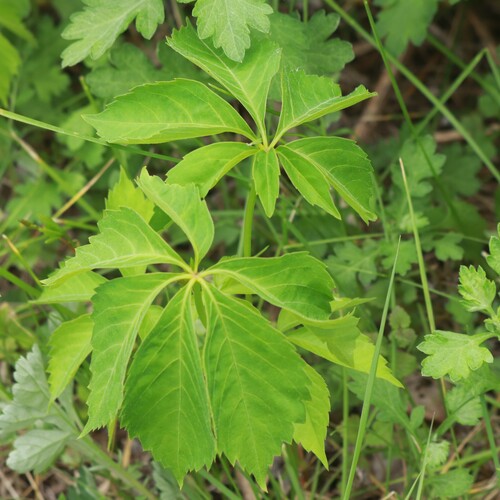
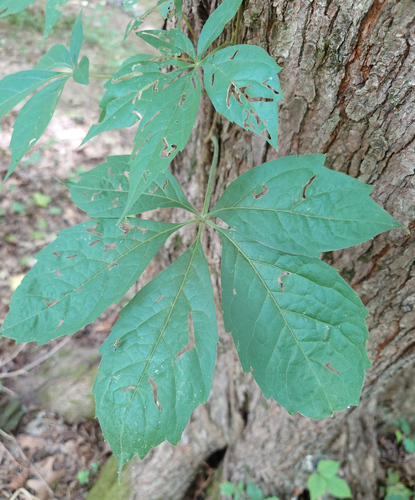
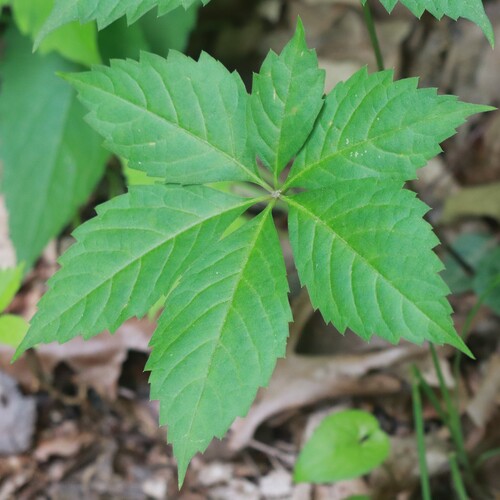
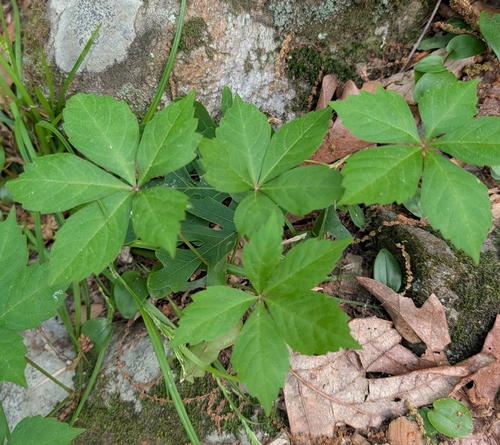
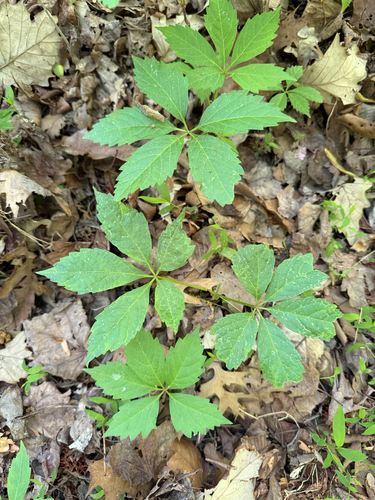
The Virginia creeper is a climbing vine with distinctive palmate leaves, usually featuring five leaflets that radiate from a central point. Its foliage changes from green to vibrant reds, oranges, and purples in the autumn, often producing dark blue-black berries. It attaches to surfaces using small, disc-like adhesive pads.
Category
PlantsRarity
Common
Danger
2/5 · Low
Snaps
91
Each leaf usually has five leaflets, a great way to tell it apart from the three-leaf poison ivy!
Its berries contain irritating oxalic acid, so humans should never eat them, even though birds do!
This speedy climber can grow over three meters in a single year, quickly covering fences and walls!
Tiny green flowers attract bees, which help create the dark berries that many birds feast on.
Virginia creeper can scale walls and trees using tiny, sticky adhesive pads on its tendrils that grip surfaces firmly.
Virginia creeper has leaves that turn brilliant red in fall, helping animals spot its dark berries, a winter food source.
Virginia creeper has flexible stems and strong roots, helping it thrive in many different tough environments.
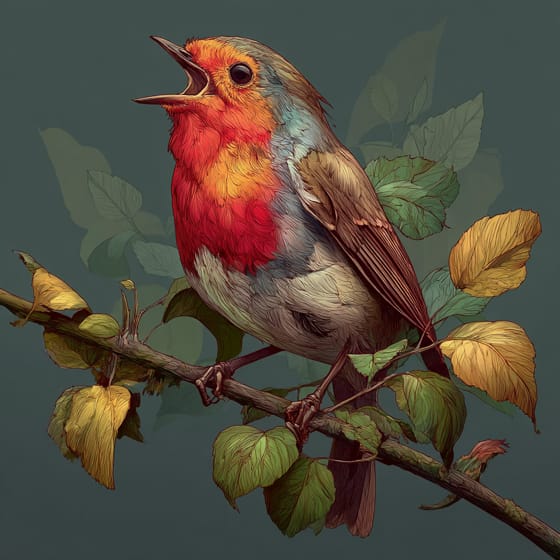
Turdus migratorius
eats ripe berries
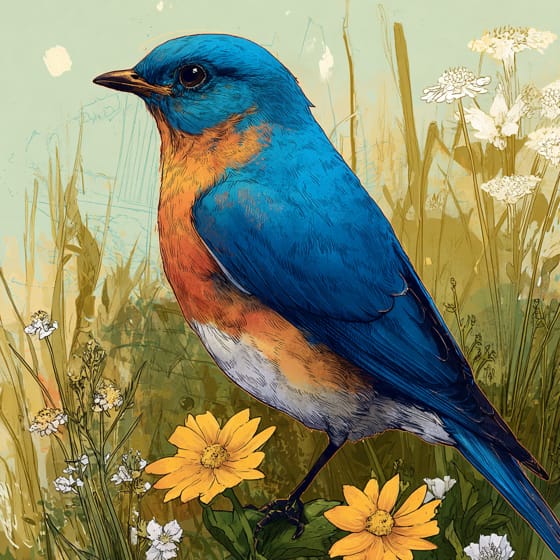
Sialia sialis
consumes its fruit
Apis mellifera
visits small flowers
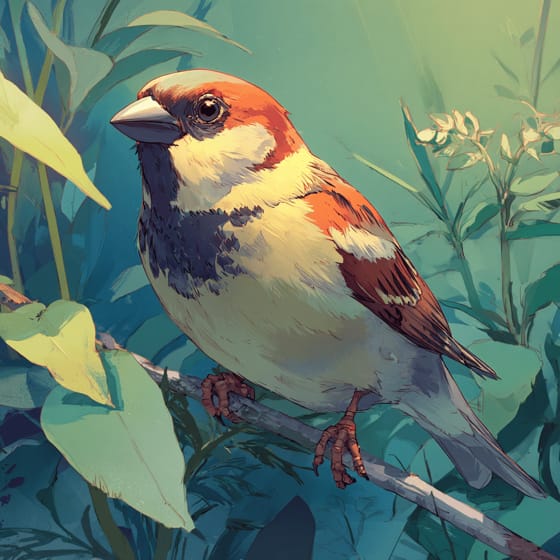
Passer domesticus
nests in dense vines
Climbing or vine plants are characterized by a growth habit that allows them to ascend upwards by twining, tendrils, or adhesive roots.
Deciduous plants periodically shed all their leaves, typically during autumn or dry seasons.
Ornamental plants are cultivated primarily for their aesthetic appeal, enhancing landscapes and gardens with their attractive foliage, flowers, or form.
Fruit-bearing plants produce fruits, which are the mature ovaries of flowering plants containing seeds.

Fall color refers to the seasonal change in foliage pigmentation, primarily in deciduous plants, displaying vibrant hues.

Forest habitats are terrestrial environments dominated by dense tree cover, supporting a high diversity of plant and animal life.
Danger
2/5 · Low
While Virginia creeper is pretty, it's best to avoid eating its berries, as they can upset your tummy.
The easiest way to identify Virginia creeper is to use the Snappit nature identifier app.
100-2000 cm
0.3-0.8 cm
Summer
No
Mild
Perennial
Insect
Zoom in to split clusters and explore where this object has been snapped.
Jun 7, 2026
East Windsor Hill Historic DistrictPhoto attribution
(c) Mark Apgar, some rights reserved (CC BY)
License: CC BY 4.0 ↗
Image may be shown cropped inside the card frame.
Jun 6, 2026
FruitvalePhoto attribution
(c) geotrope, some rights reserved (CC BY-SA)
License: CC BY-SA 4.0 ↗
Image may be shown cropped inside the card frame.
Jun 6, 2026
East Windsor Hill Historic DistrictPhoto attribution
(c) Mark Apgar, some rights reserved (CC BY)
License: CC BY 4.0 ↗
Image may be shown cropped inside the card frame.
May 30, 2026
Quaker Farms Historic DistrictPhoto attribution
(c) Jessica Utrup, some rights reserved (CC BY)
License: CC BY 4.0 ↗
Image may be shown cropped inside the card frame.
May 17, 2026
South Mountain ReservationPhoto attribution
(c) Tom Pollard, some rights reserved (CC BY)
License: CC BY 4.0 ↗
Image may be shown cropped inside the card frame.

New Jersey, US
You might spot Garlic Mustard, Sensitive Fern, and Common Mugwort.
View guide →
Massachusetts, US
You might spot Eastern White Pine and Common Eastern Bumble Bee.
View guide →

South Carolina, US
You might spot Anole, Green Treefrog, and Eastern Gray Squirrel.
View guide →

Alabama, US
You might spot Anole, Eastern Gray Squirrel, and Asian Lady Beetle.
View guide →
Iowa, US
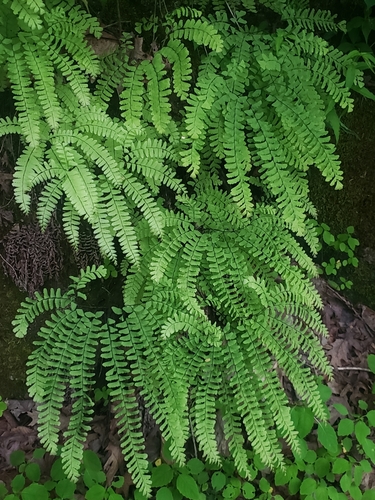
You might spot Northern Maidenhair Fern and Wood Nettle.
View guide →

District of Columbia, US
You might spot Eastern Gray Squirrel, Duck, and House Sparrow.
View guide →
Take the discovery with you
Snap it with Snappit to identify it, learn what makes it special, and add the discovery to your collection.







.jpg&width=800)



_001.jpg&width=800)




