





Wattled Crane
Bugeranus carunculatus
The Wattled Crane is a tall, elegant bird with long legs and a unique wattle on its face. It loves to live in wetlands and is known for its beautiful dance during courtship.
Habitat: Wetlands
The Wattled Crane is a tall, elegant bird with a mainly grey body, a white neck and crown, and a distinctive black face. Its most notable features are the two pendulous, fleshy wattles, bright red in colour, that hang below its chin, covered in small white feathers.
Category
BirdsRarity
Rare
Danger
1/5 · Very low
Snaps
Be the first to snap!
A Wattled Crane chick sometimes gets special help from both parents!
Their loud, rattling calls can be heard echoing across vast distances!
They use their long bills to dig up tasty tubers hidden underground!
Wattled Cranes are the largest crane species found on the African continent!
Wattled Cranes have prominent, fleshy wattles that help them communicate mood and health, especially during important courtship rituals.
Wattled Cranes can navigate deep, flooded wetlands because of their exceptionally long legs, which helps them forage for food safely.
Wattled Cranes have broad, powerful wings that help them soar high in the sky, allowing them to spot distant threats or food sources.
Wattled Cranes can construct large nests on floating vegetation because it provides a safe, elevated platform away from land predators.
These large birds are omnivores, eating wetland plants, seeds, insects, and small aquatic animals.
Polemaetus bellicosus
Martial Eagles sometimes prey on their eggs and young chicks.

Lycaon pictus
African Wild Dogs can sometimes eat eggs or unattended chicks.
Nymphaea nouchali
They eat rhizomes and tubers from wetland plants like this.
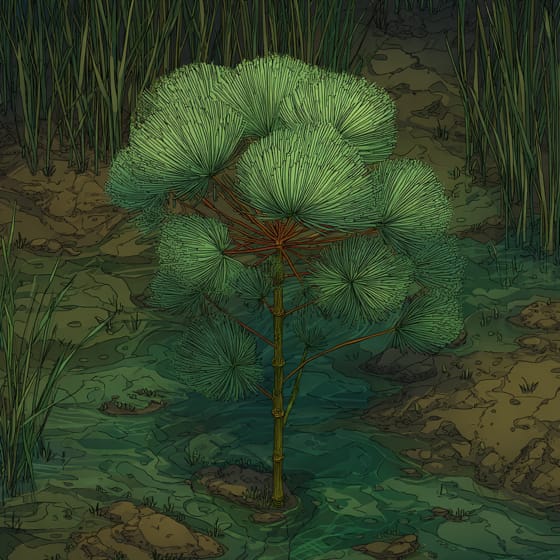
Cyperus papyrus
They rely on papyrus swamps for nesting and foraging grounds.
Feathered describes animals, primarily birds, possessing a covering of feathers.
Social animals live in organized groups, cooperating for survival benefits such as foraging, defense, and raising offspring.
This trait characterizes organisms whose diet consists entirely or primarily of plant material.
This habitat trait identifies species found in wetlands, which are areas of land saturated with water, either permanently or seasonally, including marshes, swamps, and bogs.

Diurnal animals are primarily active during daylight hours, typically resting or sleeping at night.

Migratory animals undertake seasonal movements from one region to another, typically in response to changes in climate or food availability.

Endangered status indicates a species is at a very high risk of extinction in the wild in the near future.
No aliases listed yet.
Danger
1/5 · Very low
Always watch birds from a distance and do not try to touch them.
The easiest way to identify Wattled Crane is to use the Snappit nature identifier app.
100-120 cm
180-230 cm
6.4-7.9 kg
20-30 years
65 km/h
These large birds are omnivores, eating wetland plants, seeds, insects, and small aquatic animals.
Wetlands
Zoom in to split clusters and explore where this object has been snapped.
Recent snaps will appear here as new observations are added.
Take the discovery with you
Snap it with Snappit to identify it, learn what makes it special, and add the discovery to your collection.





.jpg&width=800)








