





Whorled Coreopsis
Coreopsis verticillata
Whorled Coreopsis is a bright yellow flower that blooms in the summer. Its petals look like little rays of sunshine, and it attracts butterflies and bees, making gardens lively and colorful!
Habitat: Grasslands
The Whorled Coreopsis has vibrant yellow, daisy-like flowers, typically with eight ray petals. Its most distinctive feature is its exceptionally fine, thread-like green leaves, which are arranged in elegant whorls around the stem, giving it a delicate, airy appearance.
Category
PlantsRarity
Common
Danger
1/5 · Very low
Snaps
2
It's sometimes called "Tickseed" because its seeds look like tiny ticks!
Its scientific name "Coreopsis" means "bug-like," referring to its tiny seeds!
Many gardeners plant it because deer usually leave it alone!
You can find this cheerful plant growing wild in the sunny eastern USA!
Whorled Coreopsis has deep roots that help it find water in dry soil, allowing it to thrive even when other plants wilt.
Its bright yellow, nectar-rich flowers attract many different insects, ensuring its seeds are made to grow new plants.
Whorled Coreopsis can spread underground with rhizomes, helping it quickly form a beautiful patch in sunny spots.
Apis mellifera
Collects nectar and pollen from its bright flowers.
Bombus impatiens
Feeds on nectar, helping to spread pollen.
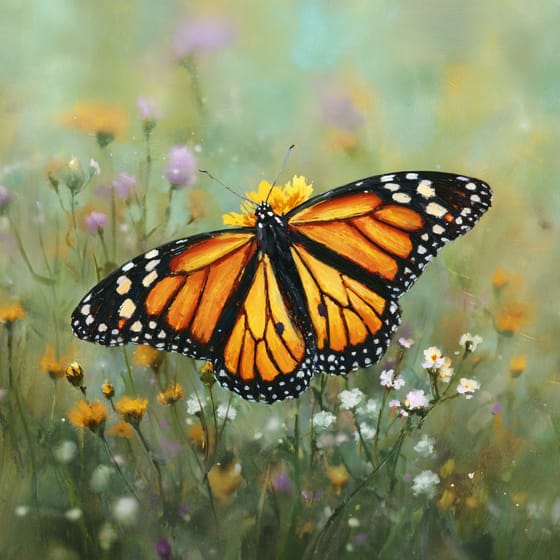
Danaus plexippus
Visits flowers for nectar, aiding plant reproduction.
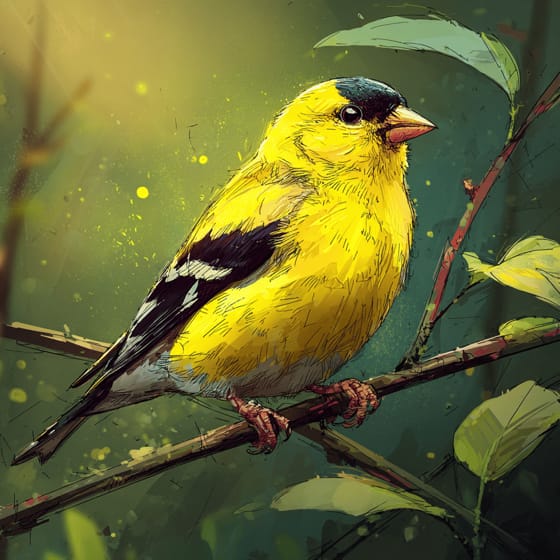
Spinus tristis
Feasts on the small seeds produced after flowering.
Flowering plants are any plants that produce flowers as part of their reproductive cycle.
Summer blooming plants produce their flowers during the summer season, often providing vibrant color when many other plants have finished.
Fragrant flowers emit a pleasant aroma, often to attract pollinators or for defense.
Colorful describes organisms or objects displaying a wide range of bright and distinct colors.

Grassland habitats are terrestrial biomes dominated by grasses and herbaceous plants, supporting a variety of grazing animals.

Describes plants that are particularly attractive and beneficial to a wide range of pollinating organisms.

Rapid growing plants exhibit accelerated growth rates, quickly increasing in size and biomass within a short period.
No aliases listed yet.
Danger
1/5 · Very low
Always ask an adult before picking flowers to keep nature safe.
The easiest way to identify Whorled Coreopsis is to use the Snappit nature identifier app.
30-90 cm
30-60 cm
2.5-5 cm
Summer to fall (June-October)
No
None
Perennial
Zoom in to split clusters and explore where this object has been snapped.

Missouri, US
You might spot Eastern Carpenter Bee, Duck, and American Robin.
View guide →

Ohio, US
You might spot Brown-Belted Bumble Bee and Eastern Carpenter Bee.
View guide →

Ohio, US
You might spot Brown-Belted Bumble Bee and Eastern Carpenter Bee.
View guide →
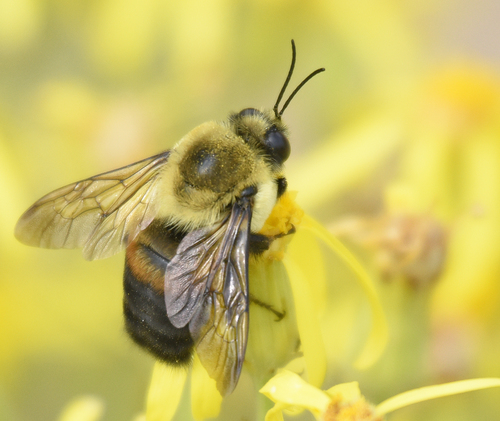
Ohio, US
You might spot Brown-Belted Bumble Bee and Eastern Carpenter Bee.
View guide →

Ohio, US
You might spot Brown-Belted Bumble Bee and Eastern Carpenter Bee.
View guide →

Ohio, US
You might spot Brown-Belted Bumble Bee and Eastern Carpenter Bee.
View guide →
Take the discovery with you
Snap it with Snappit to identify it, learn what makes it special, and add the discovery to your collection.








.jpg&width=800)


_001.jpg&width=800)




