





Nuttall'S Scrub Oak
quercus dumosa
The Nuttall's Scrub Oak is a small tree that provides shelter for many animals. Its acorns are a tasty treat for squirrels and birds!
Habitat: Nuttall's Scrub Oak typically lives in chaparral and coastal sage scrub areas.
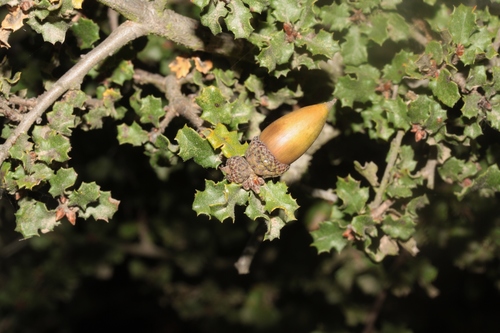
The Nuttall's Scrub Oak is a shrubby evergreen oak with stiff, dark green leaves that have spiny, toothed edges. Its bark is dark and deeply furrowed, typically appearing on multiple stems. Small, oblong acorns with warty caps are characteristic, often clustered at branch tips.
Category
PlantsRarity
Common
Danger
0/5 · No known danger
Snaps
Be the first to snap!
It's one of the smallest oak trees, often growing more like a bush!
Its acorns take two whole years to ripen before they are ready.
Many creatures depend on this oak for food, shelter, and survival.
This amazing oak can live for hundreds of years, becoming very ancient!
Nuttall'S Scrub Oak can resprout from its base after fires, helping it survive wildfire events.
Nuttall'S Scrub Oak has deep taproots that help it reach water in dry conditions, enduring arid climates.
Nuttall'S Scrub Oak has tough, spiny leaves that help defend it from hungry animals seeking a snack.

Sciurus griseus
Feasts on its acorns

Melanerpes formicivorus
Stores and eats its acorns
Phrynosoma coronatum
Hides among its branches
Cydia latiferreana
Larvae consume acorns
Social animals live in organized groups, cooperating for survival benefits such as foraging, defense, and raising offspring.
Arboreal animals live primarily in trees, utilizing them for shelter, food, and protection from predators.
This trait characterizes organisms whose diet consists entirely or primarily of plant material.
Forest habitats are terrestrial environments dominated by dense tree cover, supporting a high diversity of plant and animal life.

Endangered status indicates a species is at a very high risk of extinction in the wild in the near future.
Danger
0/5 · No known danger
No special safety notes yet.
The easiest way to identify Nuttall'S Scrub Oak is to use the Snappit nature identifier app.
100-500 cm
100-400 cm
Spring
Yes
None
Perennial
Wind
Zoom in to split clusters and explore where this object has been snapped.
Recent snaps will appear here as new observations are added.
Take the discovery with you
Snap it with Snappit to identify it, learn what makes it special, and add the discovery to your collection.








.jpg&width=800)



_001.jpg&width=800)




