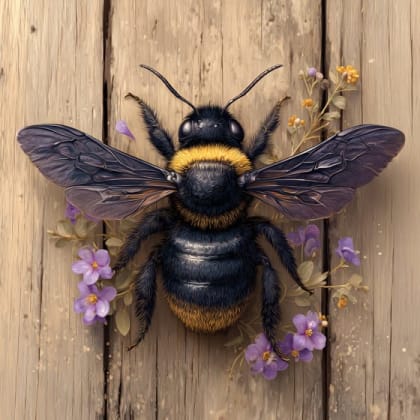





Carpenter Bee
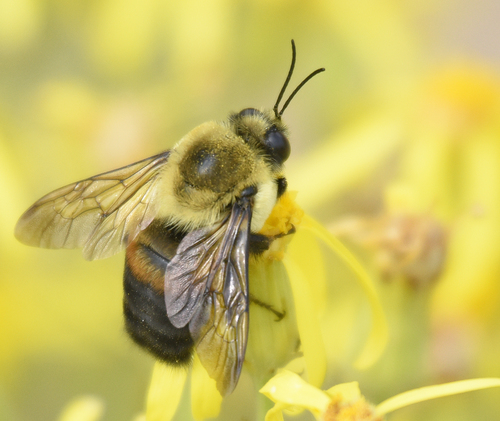
Hauck Botanic Garden is a serene 8-10 acre public park nestled in the heart of Cincinnati, Ohio, offering a delightful escape into nature.
Hauck Botanic Garden is a serene 8-10 acre public park nestled in the heart of Cincinnati, Ohio, offering a delightful escape into nature. This accredited arboretum showcases a rich tapestry of horticultural collections, from rare and exotic ornamentals to a vibrant display of native Midwest flora, making it a living laboratory and a peaceful retreat for all. Its thoughtful design provides a journey through diverse plant life, preserving a century-old legacy of botanical passion within an urban setting.
Visitors can explore a variety of meticulously curated gardens and unique plant specimens. Discover the delicate beauty of rare Lady's Slipper Orchids, marvel at the grandeur of towering Dawn Redwoods, or observe the intricate details of a 75-year-old hybrid Lea's Oak. The garden also features groves of Eastern Redbud and Flowering Dogwood that burst with color, along with the distinct charm of weeping Ryusen Japanese Maples and the stately presence of mature female Ginkgo trees near the Oak Street entrance. Newer installations like the Native Food Forest, brimming with edible native plants such as Gooseberry and American Persimmon, and the vibrant Butterfly Garden, add further layers of ecological interest and beauty.
Hauck Botanic Garden is an inviting destination for those seeking tranquility, education, or simply a beautiful outdoor experience. Its blend of historic plantings and evolving native landscapes, combined with unique features like the whimsical English Tea House and a humorous "non-historical marker" plaque, create a memorable visit. Whether you're a seasoned horticulturist or a casual visitor, the garden's diverse offerings and peaceful atmosphere provide a rejuvenating connection with the natural world, fostering appreciation for both cultivated beauty and ecological importance. Eager to name that creature? Identify any animal you find during your visit using the Snappit app.
The Hauck Botanic Garden originated from the private horticultural passion of Cincinnati philanthropist Cornelius J. Hauck. In 1924, Hauck purchased the land, which was then a soot-covered industrial area nicknamed "Sooty Acres." Driven by a desire to encourage urban green spaces, he meticulously cultivated an impressive collection of over 900 varieties of trees, shrubs, and evergreens, transforming the property into a botanical oasis. Hauck's vision extended beyond his lifetime; he served on the Cincinnati Park Board for 18 years and donated a portion of his estate to the Civic Garden Center in 1951. Upon his death in 1967, he willed the remainder of his property to Cincinnati Parks, ensuring its preservation as a public greenspace. Today, the garden, managed jointly by Cincinnati Parks and the Civic Garden Center, continues to honor his legacy as a dynamic plant laboratory and a vital urban retreat.
Enjoy self-guided walks through diverse plant collections. Take photographs of unique plant specimens and garden landscapes. Look for the whimsical "non-historical marker" plaque for a chuckle. Participate in free monthly guided tours offered by the Civic Garden Center to learn more about the garden's history and plants. Attend educational classes and events focusing on sustainable gardening and environmental stewardship.
Spring: Ephemeral wildflowers, blooming Lady's Slipper Orchids, Eastern Redbud, Flowering Dogwood, White Trillium, and other spring ephemerals.
Summer: Vibrant Butterfly Garden, lush foliage, and active pollinator populations around various themed native plant gardens.
Fall: Spectacular autumnal hues from various trees and shrubs, particularly the Lea's Oak and Ginkgo trees.
Winter: Architectural beauty of woody plants, evergreens, and the peaceful, quiet atmosphere of the garden.
Hauck Botanic Garden is a public park open daily from dawn to dusk. Parking is available at the Green Learning Station on the corner of Oak Street and Reading Road (with ramp access to the Civic Garden Center building) and along June Street within the park. Some paved walkways are present, but certain areas or monthly tours may involve "several steps and some uneven paths," suggesting varied terrain.
Don't miss the mature female Ginkgo trees near the Oak Street entrance, the historic 75-year-old Bottlebrush Buckeye colony, and the towering Dawn Redwood. Explore the newer Native Food Forest and the Butterfly Garden for insight into native plant ecology. Seek out the Serenity Garden for a quiet moment, and discover the charm of the English Tea House.
Each card links to a full Explore page with photos, traits, and fun facts.
Start with the big picture, then zoom in to explore individual wildlife observations around this place.
Wear comfortable walking shoes, as some paths may be uneven, especially if joining a guided tour.
Bring your camera to capture the diverse plant life, unique trees, and charming garden features.
Check the Civic Garden Center's website for their event calendar to see if any special classes, tours, or plant festivals coincide with your visit.
Consider visiting in mid-April for the spectacular spring wildflower display.
If driving, multiple parking options are available, including a lot at the Green Learning Station (Oak Street entrance) and street parking along June Street.
Look out for the "non-historical marker" plaque for a unique and humorous historical tidbit.

Maryland, US
You might spot White-Tailed Deer and Eastern Gray Squirrel.
View guide →
.jpg)
District of Columbia, US
You might spot Eastern Gray Squirrel, Duck, and House Sparrow.
View guide →

Illinois, US
You might spot American Robin, Canada Goose, and House Sparrow.
View guide →

Virginia, US
You might spot Spotted Lanternfly and Northern Cardinal.
View guide →
Take the discovery with you
Identify the wildlife you spot, learn as you go, and keep a collection of the adventure.

















.jpg&width=800)




.jpg&width=800)


