_Allium_vineale_-_inflorescence_immature.jpg&width=800)





wild garlic
Allium vineale
Wild garlic is a tasty plant that grows in fields and woods. It has long green leaves and pretty white flowers that smell like garlic. People often use it in cooking to add flavor!
Habitat: Woodlands
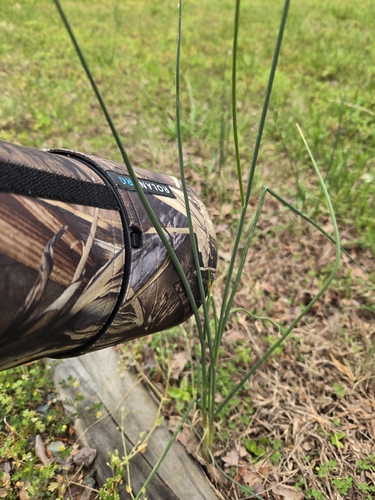
The wild garlic has thin, grass-like leaves that are hollow and cylindrical. Its small, white to pinkish-purple flowers grow in a rounded cluster, often replaced by tiny green or purple aerial bulblets at the top of the stem.
Category
PlantsRarity
Common
Danger
1/5 · Very low
Snaps
16
Historically, wild garlic was sometimes used in old folk remedies.
If cows eat too much, their milk can actually taste garlicky!
Its potent garlic smell helps it scare away most hungry forest critters.
This plant can make its own mini-clones right on its stem!
Wild garlic can grow tiny 'baby bulbs' (bulbils) on its flower stalk, which fall off and start new plants without needing seeds!
It has a super strong oniony smell that helps keep many hungry animals from nibbling its leaves and bulbs, defending itself.
Apis mellifera
collects nectar for honey
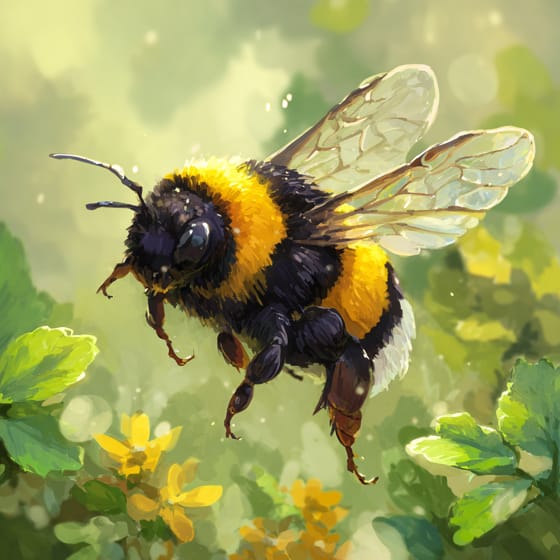
Bombus terrestris
gathers pollen from its blooms
Homo sapiens
leaves and bulbils can be foraged
Aromatic plants produce and emit fragrant volatile organic compounds, often for defense or to attract pollinators.
Flowering plants are any plants that produce flowers as part of their reproductive cycle.
Grass-like plants are herbaceous plants that visually resemble true grasses, typically having long, narrow leaves.
Spring blooming plants produce their flowers during the spring season, often signifying the end of winter and the start of new growth.

Fragrant flowers emit a pleasant aroma, often to attract pollinators or for defense.

Edible plants are those parts of a plant that are considered safe for human consumption.

Describes plants that are particularly attractive and beneficial to a wide range of pollinating organisms.

This human use trait indicates species from which spices are derived, used for flavoring, preserving food, or as aromatic agents.

Forest habitats are terrestrial environments dominated by dense tree cover, supporting a high diversity of plant and animal life.
Danger
1/5 · Very low
Always check with an adult before picking or eating any wild plants.
The easiest way to identify wild garlic is to use the Snappit nature identifier app.
30-80 cm
0.3-0.5 cm
Late spring to early summer
Yes
None
Perennial
Insect
Zoom in to split clusters and explore where this object has been snapped.
Apr 26, 2026
Scottsville Historic DistrictPhoto attribution
(c) Andre Knocklein, some rights reserved (CC BY)
License: CC BY 4.0 ↗
Image may be shown cropped inside the card frame.

Rhode Island, US
You might spot Common Mugwort, Duck, and Azure Bluet.
View guide →

Maryland, US
You might spot Crane-Fly Orchid, Fragile Forktail, and Ebony Jewelwing.
View guide →

Ohio, US
You might spot Widow Skimmer, Eastern Pondhawk, and Bee.
View guide →

Massachusetts, US
You might spot Striped Wintergreen, Painted Turtle, and Canada Goose.
View guide →

Georgia, US
You might spot Eastern Gray Squirrel, Domestic Cat, and American Robin.
View guide →

Virginia, US
You might spot Eastern Gray Squirrel, Duck, and Northern Mockingbird.
View guide →
Take the discovery with you
Snap it with Snappit to identify it, learn what makes it special, and add the discovery to your collection.







.jpg&width=800)


_001.jpg&width=800)



