





winterberry holly
Ilex verticillata
Winterberry holly is a beautiful shrub that has bright red berries in winter. It grows in wet areas and is loved by birds who eat its berries during the cold months.
Habitat: Wetlands
The winterberry holly is a unique holly that loses its leaves in autumn, revealing stems covered in incredibly bright red, orange, or sometimes yellow berries. These striking berries remain on the bare branches throughout winter, creating a vibrant display against snow.
Category
PlantsRarity
Common
Danger
2/5 · Low
Snaps
10
Its berries can stay attached to branches all winter, even through heavy snow!
Many birds wait for freezing weather to eat the berries, making them taste sweeter!
Only the 'girl' winterberry plants make the super colorful berries you see!
Unlike most hollies, this one drops its leaves, showing off its dazzling fruit.
Winterberry holly can drop all its leaves, making its brilliant red berries stand out, providing a crucial winter food source for birds when other food is scarce.
Winterberry holly has separate male and female plants; only the female plants produce the showy berries after a male plant pollinates them.
Winterberry holly can thrive in wet, swampy soils where many other plants struggle, thanks to its specialized root system.
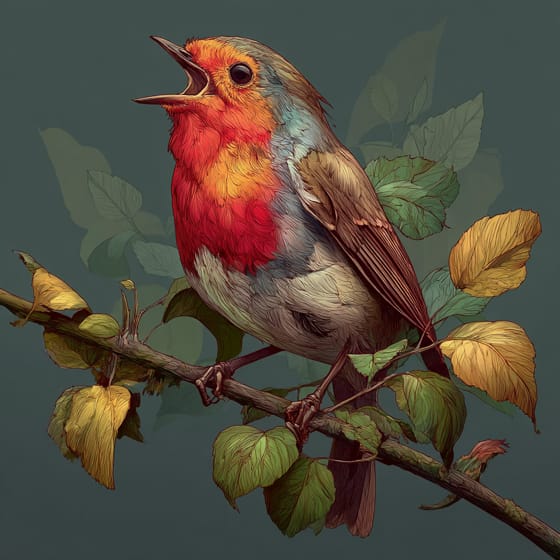
Turdus migratorius
Eats berries for winter energy.
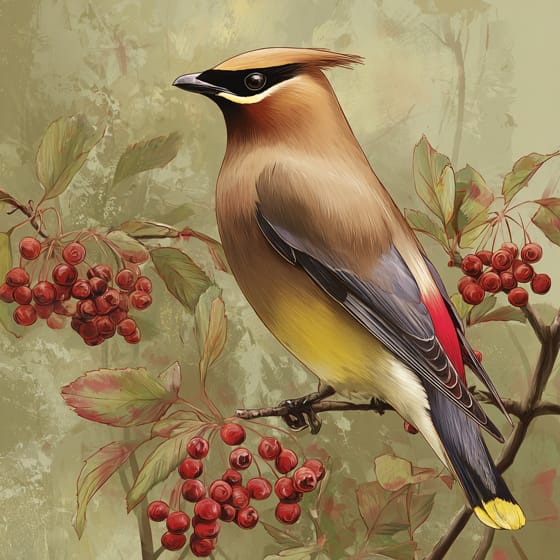
Bombycilla cedrorum
Feeds on abundant winter berries.
Apis mellifera
Visits small flowers for nectar.
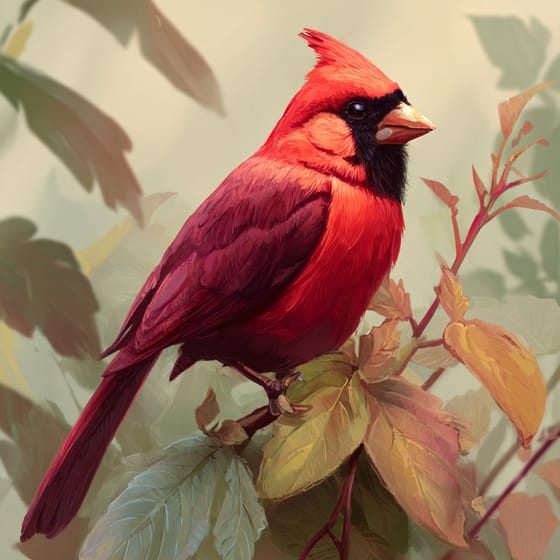
Cardinalis cardinalis
Uses dense branches for nesting.
Deciduous plants periodically shed all their leaves, typically during autumn or dry seasons.
Ornamental plants are cultivated primarily for their aesthetic appeal, enhancing landscapes and gardens with their attractive foliage, flowers, or form.
A shrub is a woody plant smaller than a tree, typically with multiple stems branching from or near the ground.
Cold hardy plants are able to withstand low temperatures and freezing conditions without significant damage.

Fruit-bearing plants produce fruits, which are the mature ovaries of flowering plants containing seeds.

Describes plants that are particularly attractive and beneficial to a wide range of pollinating organisms.

This habitat trait identifies species found in wetlands, which are areas of land saturated with water, either permanently or seasonally, including marshes, swamps, and bogs.
No aliases listed yet.
Danger
2/5 · Low
Do not eat the berries, as they can make you feel sick.
The easiest way to identify winterberry holly is to use the Snappit nature identifier app.
180-450 cm
180-300 cm
0.3-0.6 cm
Late spring to early summer
No
Mild
Perennial
Zoom in to split clusters and explore where this object has been snapped.

Maine, US
You might spot American Bullfrog and Three-Toothed Cinquefoil.
View guide →

Delaware, US
You might spot American Toad, Eastern Tiger Swallowtail, and Red Fox.
View guide →

Pennsylvania, US
You might spot Steeplebush, Elk, and Eastern Newt.
View guide →

Michigan, US
You might spot Common Merganser, Tansy, and American Herring Gull.
View guide →

New York, US
You might spot White-Tailed Deer, Eastern Skunk Cabbage, and Duck.
View guide →
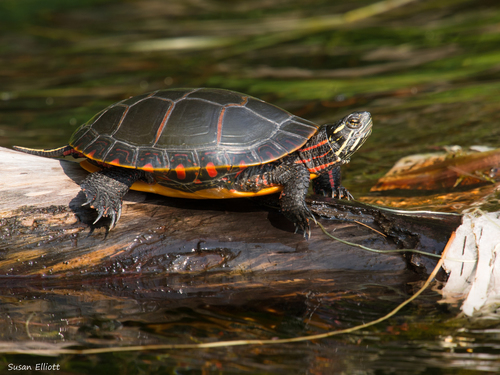
Massachusetts, US
You might spot Painted Turtle, Duck, and Great Blue Heron.
View guide →
Take the discovery with you
Snap it with Snappit to identify it, learn what makes it special, and add the discovery to your collection.








.jpg&width=800)



_001.jpg&width=800)




