





yellow birch
Betula alleghaniensis
The yellow birch is a beautiful tree with shiny, golden bark. It grows tall and provides shade and homes for many animals in the forest.
Habitat: Forests
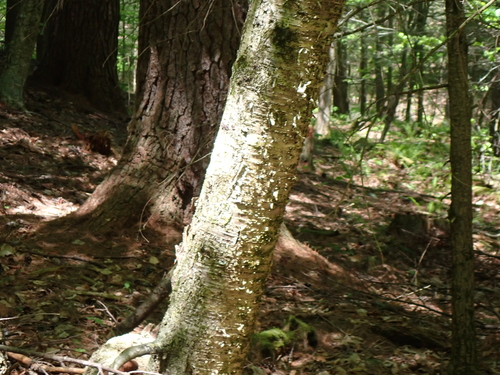
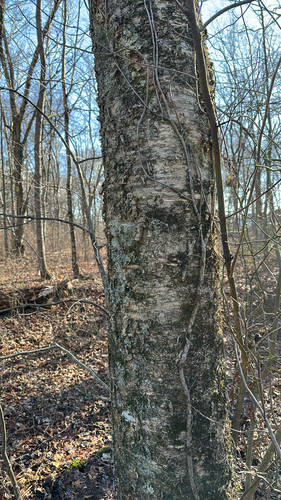
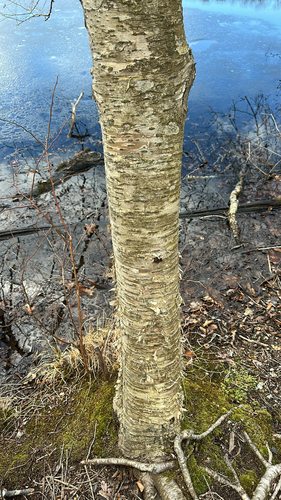
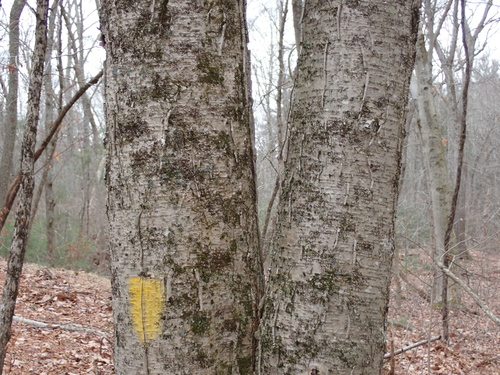
The yellow birch has shiny, peeling bark that is often silvery-yellow or bronze, appearing shaggier on older trees. Its oval leaves are finely toothed and turn a brilliant golden yellow in autumn. This bark helps distinguish it from other birches.
Category
PlantsRarity
Common
Danger
1/5 · Very low
Snaps
16
Native Americans used the flexible bark to create canoes and containers.
Scratch a twig of yellow birch to smell a minty wintergreen scent!
Sometimes, yellow birches start growing on old stumps or fallen logs!
This tree can live for over 300 years, making it very ancient!
Yellow birch has bark that peels into papery strips, helping it shed parasites and offering insulation.
The yellow birch's twigs and inner bark smell and taste like wintergreen when scratched, a unique chemical defense.
Yellow birch can sprout new trees from an old stump, allowing it to recover quickly after damage.
Deciduous plants periodically shed all their leaves, typically during autumn or dry seasons.
Shade tolerant plants are adapted to grow and thrive in areas with low light levels, requiring less direct sunlight.
Broadleaf trees are angiosperms characterized by flat, wide leaves that are typically shed annually in temperate climates.
Edible plants are those parts of a plant that are considered safe for human consumption.

Fall color refers to the seasonal change in foliage pigmentation, primarily in deciduous plants, displaying vibrant hues.
Timber refers to wood that has been prepared for use in building and carpentry.

Forest habitats are terrestrial environments dominated by dense tree cover, supporting a high diversity of plant and animal life.

This trait characterizes organisms with an exceptionally long lifespan compared to others of their kind.

Describes a species whose presence and role have a disproportionately large effect on its environment.
No aliases listed yet.
Danger
1/5 · Very low
Always stay on paths when exploring forests and don't climb trees without an adult.
The easiest way to identify yellow birch is to use the Snappit nature identifier app.
1800-3000 cm
900-1200 cm
1-10 cm
Spring
Yes
None
Perennial
Zoom in to split clusters and explore where this object has been snapped.
May 17, 2026
Berkshire Botanical GardenPhoto attribution
no rights reserved
License: CC0 1.0 ↗
Image may be shown cropped inside the card frame.
Jan 15, 2026
Oak Knoll Wildlife SanctuaryPhoto attribution
(c) John Baur, some rights reserved (CC BY)
License: CC BY 4.0 ↗
Image may be shown cropped inside the card frame.
Jan 15, 2026
Oak Knoll Wildlife SanctuaryPhoto attribution
(c) John Baur, some rights reserved (CC BY)
License: CC BY 4.0 ↗
Image may be shown cropped inside the card frame.
Jan 14, 2026
Stony Brook Wildlife SanctuaryPhoto attribution
(c) John Baur, some rights reserved (CC BY)
License: CC BY 4.0 ↗
Image may be shown cropped inside the card frame.

Pennsylvania, US
You might spot Mountain Laurel, Ghost Pipe, and Sweetfern.
View guide →

Massachusetts, US
You might spot Common Eastern Bumble Bee and Eastern Skunk Cabbage.
View guide →

New York, US
You might spot American Toad and Intermediate Wood Fern.
View guide →

Maine, US
You might spot Ghost Pipe, Pink Lady's Slipper, and Bluebead Lily.
View guide →

Massachusetts, US
You might spot Eastern Skunk Cabbage and Sweet Pepperbush.
View guide →

Ohio, US
You might spot American Cancer-Root and Christmas Fern.
View guide →
Take the discovery with you
Snap it with Snappit to identify it, learn what makes it special, and add the discovery to your collection.








.jpg&width=800)


_001.jpg&width=800)

