





woodrushes
Luzula
Woodrushes are lovely green plants that grow in shady places like forests. They have long, thin leaves and small flowers that can be white or brown. They are great at making the ground look pretty!
Habitat: Forests
The woodrushes have soft, grass-like leaves often tipped with fine white hairs, forming neat clumps. Their tiny, inconspicuous flowers are usually greenish-brown or reddish, clustered at the tips of slender stems, and lack showy petals.
Category
PlantsRarity
Common
Danger
1/5 · Very low
Snaps
Be the first to snap!
Ancient people sometimes used strong woodrush stems to weave small baskets!
Often mistaken for grass, they have flat leaves, not round ones!
Some woodrush seeds have a tiny, delicious snack for ants!
Unlike true rushes, woodrush leaves often have soft, fuzzy edges!
woodrushes can thrive in deep shade, using their broad leaves to capture scarce light in dense forests.
woodrushes has special seed attachments that attract ants, which then carry and disperse their seeds.
Many woodrushes can survive harsh winters and even grow in chilly mountain regions, thanks to their tough perennial roots.
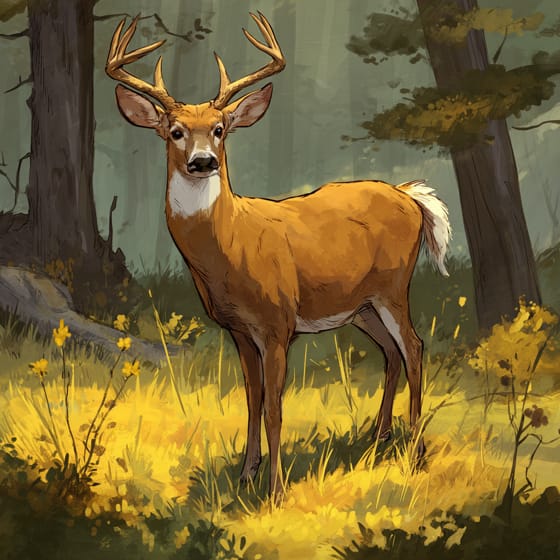
Odocoileus virginianus
Grazes on woodrush foliage in forests.
Myrmica rubra
Carries woodrush seeds for their elaiosomes.
Microtus pennsylvanicus
Forages on woodrush leaves and stems.

Arion ater
Slugs often graze on tender woodrush leaves.
Deciduous plants periodically shed all their leaves, typically during autumn or dry seasons.
Flowering plants are any plants that produce flowers as part of their reproductive cycle.
Ornamental plants are cultivated primarily for their aesthetic appeal, enhancing landscapes and gardens with their attractive foliage, flowers, or form.
Grass-like plants are herbaceous plants that visually resemble true grasses, typically having long, narrow leaves.

Shade tolerant plants are adapted to grow and thrive in areas with low light levels, requiring less direct sunlight.

Forest habitats are terrestrial environments dominated by dense tree cover, supporting a high diversity of plant and animal life.
No aliases listed yet.
Danger
1/5 · Very low
Always look but don't touch plants unless you know they are safe.
The easiest way to identify woodrushes is to use the Snappit nature identifier app.
10-60 cm
15-40 cm
0.1-0.3 cm
Late spring to early summer
No
None
Perennial
Zoom in to split clusters and explore where this object has been snapped.
Recent snaps will appear here as new observations are added.
Take the discovery with you
Snap it with Snappit to identify it, learn what makes it special, and add the discovery to your collection.







.jpg&width=800)



_001.jpg&width=800)



