





hemp dogbane
Apocynum cannabinum
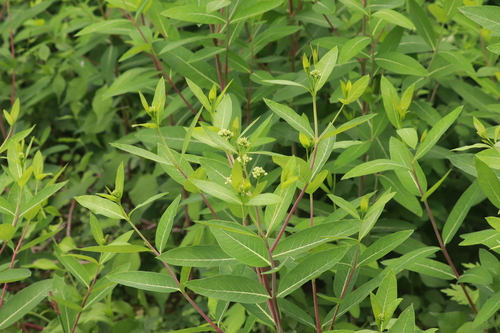
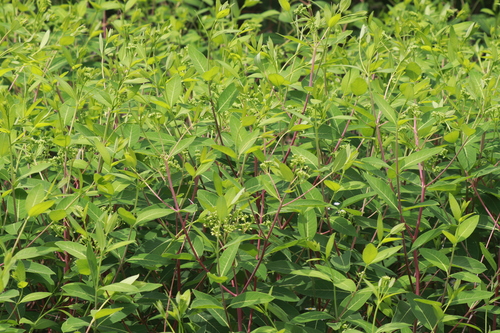
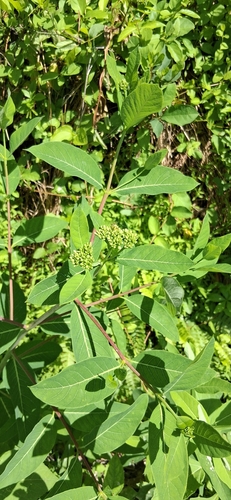
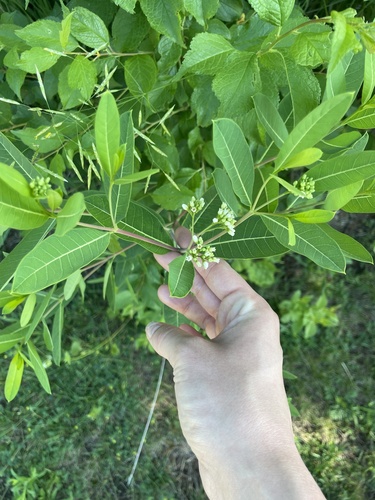
Hemp dogbane is a tall plant with pretty green leaves and clusters of small white flowers. It grows in sunny places and can be found in fields and along roadsides.
Habitat: Fields and roadsides
The hemp dogbane has slender, reddish-green stems and oval to lance-shaped leaves with smooth edges. Its small, bell-shaped flowers are typically greenish-white to yellow, appearing in clusters at the stem tips. A distinguishing feature is the milky white sap it exudes when broken.
Category
PlantsRarity
Common
Danger
2/5 · Low
Snaps
61
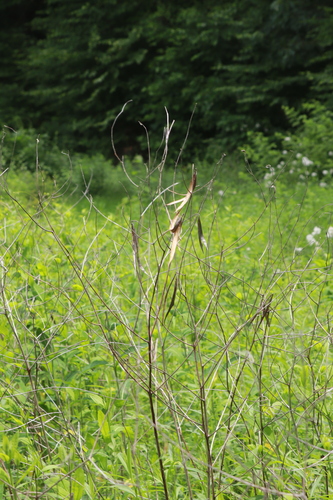
After blooming, it grows long, slender seed pods that look like twin needles.
Beware its name! 'Dogbane' means it was once thought to kill dogs.
Native Americans used its tough fibers to weave strong nets and fishing lines.
The milky sap inside can irritate skin and cause painful blisters!
Hemp dogbane can ooze a milky white sap that contains toxins, deterring hungry herbivores from taking a bite.
This plant has deep rhizomatous roots that help it survive droughts and spread effectively in its habitat.
Hemp dogbane has incredibly strong, fibrous stems, allowing it to withstand strong winds and historically be used by humans for cordage.
Apis mellifera
visits flowers for nectar

Bombus impatiens
collects nectar from flowers
Phaeochrous emarginatus
larvae and adults feed on leaves
Aphis apocyni
sucks sap from stems and leaves
Flowering plants are any plants that produce flowers as part of their reproductive cycle.
Cluster flowers are inflorescences where individual flowers are arranged closely together on a common stem.
Medicinal plants possess chemical compounds that can be used for therapeutic purposes to treat illnesses or maintain health.
This human use trait identifies species that yield natural fibers, used by humans for textiles, rope, paper, and other manufactured goods.

Grassland habitats are terrestrial biomes dominated by grasses and herbaceous plants, supporting a variety of grazing animals.

Rapid growing plants exhibit accelerated growth rates, quickly increasing in size and biomass within a short period.
No aliases listed yet.
Danger
2/5 · Low
Don't touch the plant without asking an adult, as some parts can be irritating.
The easiest way to identify hemp dogbane is to use the Snappit nature identifier app.
50-150 cm
30-60 cm
0.2-0.4 cm
Summer
No
Moderate
Perennial
Zoom in to split clusters and explore where this object has been snapped.
Jun 7, 2026
East Windsor Hill Historic DistrictPhoto attribution
(c) Mark Apgar, some rights reserved (CC BY)
License: CC BY 4.0 ↗
Image may be shown cropped inside the card frame.
Jun 6, 2026
East Windsor Hill Historic DistrictPhoto attribution
(c) Mark Apgar, some rights reserved (CC BY)
License: CC BY 4.0 ↗
Image may be shown cropped inside the card frame.
Jun 6, 2026
East Windsor Hill Historic DistrictPhoto attribution
(c) Mark Apgar, some rights reserved (CC BY)
License: CC BY 4.0 ↗
Image may be shown cropped inside the card frame.
Jun 3, 2026
Newbern Historic DistrictPhoto attribution
no rights reserved
License: CC0 1.0 ↗
Image may be shown cropped inside the card frame.
Jun 1, 2026
High Trestle TrailPhoto attribution
no rights reserved
License: CC0 1.0 ↗
Image may be shown cropped inside the card frame.

Pennsylvania, US
You might spot Mountain Laurel, Ghost Pipe, and Sweetfern.
View guide →
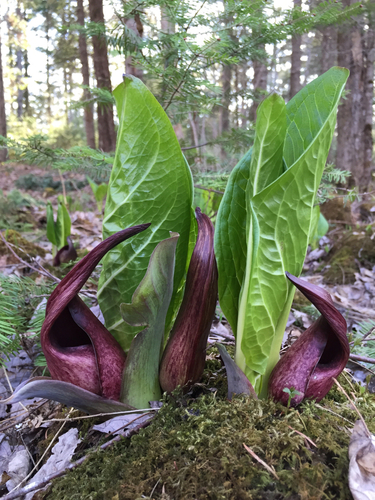
Connecticut, US
You might spot Eastern Skunk Cabbage and Eastern White Pine.
View guide →

Connecticut, US
You might spot American Robin, Eastern Poison Ivy, and Duck.
View guide →
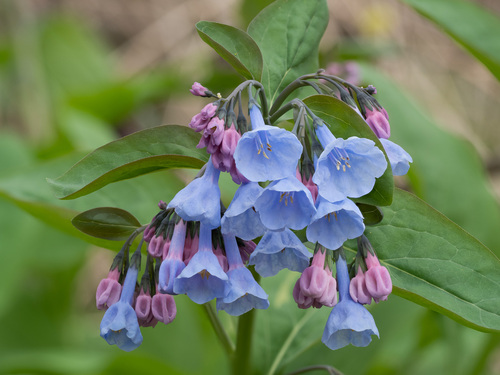
Virginia, US
You might spot Virginia Bluebells and Virginia Springbeauty.
View guide →

Pennsylvania, US
You might spot Spotted Lanternfly, Duck, and Asian Lady Beetle.
View guide →

Virginia, US
You might spot Northern Cardinal and Eastern Gray Squirrel.
View guide →
Take the discovery with you
Snap it with Snappit to identify it, learn what makes it special, and add the discovery to your collection.







.jpg&width=800)



_001.jpg&width=800)




