





Yak
Bos mutus
Yaks are large, shaggy animals with long horns that live in the mountains. They are strong and can carry heavy loads. Yaks have thick fur to keep them warm in cold places.
Habitat: Mountain regions
The Yak has a massive, muscular body covered in long, shaggy fur that can be black, brown, or grayish. It features a distinctive hump on its shoulders and short, sturdy legs with broad hooves. Its prominent, curved horns sweep outwards and then upwards, making it easily recognizable.
Category
MammalsRarity
Rare
Danger
2/5 · Low
Snaps
Be the first to snap!
A group of yaks is called a 'herd' or a 'drove', and they stick together for safety.
Their thick, woolly undercoat is super warm and is prized for making clothes in cold regions.
Wild yaks can eat snow directly to get water when ice-cold streams are frozen solid.
Yaks don't moo like cows; they make grunting noises, which is how they got their scientific name 'mute ox'!
Yak can breathe easily in high mountains because of their special blood, which carries extra oxygen.
Yak has broad, strong hooves that help them grip rocky terrain and navigate steep, icy slopes without slipping.
Yak can stay warm in freezing temperatures because of their incredibly thick, shaggy coat and a layer of insulating fat.
Yak can digest tough, sparse mountain plants because of their specialized digestive system, getting nutrients where others can't.
Yaks are plant-eaters who graze on tough grasses and small plants found in high mountains.
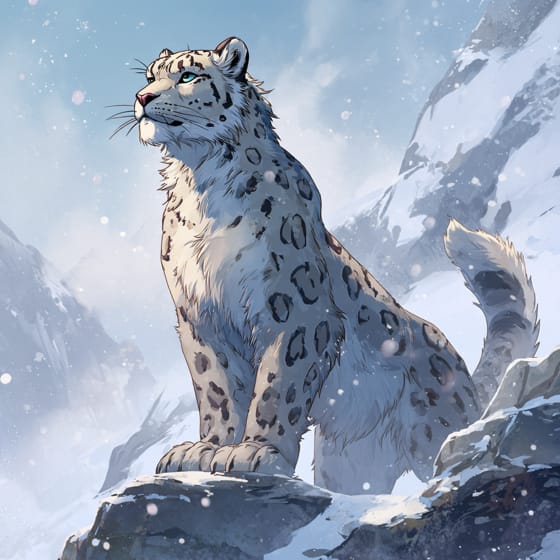
Panthera uncia
Young or weak yaks are prey for snow leopards.
Stipa purpurea
A common grass species grazed by yaks on the plateau.
Wildlife encompasses all undomesticated animal and plant life existing in their natural habitats.
Furry describes animals possessing a dense covering of soft hair or fur.
Social animals live in organized groups, cooperating for survival benefits such as foraging, defense, and raising offspring.
Characterized by having one or more hard, permanent, pointed projections on the head.

This trait characterizes organisms whose diet consists entirely or primarily of plant material.

This habitat trait identifies species found in mountainous regions, characterized by high elevation, steep slopes, and varying climate zones.
Danger
2/5 · Low
Yaks are usually gentle but can be scared, so it's best to keep a safe distance.
The easiest way to identify Yak is to use the Snappit nature identifier app.
250-330 cm
250-1000 kg
15-20 years
40 km/h
Yaks are plant-eaters who graze on tough grasses and small plants found in high mountains.
Mountain regions
Grazing
Zoom in to split clusters and explore where this object has been snapped.
Recent snaps will appear here as new observations are added.
Take the discovery with you
Snap it with Snappit to identify it, learn what makes it special, and add the discovery to your collection.





.jpg&width=800)




.JPG&width=800)


.jpg&width=800)
