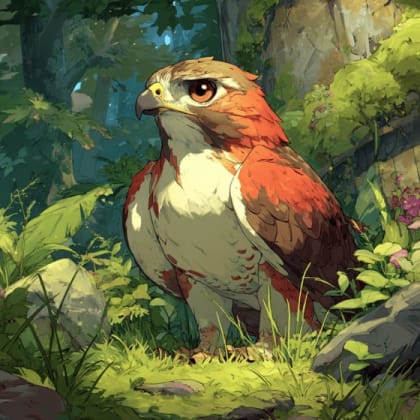





Red Tailed Hawk

Fossil Lake is a renowned paleontological site in Oregon's remote high desert, a place where the echoes of the Ice Age resonate through a vast, dry lakebed.
Fossil Lake is a renowned paleontological site in Oregon's remote high desert, a place where the echoes of the Ice Age resonate through a vast, dry lakebed. Once a sprawling ancient lake during the Pleistocene epoch, this unique landscape in northern Lake County now serves as an open-air museum, holding millions of years of Earth's history within its sediments. Managed by the Bureau of Land Management as an Area of Critical Environmental Concern, Fossil Lake is a testament to prehistoric life, providing scientists and curious visitors alike with an unparalleled glimpse into a time when colossal creatures roamed the Pacific Northwest.
While there are no living wild animals to observe in the traditional sense, the true "exhibits" here are the incredible fossil discoveries that have shaped our understanding of ancient ecosystems. Paleontologists have unearthed a staggering array of remains, including those of Columbian mammoths, dire wolves, giant beavers, and multiple species of prehistoric horses and camels. Visitors can engage with interpretive signs that detail these spectacular finds, and perhaps even ponder the significance of the 43,000-year-old Columbian mammoth trackway, a poignant frozen moment of ancient animal behavior.
A visit to Fossil Lake is an immersion into deep time, a chance to appreciate the raw, arid beauty of the high desert while contemplating the vibrant, water-filled landscape it once was. It's a destination for those seeking quiet contemplation, scientific wonder, and a tangible connection to Oregon's profound prehistoric narrative. The stark environment itself, with its flat expanses and nearby moving sand dunes, offers a memorable backdrop for reflecting on the powerful forces that have shaped our planet. Unlock an interactive field guide for this spot: get the Snappit app to identify nature on the go.
Fossil Lake's scientific significance was first brought to widespread attention in 1876-1877 by John Whiteaker, Oregon's first governor. While on a camping trip, Whiteaker discovered numerous exposed fossils, including those of "elephant [mammoth], camel, horse, and elk or reindeer," along with ancient human artifacts, scattered across a wide area of the dry lakebed. He estimated the fossil beds spanned several miles. Excited by his finds, Whiteaker delivered specimens to Thomas Condon, a prominent paleontologist at the University of Oregon. This sparked a flurry of scientific expeditions to Fossil Lake, with notable paleontologists like Edward D. Cope and O.C. Marsh visiting in the late 19th century to collect and study the site's rich fossil record. Since then, Fossil Lake has remained a crucial site for research, revealing hundreds of species and continuously yielding new insights into Pleistocene life in North America.
Read the interpretive signs to learn about the area's geological history and the extinct animals that once lived there.
* Walk the designated path to experience the expansive, stark beauty of the dry lakebed.
* Imagine the ancient lake teeming with megafauna.
* Observe the unique high desert flora and the nearby Christmas Valley Sand Dunes.
* *Note: Public fossil collection is strictly prohibited.
Spring/Fall: Mild temperatures, ideal for hiking and exploring.
Summer: Can be very hot and dry; bring plenty of water. The dry lakebed offers little shade. Wildfire smoke can occasionally be an issue in late summer.
Winter: Cold temperatures, potential for snow or harsh winds. Roads may be less accessible.
Access to the immediate Fossil Lake Area is limited to walk-in traffic only; vehicles are not permitted in the last 150 yards to the interpretive sign. The terrain is generally flat but consists of a dry lakebed, which can be uneven or sandy, and is not paved.
The primary highlight is the vast dry lakebed itself, allowing visitors to visualize the ancient lake. The Bureau of Land Management (BLM) interpretive sign provides crucial information about the site's paleontological importance and the types of fossils discovered. The scientifically significant Columbian mammoth trackway, though not always explicitly marked for public viewing, represents a major discovery.
Each card links to a full Explore page with photos, traits, and fun facts.
Start with the big picture, then zoom in to explore individual wildlife observations around this place.
Bring plenty of water and sun protection: The high desert environment is arid and offers little shade. Hydration and protection from the sun are crucial.
Wear appropriate footwear
Sturdy, closed-toe shoes are recommended for walking on uneven or sandy terrain.
Plan your route carefully
Fossil Lake is remote. Ensure you have detailed maps, and consider that cell service may be limited.
Respect the site
Remember that fossil collection is prohibited. Stay on marked paths and leave no trace.
Visit other nearby attractions
Combine your trip with visits to the Christmas Valley Sand Dunes or the Lost Forest Research Natural Area, which are part of the same Area of Critical Environmental Concern.
Jun 19, 2025
Jul 16, 2024
Jun 7, 2022
Jul 5, 2019
Jul 20, 2017

Maryland, US
You might spot White-Tailed Deer and Eastern Gray Squirrel.
View guide →
.jpg)
District of Columbia, US
You might spot Eastern Gray Squirrel, Duck, and House Sparrow.
View guide →

Illinois, US
You might spot American Robin, Canada Goose, and House Sparrow.
View guide →

Virginia, US
You might spot Spotted Lanternfly and Northern Cardinal.
View guide →
Take the discovery with you
Identify the wildlife you spot, learn as you go, and keep a collection of the adventure.














_dragonfly%2C_female_(5070363690).jpg&width=800)

