





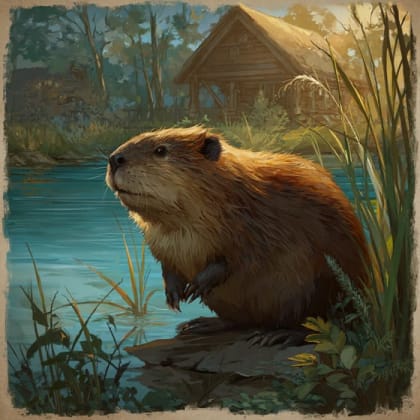
Brown Bear

Kijik is a profound Alaskan archaeological district preserving ancient Dena'ina heritage.
Kijik is a profound Alaskan archaeological district preserving ancient Dena'ina heritage.
Kijik, also known by its Dena'ina name Qizhjeh, meaning "place where people gather," is a significant ghost town and archaeological district nestled within the vast wilderness of Lake Clark National Park and Preserve in Alaska. This National Historic Landmark offers an unparalleled glimpse into the enduring history and culture of the Dena'ina Athabascan people, who inhabited this site for at least 900 years, and evidence suggests up to 2000 years. It stands as a testament to a rich indigenous past, where a thriving community once flourished amidst the abundant resources of the Alaskan wilderness, making it a unique cultural and historical treasure.
While Kijik is not a traditional park with curated exhibits in buildings, its "exhibits" are the tangible remnants of an ancient way of life etched into the landscape itself. Visitors can contemplate the foundations of Dena'ina log houses, imagine the community gathered at the site of a former Russian Orthodox church, and discern the locations of steam baths and underground caches that supported the village. The surrounding Lake Clark National Park and Preserve teems with wild Alaskan species, including large populations of brown bears, abundant sockeye salmon in the rivers and lakes, moose, caribou, and a diverse array of birdlife, offering breathtaking natural encounters.
Visiting Kijik is an immersive journey into a remote Alaskan landscape, where history and nature intertwine. It provides a unique opportunity to connect with the ancestral homeland of the Dena'ina people and appreciate the resilience of indigenous cultures. The site encourages reflection on human adaptation to the environment and the powerful stories held within archaeological landscapes, making it a deeply memorable experience for those seeking historical depth and wilderness adventure. Take the ultimate field guide with you: use the Snappit app to identify birds, plants, and animals on your trip.
Kijik's history spans thousands of years, with the Dena'ina people inhabiting the area long before Russian contact in the late 1700s. Historical texts mention Qizhjeh village as early as 1818, and archaeological evidence suggests occupation dating back 2000 years. For approximately 900 years, Qizhjeh village thrived on the shores of Lake Clark, sustained by abundant firewood, strong salmon runs, hunting, and fishing. The community grew to be one of Alaska's largest village sites, with inhabitants establishing strong cultural connections to the land, water, and wildlife. A Russian Orthodox church was built around 1889, indicating the influence of Russian presence. However, the early 20th century brought devastating flu-measles epidemics. By 1902, the population was severely depleted, and survivors began relocating to Old Nondalton, about twenty-five miles southwest. By 1909, Kijik village was completely abandoned, becoming the ghost town it is today. The site was later designated a National Historic Landmark and Archeological District due to its unique concentration of Dena'ina Athabascan sites and its well-preserved record of their cultural history.
Cultural Appreciation: Reflect on the Dena'ina history and cultural significance of the abandoned village.
* **Photography: ** Capture the vast wilderness, archaeological remnants (from a respectful distance and where permitted), and wildlife.
* **Remote Wilderness Experience:** For those venturing into Lake Clark National Park, activities like kayaking, rafting, hiking, and camping are possible, offering opportunities to see bears, salmon, and other Alaskan fauna.
* **Educational Engagement: ** Learn about the Dena'ina language and culture, as projects like the Quk' Taz'un ('The Sun Is Rising') Dena'ina outdoor learning camp practice the Dena'ina alphabet in the area.
**Seasonal notes: **
* **Summer: ** Ideal for travel, wildlife (especially salmon runs attracting bears), and exploring the broader park.
* **Winter: ** Extremely challenging due to severe weather; access is minimal to non-existent for most visitors.
* **Spring/Fall: ** Transitional seasons, can be unpredictable with weather, but may offer unique photography opportunities.
**Accessibility features: ** Kijik is a remote archaeological site within a wilderness national park. There are no paved trails, visitor centers, or wheelchair access. Access is typically via float plane to Lake Clark, followed by boat or strenuous hiking, making it largely inaccessible for those with mobility limitations.
Summer: Ideal for travel, wildlife (especially salmon runs attracting bears), and exploring the broader park.
Winter: Extremely challenging due to severe weather; access is minimal to non-existent for most visitors.
Spring/Fall: Transitional seasons, can be unpredictable with weather, but may offer unique photography opportunities.
Accessibility features: Kijik is a remote archaeological site within a wilderness national park. There are no paved trails, visitor centers, or wheelchair access. Access is typically via float plane to Lake Clark, followed by boat or strenuous hiking, making it largely inaccessible for those with mobility limitations.
Kijik is a remote archaeological site within a wilderness national park. There are no paved trails, visitor centers, or wheelchair access. Access is typically via float plane to Lake Clark, followed by boat or strenuous hiking, making it largely inaccessible for those with mobility limitations.
The foundations of Dena'ina log houses, remnants of steam baths, underground cache pits, and the site of the former Russian Orthodox church offer tangible connections to the past Dena'ina village.
The overall setting of Kijik on the shores of Lake Clark, with Kijik Lake and the Kijik River nearby, provides insight into the strategic location and resourcefulness of the Dena'ina people.
The breathtaking landscapes of Lake Clark National Park and Preserve, including K'q'uya Vena (Kijik Lake), Qizhjeh Vena (Lake Clark), and the Ch'ak'dałtnu (Kijik River), offer stunning photography opportunities.
While not a "zoo," the surrounding wilderness is home to diverse Alaskan wildlife.
Each card links to a full Explore page with photos, traits, and fun facts.
Start with the big picture, then zoom in to explore individual wildlife observations around this place.
Plan for Remote Travel
Kijik is extremely remote, accessible primarily by float plane to Lake Clark. Be prepared for self-sufficiency and potential weather delays.
Respect Cultural Sensitivity
As a National Historic Landmark and ancestral homeland, treat all archaeological sites with the utmost respect. Do not disturb any remnants or artifacts.
Prioritize Safety in Wilderness
When exploring the broader Lake Clark area, be bear-aware, carry bear spray, and know how to use it. Inform others of your travel plans.
Photography of Landscape and Wildlife
Focus your photography on the expansive natural beauty and the subtle historical markers. Use long lenses for wildlife to maintain a safe distance.
Pack Appropriately
Bring layers of clothing, rain gear, sturdy hiking boots, insect repellent, and sufficient food and water.
Seek Guidance
If interested in the historical aspects, contact Lake Clark National Park and Preserve for information on permitted activities and opportunities to engage with the Dena'ina cultural interpretations.
Jun 26, 2025
Jun 26, 2024
Jun 25, 2024
Jun 25, 2024
Jun 24, 2024

Maryland, US
You might spot White-Tailed Deer and Eastern Gray Squirrel.
View guide →
.jpg)
District of Columbia, US
You might spot Eastern Gray Squirrel, Duck, and House Sparrow.
View guide →

Illinois, US
You might spot American Robin, Canada Goose, and House Sparrow.
View guide →

Virginia, US
You might spot Spotted Lanternfly and Northern Cardinal.
View guide →
Take the discovery with you
Identify the wildlife you spot, learn as you go, and keep a collection of the adventure.






















_Menyanthes_trifoliata_-_Jardin_Botanique_Henri_GAUSSEN.jpg&width=800)