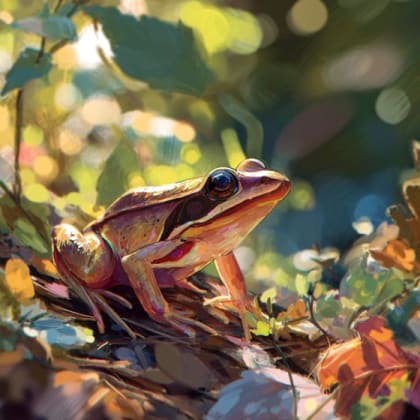





Wood Frog

The Onion Portage Archeological District offers an unparalleled journey into thousands of years of human history in the Alaskan Arctic.
The Onion Portage Archeological District offers an unparalleled journey into thousands of years of human history in the Alaskan Arctic. This deeply stratified site, nestled within the vast wilderness of Kobuk Valley National Park, is a globally significant window into the continuous occupation and cultural evolution of Arctic peoples. Its rich layers tell stories spanning back nearly 10,000 years, making it a cornerstone for understanding the region's ancient past.
At the heart of Onion Portage's allure are the remarkable archaeological layers, which reveal nine distinct complexes of human activity dating from approximately 6500 BC to AD 1700. Visitors can appreciate the historical significance of these deep stratifications, which have yielded thousands of artifacts, including lithic tools, bone tools, and pottery, vital for charting Arctic cultural chronology. The site is also home to the preserved Giddings Cabin, a poignant reminder of the pioneering archaeologist J. Louis Giddings, whose work brought this incredible site to global attention. Beyond its archaeological treasures, the district is intrinsically linked to the monumental migration of the Western Arctic Caribou Herd across the Kobuk River, a spectacle that has sustained human life here for millennia and continues to define the landscape.
A visit to Onion Portage offers more than just a historical excursion; it's an immersive wilderness adventure that connects you to an enduring cultural landscape. It provides a unique opportunity to witness where ancient traditions, such as caribou hunting, are still practiced by local Inupiat communities, demonstrating an unbroken link to the past. The rugged beauty of the Kobuk River, the vibrant wild onions (Paatitaaq) that give the area its name, and the chance to observe the spectacular caribou migration make this a profoundly memorable and educational destination for those seeking to understand the deep history and living culture of the Arctic. Eager to name that creature? Identify any animal you find during your visit using the Snappit app.
The Onion Portage Archeological District's historical significance began to unfold in 1940 with its discovery by pioneering Arctic archaeologist J. Louis Giddings during his initial exploration of the Kobuk River. While early excavations in 1941 revealed some house pits, the full potential of the site remained largely unknown until Giddings returned in 1961. It was during this revisit that he uncovered the site's extraordinary stratified nature, with numerous layers of deposits representing thousands of years of human occupation. Giddings led a major excavation in 1964, the final year of his life, meticulously documenting the site's deep history and seeking evidence of older cultures. His work at Onion Portage proved instrumental in assembling a comprehensive chronology of Arctic cultures, showcasing continuous human presence spanning 8,000 to 10,000 years. In recognition of its immense historical and cultural value, the district was added to the National Register of Historic Places in 1972 and subsequently designated a National Historic Landmark District in 1978.
Visitors can explore the archaeological context of the site, learn about the history of Arctic cultures, and witness the ongoing subsistence activities. Boating or floating the Kobuk River, hiking and backpacking (though no established trails exist), and wildlife viewing (including caribou, wolves, and bears) are popular activities. Scenic flights offer a unique perspective of the vast landscape.
Summer (May-mid-September): Expect daytime temperatures between 60-80°F, long days, and abundant wildflowers. This is the best time for floating the river, hiking, and general outdoor activities. Caribou migration is prominent in late August.
Winter (November-March): Characterized by snow, frigid temperatures, and the potential for Northern Lights viewing. Winter access requires specialized gear, preparation, and advanced cold weather survival skills.
Onion Portage is located in a remote wilderness area with no roads or established trails, making it largely inaccessible for those with mobility challenges. Access typically involves air travel and potentially watercraft or overland treks.
The primary highlight is the archaeological significance of the stratified layers, which represent millennia of human habitation. Other key points of interest include the preserved Giddings Cabin, the culturally significant caribou river crossing, and the natural beauty of the Kobuk River and its surrounding wilderness. Nearby attractions within Kobuk Valley National Park, such as the Great Kobuk Sand Dunes and the Baird Mountains, are also notable.
Each card links to a full Explore page with photos, traits, and fun facts.
Start with the big picture, then zoom in to explore individual wildlife observations around this place.
Plan transportation meticulously
Given the extreme remoteness, coordinate all flights and air taxi services well in advance. Consider arranging a guided trip through an authorized outfitter.
Prepare for wilderness conditions
There are no visitor facilities, established trails, or services. Be self-sufficient with all necessary gear, food, water purification, and emergency supplies.
Respect cultural heritage
Onion Portage is a sacred site for the Inupiat people. Do not disturb artifacts or any cultural features, and always practice Leave No Trace principles.
Be wildlife aware
The area is home to bears and other large wildlife. Carry bear spray, know how to use it, and store food properly to avoid encounters.
Dress in layers and be prepared for variable weather: Even in summer, Arctic weather can change rapidly. Waterproof and insulated clothing is essential.
Consider combining your visit with other Kobuk Valley attractions: The nearby Great Kobuk Sand Dunes offer a striking contrast to the riverine environment and are often visited as part of a broader park exploration.
Aug 15, 2022
Jun 19, 2021
Jun 19, 2021
Jun 19, 2021
Jun 19, 2021

Maryland, US
You might spot White-Tailed Deer and Eastern Gray Squirrel.
View guide →
.jpg)
District of Columbia, US
You might spot Eastern Gray Squirrel, Duck, and House Sparrow.
View guide →

Illinois, US
You might spot American Robin, Canada Goose, and House Sparrow.
View guide →

Virginia, US
You might spot Spotted Lanternfly and Northern Cardinal.
View guide →
Take the discovery with you
Identify the wildlife you spot, learn as you go, and keep a collection of the adventure.