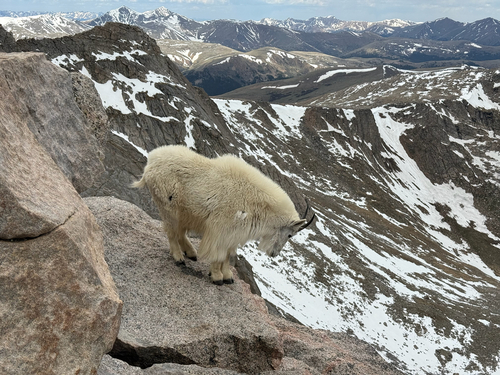





Mountain Goat

Summit Lake Park offers a breathtaking alpine escape at an astonishing altitude.
Summit Lake Park offers a breathtaking alpine escape at an astonishing altitude. This unique park, part of the Denver Mountain Parks system, is recognized as the highest city park in the United States and the first National Natural Landmark in Colorado. Nestled at 12,830 feet above sea level within a glacial cirque below Mount Blue Sky (formerly Mount Evans), it provides unparalleled access to a fragile and captivating alpine tundra environment. The area is a living testament to glacial forces, featuring a tarn (Summit Lake itself), extensive permafrost, and a rugged, dramatic landscape shaped by ancient ice.
The park is renowned for its exceptional alpine botanical features, boasting a variety of rare plants, some of which are found nowhere else outside the Arctic Circle. During its brief summer season, the tundra explodes with vibrant wildflowers, offering a stunning display against the stark mountain backdrop. Beyond its botanical treasures, Summit Lake Park is a prime location for wildlife viewing, offering opportunities to observe iconic high-altitude species in their natural habitat.
Visiting Summit Lake Park is an immersive experience into a rare and delicate ecosystem, providing spectacular panoramic views of the Continental Divide and the surrounding wilderness. It's a place where the grandeur of the Rocky Mountains is on full display, offering both serenity and adventure for those seeking to connect with nature's raw beauty and unique high-altitude life. The combination of its geological significance, rare flora, and abundant wildlife makes it an unforgettable destination. Don't forget to bring the Snappit nature identification app along to scan local species.
The land comprising Summit Lake Park was acquired by the city of Denver in 1924, becoming a vital part of the Denver Mountain Parks system designed to preserve natural areas for public enjoyment. In 1965, the park achieved significant recognition when it was designated as a National Natural Landmark, making it the first such landmark in Colorado. This designation underscored its national importance due to its outstanding natural features, particularly its pristine alpine tundra ecosystem. During the 1930s, the Civilian Conservation Corps (CCC) contributed to the park's infrastructure, constructing a rustic stone shelter house near the lake. This shelter, designed by Denver architect J.J.B. Benedict, stands as a historical element within the park. The development of the Mount Blue Sky Road (formerly Mount Evans Road) also played a crucial role in making the park accessible, with the road to the summit completed in 1930.
Hiking: Enjoy easy walks around Summit Lake or embark on more strenuous trails like the Chicago Lakes Trail or the Mount Blue Sky Ridge Trail.
* **Photography: ** Capture the dramatic alpine landscapes, unique flora, and wildlife.
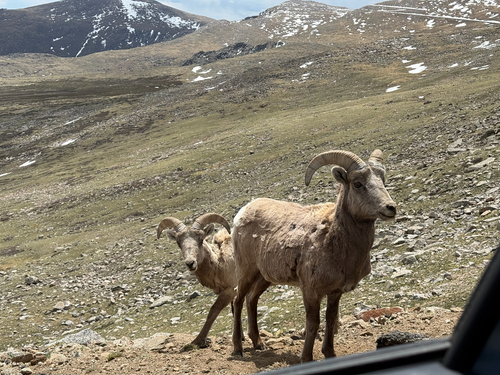
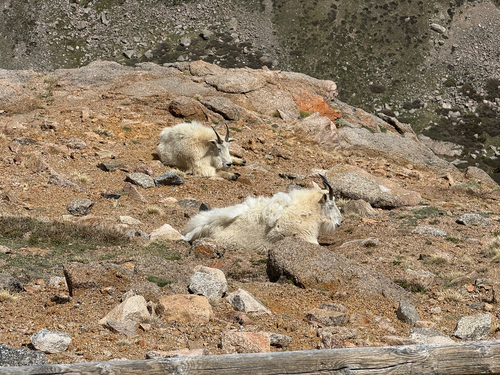
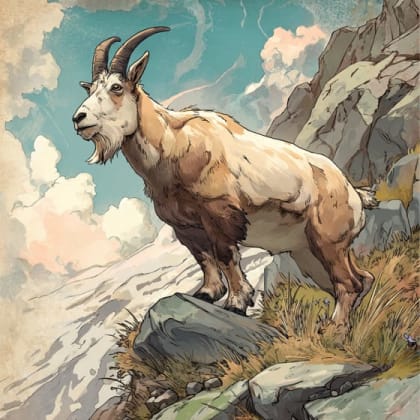
* **Wildlife Watching: ** Observe high-altitude animals, especially mountain goats and bighorn sheep, often seen near the road and trails.
* **Scenic Views: ** Marvel at panoramic vistas of the Continental Divide and distant peaks.
* **Interpretive Areas: ** Learn about the fragile alpine ecosystem and its inhabitants.
Weather: Conditions can change rapidly, with intense sunlight, cold temperatures, strong winds, and sudden snow, hail, or rain possible even in summer.
Road Closures: The Mount Blue Sky Road (CO 5) is typically open from Memorial Day to early October, but can close any day due to winter-like conditions.
Wildflower Bloom: Peaks in July and August.
Animal Activity: Wildlife is often active during the summer months.
The park is accessible via the paved Mount Blue Sky Road. There is a parking area and restrooms. While some trails are short and relatively flat around the lake, visitors should be aware of the high altitude and potentially uneven terrain. Visitors are asked to stay on designated trails to protect the fragile tundra.
The glacial tarn itself, the headwaters of Bear Creek, offers stunning reflections and a serene focal point.
Experience one of the best examples of Arctic tundra in the contiguous United States, complete with rare and unique alpine flora.
A short, accessible trail leads to an impressive viewpoint overlooking the Chicago Lakes Basin.
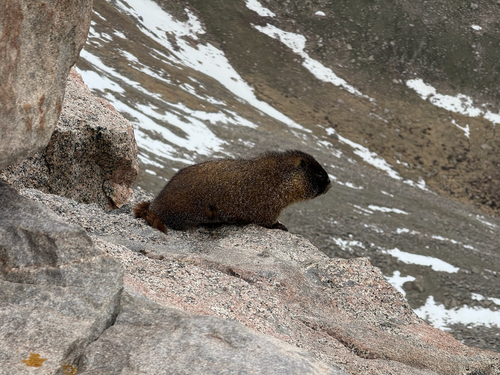
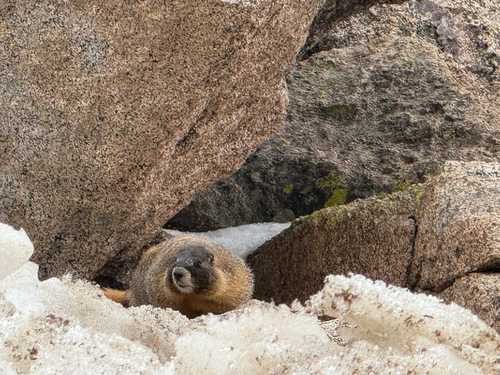
Excellent opportunities to see mountain goats, bighorn sheep, marmots, and pikas.
Each card links to a full Explore page with photos, traits, and fun facts.
Start with the big picture, then zoom in to explore individual wildlife observations around this place.
Check Road Conditions and Make Reservations: Always confirm the opening status of the Mount Blue Sky Road (CO 5) and reserve your timed entry ticket via recreation.gov well in advance, as these are often mandatory and sell out.
Dress in Layers
High-altitude weather is unpredictable. Be prepared for sun, wind, cold, rain, or even snow, regardless of the forecast at lower elevations.
Acclimatize to Altitude
Summit Lake is at nearly 13,000 feet. Take it easy, stay hydrated, and be aware of symptoms of altitude sickness.
Stay on Trails
The alpine tundra is extremely fragile. Walking off-trail can cause irreversible damage to rare plants and delicate ecosystems.
Maintain Distance from Wildlife
While wildlife is common, observe animals from a respectful distance. Do not feed them or approach them, as they are wild and can be dangerous.
Bring Water, Snacks, and Sun Protection
Services are limited, and the high altitude and intense sun require extra hydration and protection.
Jun 6, 2026
Photo attribution
(c) Jared Lincenberg, some rights reserved (CC BY)
License: CC BY 4.0 ↗
Image may be shown cropped inside the card frame.
Jun 6, 2026
Photo attribution
(c) Jared Lincenberg, some rights reserved (CC BY)
License: CC BY 4.0 ↗
Image may be shown cropped inside the card frame.
Jun 6, 2026
Photo attribution
(c) Jared Lincenberg, some rights reserved (CC BY)
License: CC BY 4.0 ↗
Image may be shown cropped inside the card frame.
Jun 6, 2026
Photo attribution
(c) Jared Lincenberg, some rights reserved (CC BY)
License: CC BY 4.0 ↗
Image may be shown cropped inside the card frame.
Jun 6, 2026
Photo attribution
(c) Jared Lincenberg, some rights reserved (CC BY)
License: CC BY 4.0 ↗
Image may be shown cropped inside the card frame.

Maryland, US
You might spot White-Tailed Deer and Eastern Gray Squirrel.
View guide →
.jpg)
District of Columbia, US
You might spot Eastern Gray Squirrel, Duck, and House Sparrow.
View guide →

Illinois, US
You might spot American Robin, Canada Goose, and House Sparrow.
View guide →

Virginia, US
You might spot Spotted Lanternfly and Northern Cardinal.
View guide →
Take the discovery with you
Identify the wildlife you spot, learn as you go, and keep a collection of the adventure.