Snappit logo
Snappit
Get App
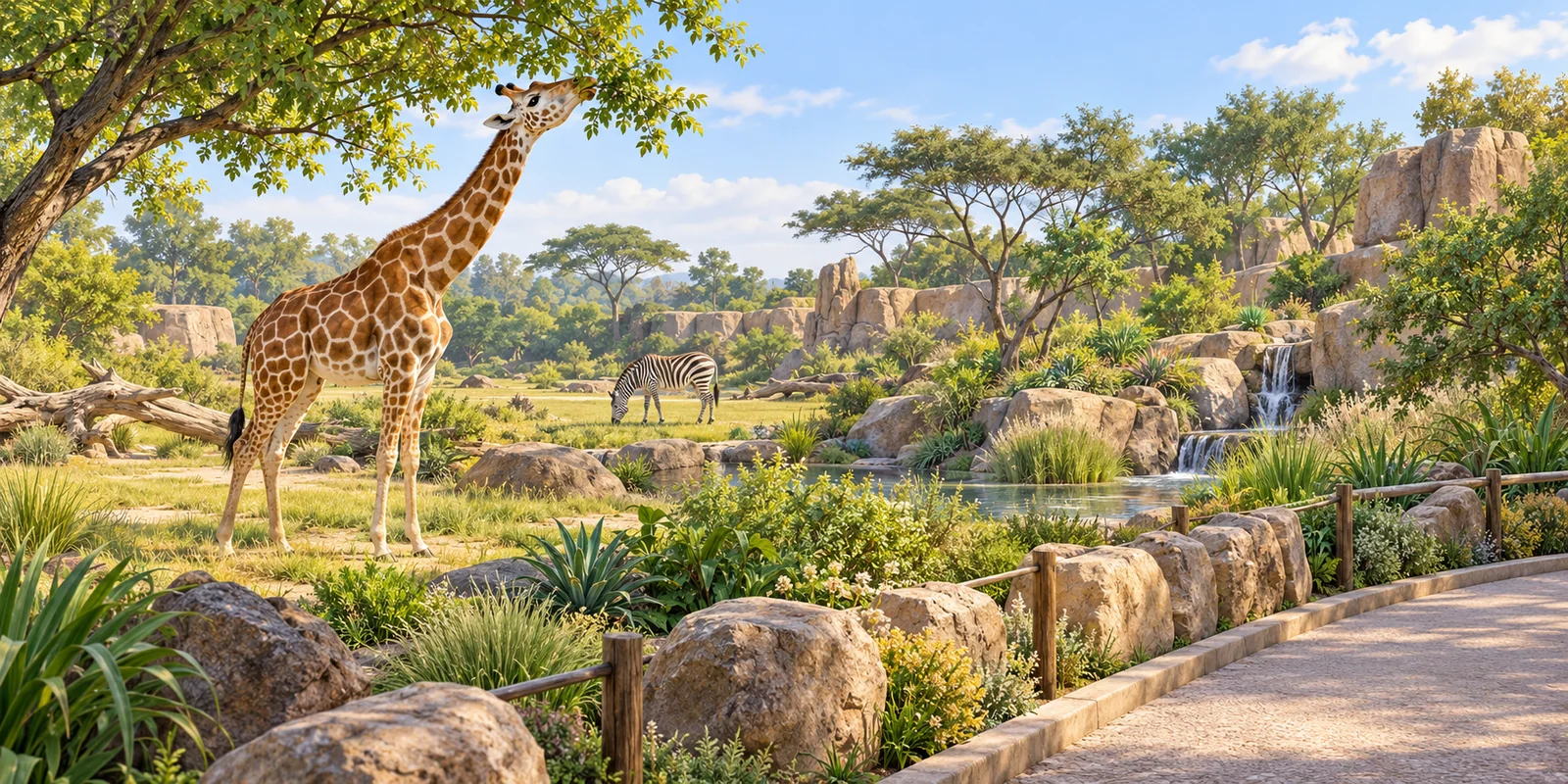
Generic illustration, not a photograph of this venueIllustration
ZooSachsen-Anhalt, Germany

Bergzoo Halle (Zoologischer Garten Halle)

Come to Bergzoo Halle for mountain animals, tropical houses and views across the city in one distinctly uphill zoo visit.

About

Come to Bergzoo Halle for mountain animals, tropical houses and views across the city in one distinctly uphill zoo visit. The nine-hectare grounds wrap around the Reilsberg, so even a compact-looking plan can fill a leisurely half-day. Start at the Reilstraße entrance, pick up the zoo plan and choose a few animals everyone wants to see before deciding how much climbing to take on.

The hill gives the mountain-animal enclosures much of their character. West Caucasian turs use natural porphyry rock, while red pandas can be tucked away above your head. Around the zoo, four habitat themes bring together mountain landscapes, grasslands, rainforests and the South American waters of Humboldts Küste. Penguins, flamingos and pelicans make the waterside exhibits worth a patient stop; the indoor houses reward a slower search among branches, leaves and pools.

There is plenty here for children who like doing as well as looking. Try the climbing spider beside the squirrel-monkey house, the play ship or the climbing rock near the Bergterrassen. The Reilsalm adds an Alpine farm setting with domestic sheep and picnic tables. All these exhibit animals live in human care, including the farm breeds. Leave room for a rest and a second look at a favourite animal rather than turning the hill into a race. Don't forget to bring the Snappit nature identification app along to scan local species.

The zoo opened on 23 May 1901. Its early use of the Reilsberg's natural rock is still visible at the tur enclosure. The big-cat house dates from 1926 and reopened after restoration in 2003. More recent additions include the Alpine-style Reilsalm, opened in 2022. These different periods sit alongside one another as you explore the hill.

What to do here

Begin with the squirrel-monkey house, where a glass visitor tunnel lets you look up at animals moving overhead, or head for the penguins and other waterbirds. For a longer visit, add the mountain enclosures and Bergterrassen, using the plan to choose between slopes and steps. Mix an indoor stop at the crocodile and giant-otter house or rainforest house with a play break. The red-panda training and keeper feedings can give the day a focal point; check the day's notices rather than trying to fit in every session.

Seasonal info

In warm weather, take regular rests on the climb and carry drinking water. Wet leaves, rain and winter ice call for extra care on downhill paths. Construction areas are marked on the zoo plan, including the former elephant area. Halle's elephant family moved to Tierpark Berlin in June 2026, so do not plan this visit around elephants. Follow current diversions and check notices before setting off.

Accessibility

This is a hillside outing with sustained uphill and downhill walking and some steps. The main entrance has level access through the shop and a wheelchair/pushchair ramp; the adjoining car park has a lift. Inside, the plan marks stair sections, inaccessible points and alternative ways for wheelchairs and pushchairs. Those alternatives still involve the hill. Call 0345 5203-300 to discuss gradients, the exhibits you want to reach, equipment hire and any assistance you need. Pre-bookable shuttle tours may help, but confirm boarding and wheelchair arrangements individually.

Don't miss

1

Mountain animals on the Reilsberg

Look for red pandas, turs and golden takins among the hillside enclosures.

2

Humboldts Küste

Spend time with Humboldt penguins, flamingos and pelicans, then watch the fur seal through the underwater window.

3

Tropical houses

Look above the squirrel-monkey tunnel and pause at the giant-otter and rainforest exhibits.

4

Play with a view

Combine the climbing areas and Reilsalm with a break at the Bergterrassen and, if suitable, the lookout tower.

Walks and routes

A half-day with children

Choose a waterside favourite and one tropical house before committing to the upper hill. Add the mountain animals that interest your family, then take a food or play break at the Bergterrassen or a picnic pause at the Reilsalm. Finish with a favourite stop you want to see again. Use the day's map and access advice to choose your order.


Two hours with fewer climbs

Pick two or three priorities near the main entrance, such as the squirrel-monkey house and waterbirds, and leave room for one play or seated break. Ask staff which current paths best connect your choices with the least climbing. Save the upper mountain enclosures and tower for a visit when everyone has more energy.

Things to try

Watch three ways of moving

Ask each person to choose one movement to follow: a penguin swimming, a squirrel monkey climbing or a tur placing its feet on rock. Sketch the body shape afterwards and discuss which part of the animal did the most work.

Look inside a hive

At the Bienenhaus, use the viewing openings and learning displays to explore how honeybees live together. Keep clear of the bees' flight paths and leave the hives and equipment untouched.

Spend longer looking indoors

In the rainforest house, vary your search between the pygmy-hippo area, smaller terrariums and nocturnal exhibits. The big-cat house also has aardvarks and smaller animals. Bring waterproofs for the outdoor connections and check house closing times before saving an indoor favourite until last.

Wildlife and habitats

Look up into the trees before searching the ground. Follow the tail and body outline among the branches, then see whether you can find the cranes or tufted deer sharing the enclosure.

Pause by the aviary furnishings and watch how a bird investigates them with its beak and feet. The zoo has expanded the keas into two aviaries; lively calling alone is not a reason to hurry past.

Enter quietly when the walk-through area is open. Watch the ears and the way an animal checks its surroundings, keeping your distance so it can withdraw without being followed.

Watch the bill as a bird feeds in the water, then compare its posture with one standing on a single leg. The lagoon is a good place to slow down and notice small movements.

Look closely at the long bill and pouch beneath it, then watch how the bird folds its wings or preens. Enjoy the pond from the visitor side without trying to attract the birds with food.

Check both water and dry resting places, then wait quietly. If an otter swims into view, follow its whole movement rather than chasing it from window to window; listen for calls too.

Leave time for this smaller resident of the big-cat house. Look for the long ears, heavy claws and extended snout if the animal is visible; a resting aardvark deserves the same quiet as a sleeping cat.

Look up from inside the glass visitor tunnel and follow one monkey briefly through the climbing structure. This entry covers squirrel monkeys at genus level; no particular Saimiri species is specified here.

Halle calls its lions Barbary lions, within the northern-lion group. Watch posture, resting and movement from the public viewing area. This entry covers the species Panthera leo, rather than a separate subspecies record.

Look through the planting before assuming the tiger is absent. The stripes can break up its outline surprisingly well. The zoo identifies these as Sumatran tigers; this entry uses the broader tiger species.

Compare what different animals are doing at the same moment: digging, standing, walking or resting. Notice the entrances to their underground space without expecting every member of the group to be above ground.

Take time to find the resting birds and compare white and darker-patterned plumage. Keep the birds undisturbed; a still owl is an opportunity to study shape and feathers.

The animals listed here are captive zoo exhibits, not free-living wildlife records. The sheep at the Reilsalm and the goats, donkeys and other farm animals elsewhere in the zoo are domestic animals in human care. The squirrel-monkey entry covers the genus Saimiri; lion and tiger entries cover their parent species. Humboldt penguins, golden takins and Parma wallabies are additional animals to look for even though they have no linked entry in this guide.

Stories and discoveries

A reserve team of wallabies

The Parma wallabies introduced in September 2026 are males held as part of a coordinated European breeding programme. Keeping males available for future pairings helps a programme even when a particular zoo is not breeding the animals itself.

A familiar bird with a conservation role

Halle breeds Humboldt penguins within the European zoo programme and supports Sphenisco's work in Chile and Peru. Watching the colony is a good starting point for talking about protecting animals both in zoos and in their natural homes.

When to visit

Winter evenings: Magische Lichterwelten

The light exhibition Die letzten Paradiese is scheduled for 4 December 2026 to 27 February 2027, Wednesdays to Saturdays from 17:00 to 21:30, with no opening on 24 or 31 December. It has its own tickets and an outdoor circuit of more than two kilometres. Check the event page for changes and plan this separately from a daytime animal visit.

Getting there and practical advice

Make the breaks part of the day

The plan shows picnic spots as well as food outlets, and the Reilsalm has tables and benches. At the Bergterrassen, children can use the nearby climbing rock while an accompanying adult keeps watch. Toilet symbols include accessible facilities and baby-changing rooms; ask staff if you need details about a particular toilet.

Discuss a shuttle before booking

The 90-minute Reilsberg-Safari is a guided electric-shuttle tour with animal stops and up to five guests per vehicle. It requires a booking and costs extra. Tell the zoo about any wheelchair, transfer or support needs before reserving; the published offer does not specify how individual mobility equipment is carried.

Sources and useful links

Wildlife you might spot

12

Each card links to a full Explore page with photos, traits, and fun facts.

Snap map for this place

Start with the big picture, then zoom in to explore individual wildlife observations around this place.

Loading map…

Good to know before you go

Use the main entrance

Head to Reilstraße 57, 06114 Halle (Saale). Fasanenstraße 5a is the administration address. Follow the current entrance signs during building work.

Take the tram

Lines 3 and 12 serve Zoo, beside the main entrance. Check HAVAG or INSA for your date and starting point. The rail stop Halle Zoo is a separate stop with an onward walk.

Check vehicle height

The adjoining parking garage has a 1.90 m clearance limit. Disabled spaces and lift access are available. Higher vehicles need a different parking plan.

Pack for the slopes

Wear shoes with grip and keep loads light. Pushchairs and pull-along wagons are available to hire near the entrance, subject to availability; park them securely whenever you stop on a slope.

Choose one keeper session

Use the current feeding board to pick a highlight. Big-cat and chimpanzee feeding times vary. Keep the viewing space clear and let keepers decide how each session runs.

Keep picnic food to yourselves

Only use zoo-dispensed feed where signs allow it for waterfowl or petting animals. In walk-through areas, stay on the visitor path and let animals move away.

Leave wheels at home

Children's scooters, balance bikes and similar ride-ons are not allowed. Children under 12 need an adult, and tickets stop being valid once you leave the zoo.

Take photographs quietly

Avoid flash and do not tap glass or call to animals. Private photography is welcome; commercial use or passing images to third parties for their use requires the zoo management's express permission.

Frequently asked questions

Yes, with a dog ticket and a short lead. The zoo also has a dog activity trail of nearly one kilometre with 12 stations. Follow local signs and ask about access restrictions in animal houses and walk-through enclosures.
The Bergterrassen has food service, and the plan marks further snack stops, picnic places, accessible toilets and baby-changing facilities. Catering hours vary with the weather and visitor numbers. Bring a snack for children rather than relying on every outlet being open.
The tropical houses and big-cat house give you indoor stops, but you still walk outdoors between them. For showers, choose fewer areas and linger indoors; in persistent rain, the hill and outdoor play spaces make a shorter visit more comfortable.
The elephant family is now in Berlin, and parts of the grounds are being rebuilt. Parma wallabies have joined the collection, with animals in the wombat enclosure and the swift-parrot aviary. Use the current map and signs instead of relying on an older visit.

Recent snaps at this place

Recent snaps will appear here as new observations are added.

View all ›

Take the discovery with you

Exploring Bergzoo Halle (Zoologischer Garten Halle)?

Identify the wildlife you spot, learn as you go, and keep a collection of the adventure.

  1. 1Spot it
  2. 2Snap it
  3. 3Keep the discovery