





African Elephant
Loxodonta africana
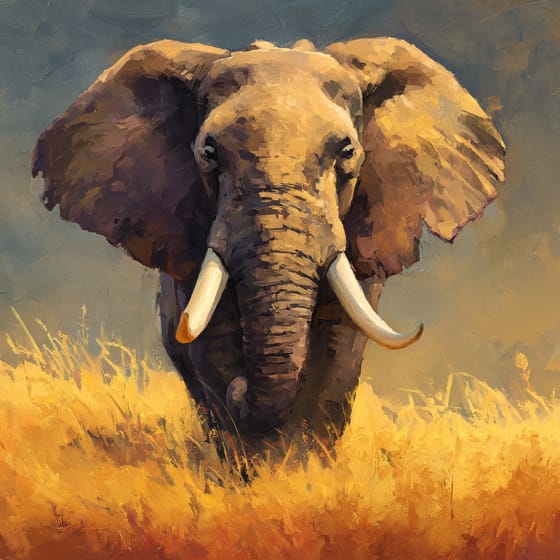
The African elephant is the largest land animal on Earth! They are known for their big ears and long trunks, which they use to eat, drink, and play.
Habitat: Grasslands and savannas
The African Elephant is the largest land animal, with wrinkled grey skin and enormous, fan-shaped ears often compared to the continent of Africa. They have a long, powerful trunk and curved ivory tusks, distinguishing them from their smaller-eared Asian cousins.
Category
MammalsRarity
Common
Danger
3/5 · Moderate
Snaps
Be the first to snap!
An elephant can hear water from up to 12 miles away using their trunk and feet!
Baby elephants often suck their trunks for comfort, just like human babies use pacifiers!
Elephants create their own sunscreen by spraying themselves with dust and mud!
Their tusks are actually elongated incisor teeth that never stop growing!
African Elephants have huge ears filled with blood vessels that help them cool down their massive bodies in hot climates.
African Elephants have incredible long-term memory, allowing them to remember water sources and migration routes for decades.
African Elephants can detect vibrations through their feet from distant elephant calls or even approaching storms.
These gentle giants munch on plants, using their trunks to grab leaves, grasses, and bark!
Acacia tortilis
Elephants browse its leaves and pods.

Adansonia digitata
Elephants strip bark and eat fruit, dispersing seeds.
Panthera leo
Occasionally hunts young or vulnerable elephant calves.
Furry describes animals possessing a dense covering of soft hair or fur.
Social animals live in organized groups, cooperating for survival benefits such as foraging, defense, and raising offspring.
This trait characterizes organisms whose diet consists entirely or primarily of plant material.
Characterized by having long, pointed, projecting teeth, usually in pairs.
This habitat trait denotes species native to savannas, which are grasslands with scattered trees, typically found in tropical or subtropical regions with distinct wet and dry seasons.

Giant describes organisms or objects of significantly larger size than average for their species or type.

Protected status signifies a species or area is safeguarded by legal measures and conservation efforts to prevent harm or loss.

Threatened status denotes a species likely to become endangered in the foreseeable future without effective conservation interventions.
Danger
3/5 · Moderate
Always admire elephants from a safe distance. They are gentle giants, but they can be very big and strong.
The easiest way to identify African Elephant is to use the Snappit nature identifier app.
550-750 cm
2200-6000 kg
60-70 years
40 km/h
These gentle giants munch on plants, using their trunks to grab leaves, grasses, and bark!
Grasslands and savannas
Foraging
Zoom in to split clusters and explore where this object has been snapped.
Recent snaps will appear here as new observations are added.
Alabama, US
You might spot African Elephant and Reticulated Giraffe.
View guide →

Texas, US
You might spot African Elephant, Reticulated Giraffe, and African Lion.
View guide →
England, UK
You might spot African Elephant, Bornean Orangutan, and Tiger.
View guide →
Tennessee, US
You might spot Grizzly Bear, Polar Bear, and African Elephant.
View guide →

Wisconsin, US
You might spot African Elephant, Humboldt Penguin, and Gorilla.
View guide →
Rhode Island, US
You might spot African Elephant, Giraffes, and Snow Leopard.
View guide →
Take the discovery with you
Snap it with Snappit to identify it, learn what makes it special, and add the discovery to your collection.




.jpg&width=800)



.JPG&width=800)


.jpg&width=800)
