





American Carpenter Ant
Camponotus americanus
The American Carpenter Ant is a large black ant that loves to build its home in wood. They are very strong and can carry food many times their weight!
Habitat: Forests
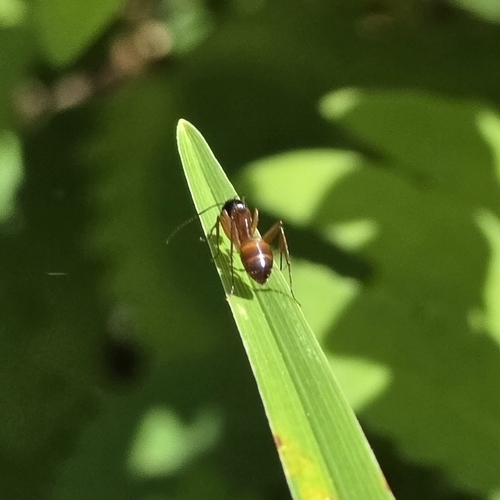
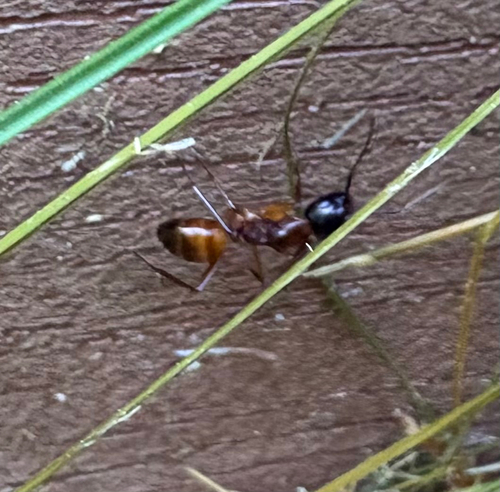
The American Carpenter Ant is a relatively large ant, typically dark reddish-brown to black, with a distinctly rounded thorax and a single node between its thorax and abdomen. Its body often appears shiny, setting it apart from smaller, more uniform black ants.
Category
InsectsRarity
Common
Danger
1/5 · Very low
Snaps
8
A queen can live for over 15 years, creating a huge colony!
Carpenter ants communicate by touching antennae, sharing important info!
Their powerful jaws can easily slice through tough insect exoskeletons!
They don't eat wood, but clear it out, spitting wood shavings outside their nest!
American Carpenter Ant can carve intricate tunnels within wood because of their strong mandibles that help them create nests and shelter.
American Carpenter Ant has complex pheromones that help them lay scent trails to guide nestmates to food or warn of danger.
American Carpenter Ant can spray formic acid for defense because they have a special gland that helps them deter small predators.
These ants enjoy sweet honeydew, plant nectar, and sometimes tiny insects for protein.
Aphis gossypii
Ants collect sweet honeydew produced by aphids.
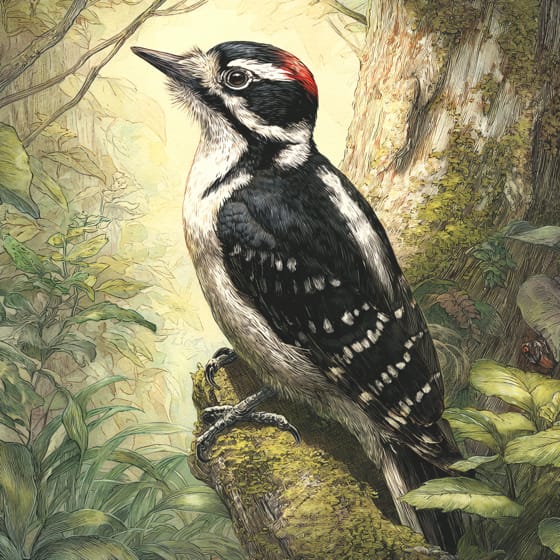
Picoides villosus
Woodpeckers drill into wood to find and eat carpenter ants.
Malacosoma americanum
Ants prey on caterpillars, especially when young or vulnerable.
Social animals live in organized groups, cooperating for survival benefits such as foraging, defense, and raising offspring.
This trait identifies organisms whose diet includes both plant and animal matter.
Describes organisms that break down dead organic material, recycling nutrients back into the ecosystem.
Forest habitats are terrestrial environments dominated by dense tree cover, supporting a high diversity of plant and animal life.

Describes a species whose presence and role have a disproportionately large effect on its environment.

Giant describes organisms or objects of significantly larger size than average for their species or type.
No aliases listed yet.
Danger
1/5 · Very low
Don't disturb ant nests; they are busy working and protecting their home.
The easiest way to identify American Carpenter Ant is to use the Snappit nature identifier app.
6-12 mm
200-730 days
These ants enjoy sweet honeydew, plant nectar, and sometimes tiny insects for protein.
Forests
Foraging
6
50000
Zoom in to split clusters and explore where this object has been snapped.
Jun 18, 2026
Rockdale Common Housing DistrictPhoto attribution
(c) Betsy Lambert, some rights reserved (CC BY)
License: CC BY 4.0 ↗
Image may be shown cropped inside the card frame.
Jun 5, 2026
Mount Kisco Municipal ComplexPhoto attribution
(c) eml23, some rights reserved (CC BY)
License: CC BY 4.0 ↗
Image may be shown cropped inside the card frame.

Alabama, US
You might spot Elf Orpine, Canada Goose, and Leatherleaf Mahonia.
View guide →

Alabama, US
You might spot Elf Orpine, Canada Goose, and Great Blue Heron.
View guide →

Iowa, US
You might spot House Sparrow and Common Eastern Bumble Bee.
View guide →

Massachusetts, US
You might spot Common Eastern Bumble Bee, Bee, and Eastern Calligrapher.
View guide →
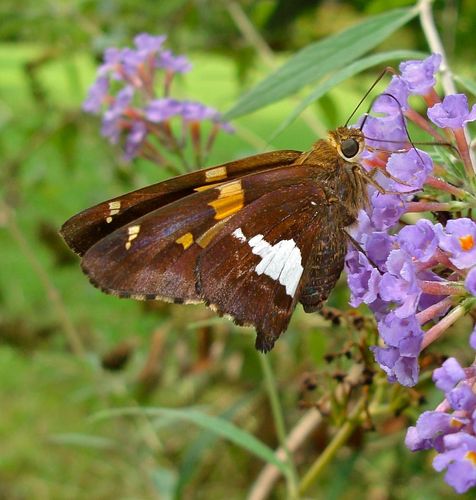
Iowa, US
You might spot Silver-Spotted Skipper, Question Mark, and Banded Pennant.
View guide →

Iowa, US
You might spot Bluegill, Canada Goose, and Carolina Mantis.
View guide →
Take the discovery with you
Snap it with Snappit to identify it, learn what makes it special, and add the discovery to your collection.









.jpg&width=800)


