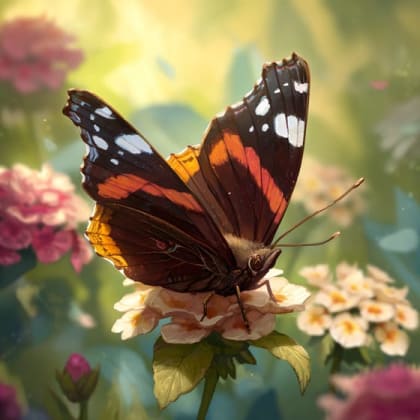





Admiral Butterfly
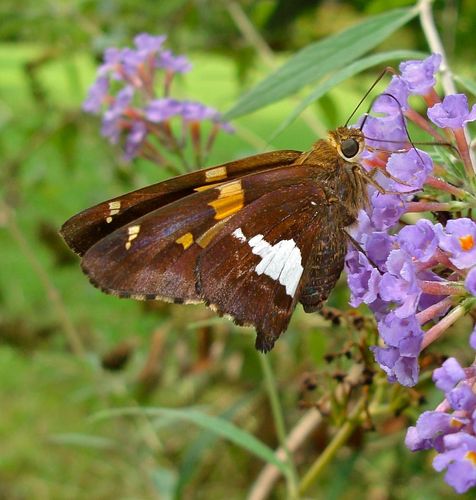
Shimek State Forest is a sprawling natural haven in southeast Iowa, offering diverse outdoor adventures.
Shimek State Forest is a sprawling natural haven in southeast Iowa, offering diverse outdoor adventures. This expansive forest covers over 9,000 acres, making it one of Iowa's largest continuous woodlands. Named after a pioneering Iowa naturalist, Dr. Bohumil Shimek, it stands as a testament to conservation and responsible forest management, providing a vital ecosystem for abundant wildlife and a rugged escape for visitors.
The forest boasts nearly 60 miles of trails winding through rugged hills and deep woodland, perfect for hiking, horseback riding, and mountain biking. Its varied landscape features predominant oak-hickory forests, bottomland hardwoods, and unique planted conifer stands, such as Eastern White Pine and Red Pine. Nature enthusiasts can explore four small lakes teeming with fish like bluegill, channel catfish, bass, and redear sunfish, while birdwatchers will find the Croton Unit particularly rewarding for its diverse avian species, including various warblers and tanagers.
Visiting Shimek State Forest offers a chance to immerse yourself in Iowa's natural beauty, observe a rich variety of wildlife, and participate in numerous recreational activities. Whether you're seeking a tranquil nature walk, an exhilarating trail ride, or a peaceful day of fishing, the forest provides a memorable outdoor experience. Its commitment to forest management and wildlife habitat makes it a special destination for those looking to connect with the wilderness and appreciate conservation efforts. Unlock an interactive field guide for this spot: get the Snappit app to identify nature on the go.
Shimek State Forest owes its existence to the vision of Dr. Bohumil Shimek, an Iowa naturalist and University of Iowa professor. During the 1930s, Shimek successfully advocated for the state to acquire vanishing forestland and abandoned farms in Lee and Van Buren Counties, which were depleted from extensive farming. Initially known as the "Lee and Van Buren State Forest," work began to reforest these areas, with the Civilian Conservation Corps (CCC) playing a crucial role in planting thousands of acres of hardwoods and conifers as demonstration projects. The forest's name was later changed to Farmington State Forest and, in 1950, it was officially named Shimek State Forest in honor of Dr. Shimek's significant contributions to conservation. Today, the forest continues to serve as an example of effective forest management, balancing timber production with wildlife habitat and recreational opportunities.
Hiking, horseback riding, mountain biking, fishing in four stocked lakes, hunting (during season), camping, picnicking, nature study, birdwatching, creek hikes (especially in summer), mushroom hunting, cross-country skiing, and limited snowmobiling.
Spring/Summer: Be prepared for ticks; long sleeves and insect repellent are recommended. Creek hikes offer a refreshing way to explore.
Fall: Experience vibrant fall colors, and hunting seasons begin.
Winter: Ideal for activities like cross-country skiing and ice fishing. Hiking in late fall or early spring can be less challenging due to thinner undergrowth.
Black Oak Lake in the Farmington Unit provides an accessible picnic area, fishing dock, and restrooms. Some trails are wide and easier to navigate, though many offer a more rugged experience.
Explore diverse landscapes on foot, horseback, or mountain bike.
Features an accessible picnic area, fishing dock, and restrooms, perfect for a relaxing outing.
A significant area for birdwatching, known for a variety of breeding season birds.
Dedicated trails and facilities for horse riders, including stalls for overnight stabling.
Each card links to a full Explore page with photos, traits, and fun facts.
Start with the big picture, then zoom in to explore individual wildlife observations around this place.
Prepare for rugged trails
Many trails are less developed, offering a more rustic experience, so wear appropriate footwear and be ready for varying conditions.
Bring insect repellent
Ticks are common, especially in spring and summer, so protect yourself with repellent and long clothing.
Check trail conditions
Equestrian trails in the Lick Creek Unit have specific "open," "wet," or "closed" statuses; verify before you go, especially after rain.
Make camping reservations
While some sites are first-come, first-served, many campgrounds are reservable, particularly the equestrian sites. Plan ahead to secure your spot.
Observe hunting regulations
The forest is a public hunting area; be aware of hunting seasons and safety guidelines if visiting during those times.
Explore by water
The lakes are stocked, and only electric trolling motors are allowed, making for a peaceful fishing experience.
Aug 3, 2025
Photo attribution
(c) -Rorey-, some rights reserved (CC BY)
License: CC BY 4.0 ↗
Image may be shown cropped inside the card frame.
Jul 9, 2025
Photo attribution
(c) -Rorey-, some rights reserved (CC BY)
License: CC BY 4.0 ↗
Image may be shown cropped inside the card frame.
Jul 9, 2025
Photo attribution
(c) -Rorey-, some rights reserved (CC BY)
License: CC BY 4.0 ↗
Image may be shown cropped inside the card frame.
May 16, 2026
May 16, 2026

Maryland, US
You might spot White-Tailed Deer and Eastern Gray Squirrel.
View guide →
.jpg)
District of Columbia, US
You might spot Eastern Gray Squirrel, Duck, and House Sparrow.
View guide →

Illinois, US
You might spot American Robin, Canada Goose, and House Sparrow.
View guide →

Virginia, US
You might spot Spotted Lanternfly and Northern Cardinal.
View guide →
Take the discovery with you
Identify the wildlife you spot, learn as you go, and keep a collection of the adventure.
















_(8-2-12)_san_rafael_grassland%2C_scc%2C_az_-01_(7701313806).jpg&width=800)

