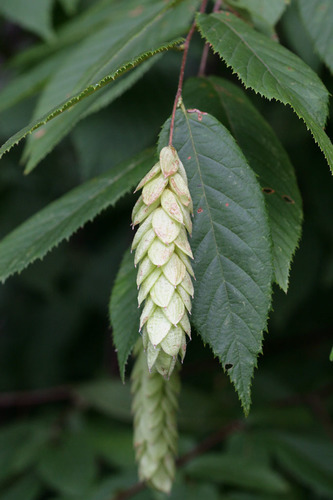


American Hophornbeam
ostrya virginiana
The American Hophornbeam, also widely known as ironwood, is a resilient understory tree native to the deciduous forests of eastern North America. Belonging to the birch family, Betulaceae, this slow-growing hardwood is celebrated for its remarkable durability and distinctive visual features. Unlike many towering canopy giants, the hophornbeam thrives in the shade, patiently growing beneath larger oaks and maples. Its common name derives from its fruit clusters, which bear a striking resemblance to hops, and its exceptionally tough wood, which was historically used to craft tool handles, sleigh runners, and mallets. This tree plays a vital role in its forest community, providing shelter and nutrition for a variety of woodland wildlife, including songbirds, grouse, and small mammals.
Habitat: Found in the understory of moist, well-drained deciduous or mixed forests, often growing on rocky slopes and ridges.
The American Hophornbeam is a small to medium-sized deciduous tree, typically reaching heights of 5 to 15 meters, characterized by an upright-oval crown and slender, spreading branches. Its most distinctive feature is its mature bark, which is grayish-brown and breaks into narrow, vertical shreddy strips that peel away at the ends, giving it a rough, paper-like texture. In spring and summer, it displays alternate, simple, ovate leaves with doubly serrate margins, which turn a lovely clear yellow in autumn. The tree's fruits are small, nutlet-bearing sacs clustered in drooping, hop-like catkins that transition from pale green to papery brown as they mature.
Category
PlantsRarity
Common
Danger
1/5 · Very low
Snaps
2
Because of its extreme hardness, early pioneers utilized its wood to manufacture durable objects like levers, mill cogs, and tool handles.
Its wood is so heavy and dense that it will sink in water rather than float when freshly cut.
The common name 'Hophornbeam' refers to the seed pods, which look almost identical to the hops used in brewing beer.
Unlike many other deciduous trees, some young hophornbeams retain their dried, papery leaves throughout the winter, a phenomenon known as marcescence.
Possesses incredibly dense and heavy heartwood that resists decay, mechanical damage, and severe weather, earning it the common moniker 'ironwood'.
An exceptional understory survivor, it can photosynthesize efficiently in low-light conditions beneath dense forest canopies.
Its shreddy, exfoliating bark acts as a physical barrier that discourages climbing herbivores and makes it difficult for wood-boring pests to establish.
As a photoautotrophic plant, it produces its own energy through photosynthesis, utilizing sunlight, carbon dioxide, water, and soil nutrients.

Bonasa umbellus
Feeds heavily on the winter buds and catkins as a key cold-season food source.
Callophrys henrici
Serves as a larval host plant for the caterpillars of this butterfly.
.jpg&width=800)
Tamias striatus
Forages for the fallen nutlets and seeds produced in the hop-like husks.
No trait badges are assigned for this object yet.
No aliases listed yet.
Collections for this object will appear here as more themes are added.
Danger
1/5 · Very low
No special safety notes yet.
The easiest way to identify American Hophornbeam is to use the Snappit nature identifier app.
500-1500 cm
50-150 years
As a photoautotrophic plant, it produces its own energy through photosynthesis, utilizing sunlight, carbon dioxide, water, and soil nutrients.
Found in the understory of moist, well-drained deciduous or mixed forests, often growing on rocky slopes and ridges.
Zoom in to split clusters and explore where this object has been snapped.

Massachusetts, US
You might spot Hemlock Woolly Adelgid, Eastern Newt, and Red Trillium.
View guide →

Illinois, US
You might spot American Robin, Monarch, and Duck.
View guide →

Massachusetts, US
You might spot Red Trillium, Round-Leaved Sundew, and Pitch Pine.
View guide →
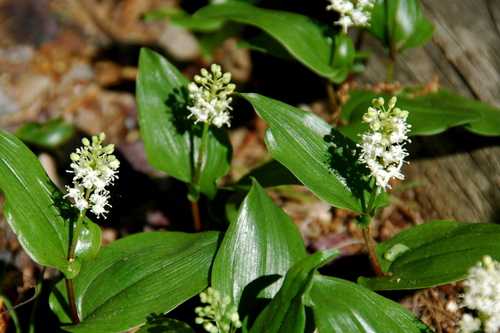
Connecticut, US
You might spot Canada Mayflower and Eastern White Pine.
View guide →

Michigan, US
You might spot Whooping Crane, Wild Teasel, and Redside Dace.
View guide →

Louisiana, US
You might spot Sharp-Lobed Hepatica and Purple-Flowered Raspberry.
View guide →
Take the discovery with you
Snap it with Snappit to identify it, learn what makes it special, and add the discovery to your collection.











.jpg&width=800)



_001.jpg&width=800)




