
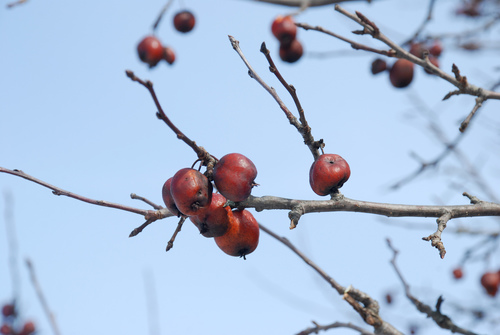


Apples And Crabapples
malus
The genus Malus, comprising apples and crabapples, consists of small to medium-sized deciduous trees celebrated globally for their beautiful spring blossoms and nutrient-rich fruit. Originating in the temperate regions of Europe, Asia, and North America, these trees have played an instrumental role in human history, agriculture, and folklore. While sweet domestic apples are highly prized for fresh eating, wild crabapples—defined by their smaller, tarter fruit—serve as vital ecological keystones, providing key forage for native wildlife and essential pollen for domestic apple varieties.
Habitat: Found in temperate forests, woodlands, agricultural edges, and suburban gardens across the Northern Hemisphere.
Malus species typically feature rounded, spreading crowns and grayish-brown, scaly bark. In the spring, they are easily recognized by their spectacular clusters of five-petaled flowers, which range from pure white to vibrant pink. Their alternate, oval leaves have serrated margins and slightly fuzzy undersides. The fruit, or pome, varies widely in size from tiny, pea-sized wild crabapples to large, cultivated varieties, showing colors of yellow, green, or deep red.
Category
PlantsRarity
Common
Danger
1/5 · Very low
Snaps
Be the first to snap!
Apples belong to the rose family (Rosaceae), making them botanical relatives of roses, plums, and peaches.
Because air pockets make up about 25% of their total volume, fresh apples will easily float in water.
There are over 7,500 known cultivars of domestic apples, meaning it would take more than 20 years to try them all if you ate a different one every day.
Most Malus trees cannot self-pollinate, requiring pollen from a genetically distinct individual of the same genus to produce fruit, which ensures high genetic diversity.
They undergo cold acclimation to withstand sub-zero winter temperatures, using a specific period of winter chill to break bud dormancy in spring.
Their seeds contain amygdalin, a chemical compound that releases toxic hydrogen cyanide when chewed, deterring seed predators.
As photosynthetic plants, Malus species synthesize their own chemical energy from sunlight, carbon dioxide, and water.
Apis mellifera
Honey bees act as primary pollinators, transferring pollen between flowers while collecting sweet nectar.

Cydia pomonella
The larvae of the codling moth feed inside the apple fruit, causing significant damage to the crop.

Gymnosporangium juniperi-virginianae
This fungal pathogen cycles between eastern red cedars and apple trees, causing rust-colored spots on leaves and fruit.

Odocoileus virginianus
White-tailed deer feed heavily on fallen crabapples and apples during the autumn months, aiding in seed dispersal.
No trait badges are assigned for this object yet.
No aliases listed yet.
Collections for this object will appear here as more themes are added.
Danger
1/5 · Very low
No special safety notes yet.
Start with the whole plant, then compare leaf arrangement, leaf edges, stems and any flowers or fruit. Opposite leaves grow in pairs; alternate leaves come one at a time along the stem. These details tell you far more together than a single green leaf does. Plant Identifier: upload a photo and compare the visible details.
200-1500 cm
30-150 years
As photosynthetic plants, Malus species synthesize their own chemical energy from sunlight, carbon dioxide, and water.
Found in temperate forests, woodlands, agricultural edges, and suburban gardens across the Northern Hemisphere.
Zoom in to split clusters and explore where this object has been snapped.
Recent snaps will appear here as new observations are added.

Pennsylvania, US
You might spot Eastern Skunk Cabbage and American Hornbeam.
View guide →
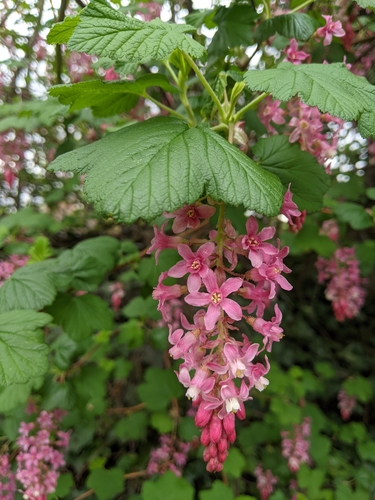
Kansas, US
You might spot Currants and Gooseberries, Red Maple, and Virginia Creeper.
View guide →
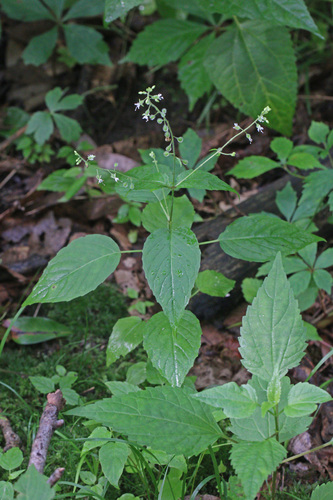
Virginia, US
You might spot Broadleaf Enchanter's Nightshade and White Avens.
View guide →
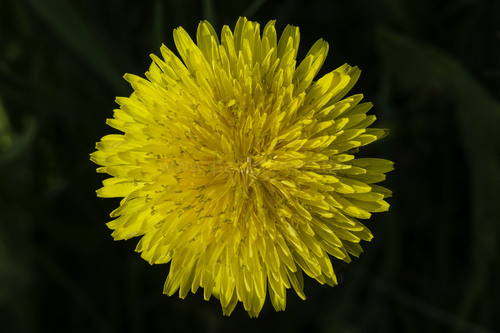
Colorado, US
You might spot Common Dandelion, Apples and Crabapples, and Dwarf Mallow.
View guide →
Take the discovery with you
Snap it with Snappit to identify it, learn what makes it special, and add the discovery to your collection.

















