Western Black Widow
latrodectus hesperus
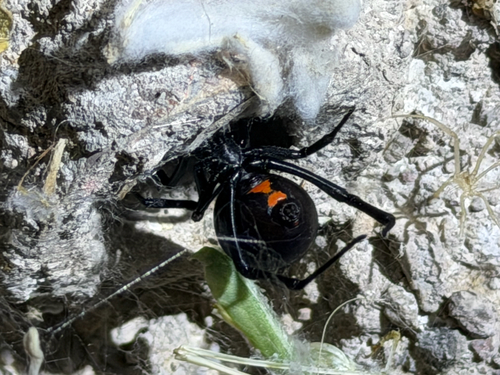
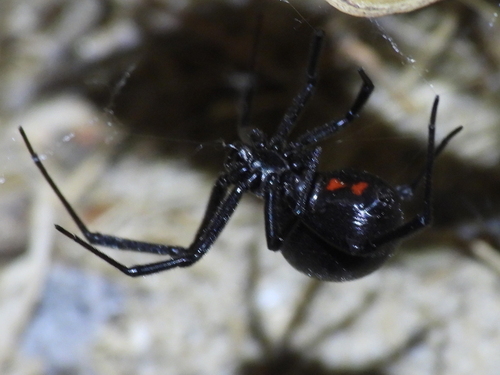
The Western Black Widow is a shiny black spider with a distinctive red hourglass shape on its belly. It is known for its web-making skills and can be found in many places, including gardens and forests!
Habitat: They typically live in dark, sheltered areas like woodpiles, under rocks, or inside buildings.
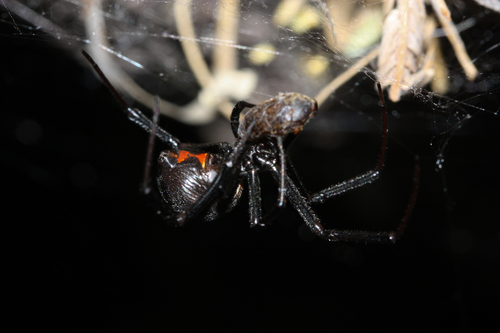
The Western Black Widow is a shiny, jet-black spider with a distinctive red hourglass marking on the underside of her rounded abdomen. This hourglass can sometimes look broken or X-shaped, differentiating her from similar species.
Category
InvertebrateRarity
Common
Danger
3/5 · Moderate
Snaps
29
Baby black widows are actually orange and white, looking nothing like their parents!
Despite their scary name, male Western Black Widows are tiny and don't have dangerous venom.
Their venom is incredibly potent, said to be 15 times stronger than a rattlesnake's!
They feel vibrations in their web to 'see' where prey or danger is coming from!
Western Black Widows can spin incredibly strong, sticky silk because of specialized glands that help them build durable, irregular webs to trap prey.
Western Black Widows possess potent venom that helps them quickly subdue their prey, delivered through fangs.
Western Black Widows have sensitive hairs on their legs that help them detect tiny vibrations in their web, alerting them to prey or danger.
Western Black Widows are super skilled hunters, munching on insects and other small critters they catch in their sticky webs!
Baeus latrodecti
lays eggs inside black widow egg sacs
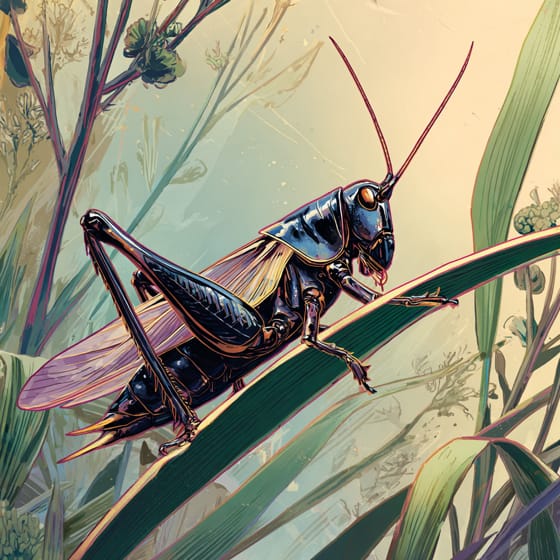
Gryllus assimilis
crickets are a common prey item for the spider
Sceliphron caementarium
paralyzes and provisions for its larvae
Musca domestica
flies often get caught in their sticky webs
Solitary animals live alone for most of their lives, only interacting with others for mating or parental care.
Colorful describes organisms or objects displaying a wide range of bright and distinct colors.
This trait identifies organisms whose diet consists entirely or primarily of animal tissue.
Nocturnal animals are primarily active during the nighttime hours, typically resting or sleeping during the day.

Venomous organisms produce toxins that are injected into another animal, typically through a bite or sting.
Danger
3/5 · Moderate
Always be cautious and avoid touching spiders.
The easiest way to identify Western Black Widow is to use the Snappit nature identifier app.
Western Black Widows are super skilled hunters, munching on insects and other small critters they catch in their sticky webs!
They typically live in dark, sheltered areas like woodpiles, under rocks, or inside buildings.
Ambush
Zoom in to split clusters and explore where this object has been snapped.
Jun 4, 2026
Las Vegas High School Neighborhood Historic DistrictPhoto attribution
(c) Katrina Smith, some rights reserved (CC BY)
License: CC BY 4.0 ↗
Image may be shown cropped inside the card frame.
Jun 1, 2026
Julia Davis ParkPhoto attribution
(c) Sam Kieschnick, some rights reserved (CC BY)
License: CC BY 4.0 ↗
Image may be shown cropped inside the card frame.
May 8, 2026
Madera CanyonPhoto attribution
(c) Andrew Meeds, some rights reserved (CC BY)
License: CC BY 4.0 ↗
Image may be shown cropped inside the card frame.

Colorado, US
You might spot Eastern Fox Squirrel, Bee, and Duck.
View guide →

Kansas, US
You might spot Cliff Swallow and Desert Prince's Plume.
View guide →

New Mexico, US
You might spot Duck, Greater Roadrunner, and American Robin.
View guide →

New Mexico, US
You might spot Wood Duck, Duck, and Canada Goose.
View guide →

Arizona, US
You might spot Saguaro and Graham's Nipple Cactus.
View guide →

California, US
You might spot Western Fence Lizard and California Poppy.
View guide →
Take the discovery with you
Snap it with Snappit to identify it, learn what makes it special, and add the discovery to your collection.