





Babirusa
Babyrousa babyrussa
Babirusas are unique pigs with long, curved tusks that grow through their snouts. They live in the forests of Southeast Asia and are excellent swimmers!
Habitat: Forests
The Babirusa has distinctive upward-curving tusks that can pierce its own skull if not worn down. It has wrinkled, coarse, greyish-brown skin with sparse hair, giving it a somewhat prehistoric appearance. Its slender legs and arched back make it visually different from other wild pigs.
Category
MammalsRarity
Rare
Danger
3/5 · Moderate
Snaps
Be the first to snap!
The Babirusa's name means "pig-deer" in Malay, describing its unique look.
Their upper tusks can actually grow so long they curl back towards their forehead!
They don't use their tusks to dig for food, preferring to root with their hard snouts.
Unlike other pigs, female babirusas have only two nipples to feed their single-born young.
Babirusa has unique tusks that grow through their snout, helping males display dominance or defend themselves in rare fights.
Babirusa can expertly forage through dense jungle, using a keen sense of smell to locate buried roots and fungi for food.
Babirusa can wallow in mud baths to cool down its body and protect its sensitive, sparse skin from biting insects and sunburn.
These unique pigs enjoy a varied diet of plants, fruits, roots, and even some forest critters.

Homo sapiens
Hunted for meat; habitat is destroyed by human activity.
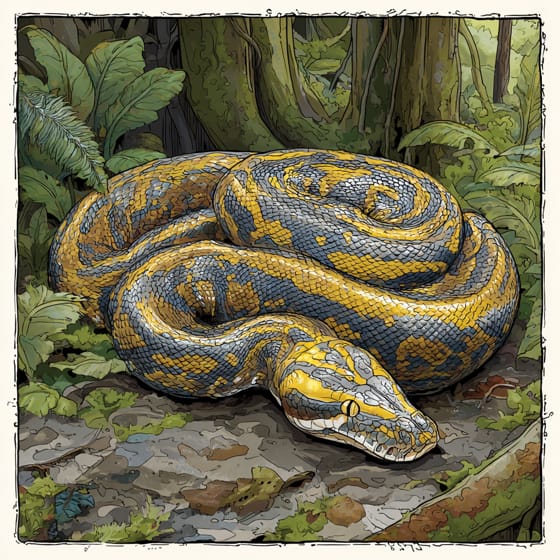
Python reticulatus
Juvenile Babirusas can be prey for large constricting snakes.
Ficus racemosa
Enjoys fallen fruits and leaves from various fig trees.
Diospyros celebica
Feeds on the fruits, leaves, and young shoots of these trees.
Wildlife encompasses all undomesticated animal and plant life existing in their natural habitats.
Furry describes animals possessing a dense covering of soft hair or fur.
Arboreal animals live primarily in trees, utilizing them for shelter, food, and protection from predators.
This trait characterizes organisms whose diet consists entirely or primarily of plant material.

This trait describes organisms that manipulate external objects to achieve a specific goal.

Characterized by having long, pointed, projecting teeth, usually in pairs.

This trait signifies organisms belonging to a very old evolutionary group with ancestors dating back millions of years.

Forest habitats are terrestrial environments dominated by dense tree cover, supporting a high diversity of plant and animal life.
Danger
3/5 · Moderate
Babirusas are wild animals and should be observed from a safe distance.
The easiest way to identify Babirusa is to use the Snappit nature identifier app.
85-110 cm
60-100 kg
10-24 years
35 km/h
These unique pigs enjoy a varied diet of plants, fruits, roots, and even some forest critters.
Forests
Foraging
Zoom in to split clusters and explore where this object has been snapped.
Recent snaps will appear here as new observations are added.
Take the discovery with you
Snap it with Snappit to identify it, learn what makes it special, and add the discovery to your collection.




.jpg&width=800)



.JPG&width=800)


.jpg&width=800)
