





Banded Civet
Hemigalus derbyanus
The Banded Civet is a small, nocturnal animal with beautiful stripes and spots on its fur. It loves to explore the forest at night, looking for tasty fruits and insects to eat.
Habitat: Forests
The Banded Civet is a slender mammal covered in cream to buff fur with broad, dark brown or black bands across its back and flanks. It has a short, pointed snout, a dark mask across its eyes, and a bushy tail also ringed with dark bands.
Category
MammalsRarity
Rare
Danger
3/5 · Moderate
Snaps
Be the first to snap!
Baby civets, called "kits," are born tiny, weighing less than a bar of soap!
Their unique scientific name "Hemigalus" means "half-weasel," even though they are civets!
They often walk with a strange, waddling gait, looking clumsy on the ground.
They rub special scent glands on trees, leaving secret "messages" for others.
Banded Civet has excellent night vision and a powerful sense of smell that helps them locate prey in the dense forest undergrowth.
Banded Civet possesses strong claws and a flexible body that allows them to climb trees effortlessly to find food and escape danger.
Banded Civets can produce a musky scent from glands that helps them mark their territory and communicate with other civets.
This civet is an omnivore, munching on insects, worms, fruits, and small creatures found on the forest floor.
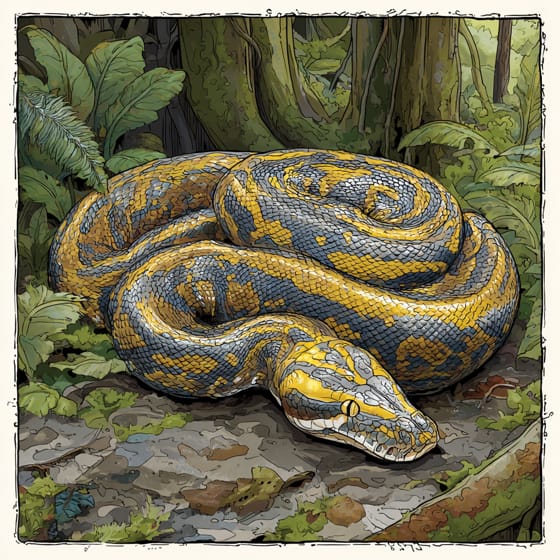
Python reticulatus
Adult pythons can ambush and prey on civets.
Neofelis nebulosa
One of the top predators in their jungle home.
Ficus racemosa
Enjoys eating the sweet fruits from forest trees.
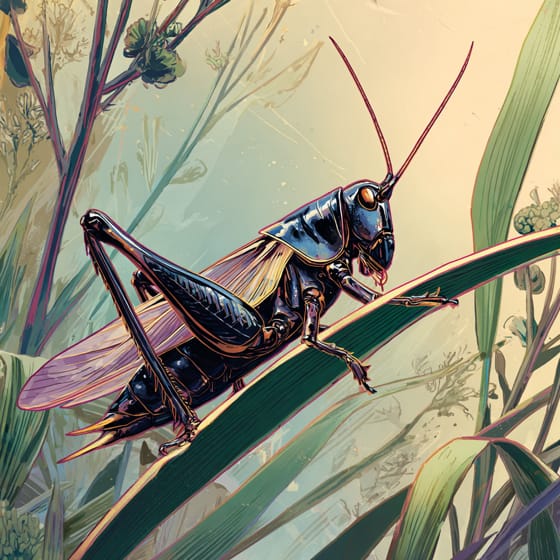
Gryllus bimaculatus
Hunts various insects and invertebrates found on the ground.
Furry describes animals possessing a dense covering of soft hair or fur.
Marked with spots or patches of a different color.
Marked with parallel bands or lines of color.
Solitary animals live alone for most of their lives, only interacting with others for mating or parental care.

Arboreal animals live primarily in trees, utilizing them for shelter, food, and protection from predators.

This trait identifies organisms whose diet primarily consists of insects and other small invertebrates.

Forest habitats are terrestrial environments dominated by dense tree cover, supporting a high diversity of plant and animal life.

This trait identifies organisms whose diet consists entirely or primarily of animal tissue.

Nocturnal animals are primarily active during the nighttime hours, typically resting or sleeping during the day.

Endangered status indicates a species is at a very high risk of extinction in the wild in the near future.
No aliases listed yet.
Danger
3/5 · Moderate
Banded Civets are wild animals and should be admired from a distance.
The easiest way to identify Banded Civet is to use the Snappit nature identifier app.
40-50 cm
1-3 kg
8-14 years
20 km/h
This civet is an omnivore, munching on insects, worms, fruits, and small creatures found on the forest floor.
Forests
Foraging
Zoom in to split clusters and explore where this object has been snapped.
Recent snaps will appear here as new observations are added.
Take the discovery with you
Snap it with Snappit to identify it, learn what makes it special, and add the discovery to your collection.




.jpg&width=800)



.JPG&width=800)



.jpg&width=800)
