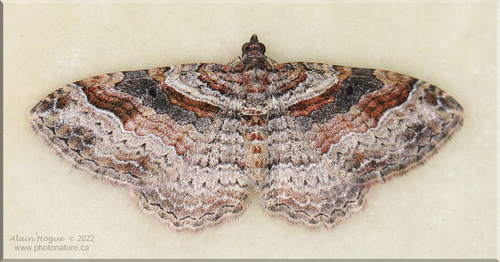


Bent-Lined Carpet
costaconvexa centrostrigaria
The Bent-Lined Carpet (Costaconvexa centrostrigaria) is a delicate and ubiquitous geometer moth found throughout North America. Named for the intricate, wavy lines that decorate its wings, this small insect is a master of camouflage, easily blending into tree bark and leaf litter. As members of the Geometridae family, their larvae are famously known as "inchworms," moving in a characteristic looping motion as they measure the earth beneath them. Adaptable and widespread, the Bent-Lined Carpet can be found in a variety of environments ranging from overgrown fields and gardens to open woodlands. They are active from early spring through late fall, making them a familiar sight for keen-eyed naturalists. Their presence serves as a quiet reminder of the intricate biodiversity thriving in our own backyards, where they play a vital role as both minor pollinators and a steady food source for local predators.
Habitat: Found in overgrown fields, meadows, gardens, and open woodlands, typically near low-growing herbaceous plants and weedy vegetation.
This is a small moth with a wingspan ranging from 1.5 to 2.4 centimeters. Its forewings are typically a pale grayish-brown or tan, crossed by numerous fine, wavy, dark lines that give it a "carpet-like" pattern. The species exhibits sexual dimorphism: males often feature a distinct, dark reddish-brown or blackish median band across the center of their forewings, whereas females tend to have a more uniform, muted coloration with less pronounced banding. In their resting posture, they lay their wings flat against the surface, helping them blend seamlessly into their surroundings.
Category
InsectsRarity
Common
Danger
1/5 · Very low
Snaps
2
Bent-Lined Carpets are sexually dimorphic; you can often tell males apart from females by a thick, dark stripe across the middle of the male's wings.
Like all geometer moths, the Bent-Lined Carpet's caterpillars are 'inchworms'—a name derived from their unique method of measuring the earth as they loop along.
The common name 'Carpet' is shared by many moths in this subfamily because their complex, wavy wing patterns resemble ornate, antique woven rugs.
This species is capable of producing multiple generations (broods) per year, allowing it to maintain high population numbers from early spring through late autumn.
The intricate, wavy patterns on their wings allow them to blend perfectly against tree bark, dried leaves, and soil to avoid visually hunting predators.
As caterpillars, they lack middle prolegs, causing them to move by drawing their hind end up to their front legs in a distinctive looping gait.
When disturbed, adult moths employ a highly erratic, fluttering flight pattern that makes it difficult for avian and insect predators to track and catch them.
Larvae feed on the leaves of various low-growing herbaceous plants, while adults sip nectar from small flowers.
Age differences: Caterpillars possess mandibles to chew on herbaceous foliage, whereas adult moths rely on a tube-like proboscis to drink liquid nectar.
Persicaria pensylvanica
Larvae use smartweeds as a primary food source for growth and development.
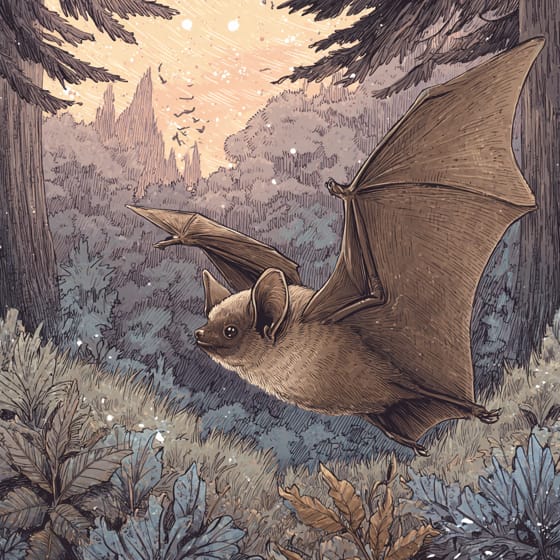
Myotis lucifugus
Adult moths are frequent prey for insectivorous bats hunting in open woodlands.
.jpg&width=800)
Polistes dominula
Caterpillars are often hunted by predatory wasps that forage in weedy vegetation.
No trait badges are assigned for this object yet.
No aliases listed yet.
Collections for this object will appear here as more themes are added.
Danger
1/5 · Very low
No special safety notes yet.
The easiest way to identify Bent-Lined Carpet is to use the Snappit nature identifier app.
1-2 cm
1-3 cm
0.00001-0.00005 kg
0-1 years
5 km/h
Larvae feed on the leaves of various low-growing herbaceous plants, while adults sip nectar from small flowers.
Found in overgrown fields, meadows, gardens, and open woodlands, typically near low-growing herbaceous plants and weedy vegetation.
Zoom in to split clusters and explore where this object has been snapped.
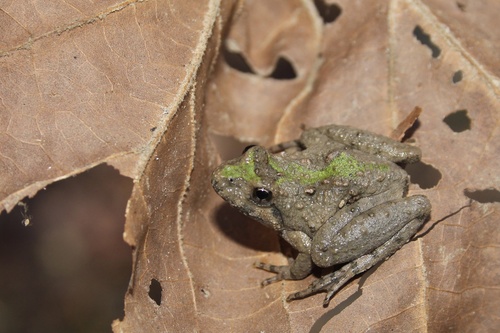
Delaware, US
You might spot Northern Cricket Frog, Fan Clubmoss, and Fowler's Toad.
View guide →

Pennsylvania, US
You might spot Large Yellow Underwing and Eastern Black Carpenter Ant.
View guide →

South Carolina, US
You might spot Green Cloverworm Moth and Black-Dotted Ruddy Moth.
View guide →
Take the discovery with you
Snap it with Snappit to identify it, learn what makes it special, and add the discovery to your collection.












.jpg&width=800)




