





Bigbract Verbena
verbena bracteata
The Bigbract Verbena is a colorful flower that attracts butterflies and bees! Its bright blooms can make any garden look more cheerful and lively.
Habitat: It lives in sunny fields, gardens, and along roadsides.
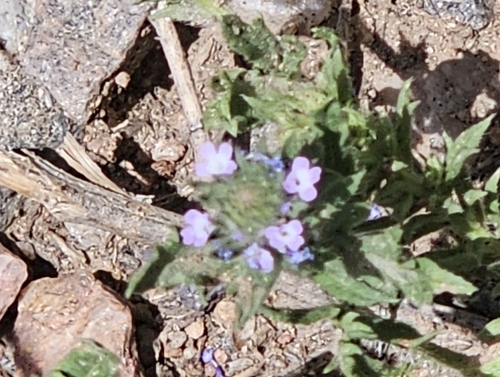
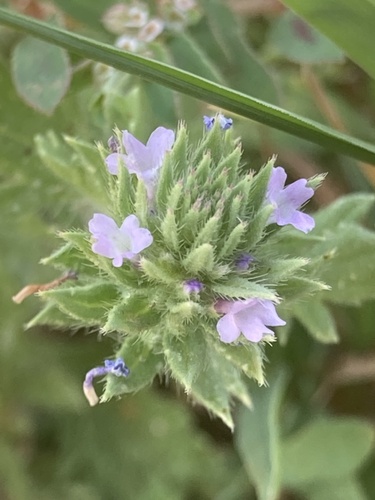
The Bigbract Verbena is a low-growing plant with sprawling stems and deeply lobed leaves. Its small, purplish-blue flowers are clustered in dense spikes, often partially hidden by prominent, stiff, leaf-like green bracts that give it its name.
Category
PlantsRarity
Common
Danger
0/5 · No known danger
Snaps
4
Despite its common beauty, in some places, it's considered a persistent weed!
Its tiny purple flowers hug the ground, almost hidden by leafy protectors!
Native Americans once used parts of this verbena for traditional remedies.
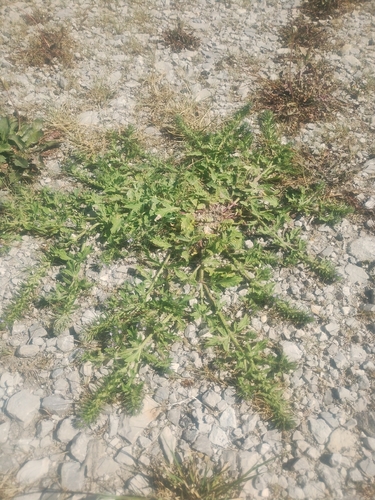
This tough plant can grow in sidewalk cracks and dry, dusty spots!
Bigbract Verbena has large, leaf-like bracts that help shield its tiny flowers and developing seeds from harm.
This verbena can grow close to the ground, spreading its stems to outcompete other plants for space and light.
Bigbract Verbena can thrive in dry, poor soils as its roots help it find water, making it very tough.
Apis mellifera
visits flowers for nectar

Bombus impatiens
collects pollen and nectar
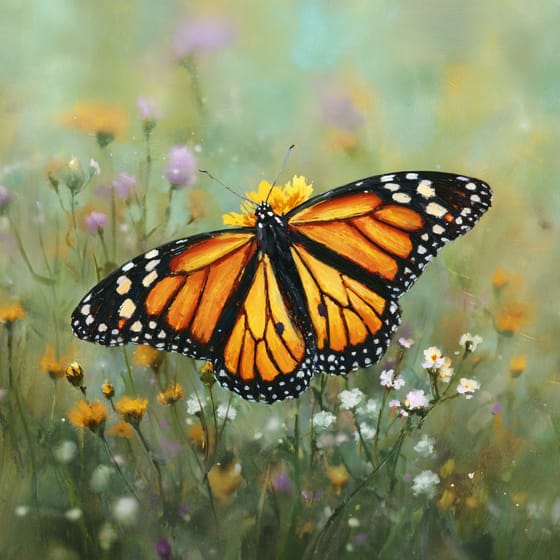
Danaus plexippus
sips nectar from the blooms
Colorful describes organisms or objects displaying a wide range of bright and distinct colors.
Grassland habitats are terrestrial biomes dominated by grasses and herbaceous plants, supporting a variety of grazing animals.
This trait characterizes organisms whose diet consists entirely or primarily of plant material.
Diurnal animals are primarily active during daylight hours, typically resting or sleeping at night.

Describes organisms that transfer pollen, enabling the fertilization and reproduction of plants.
Danger
0/5 · No known danger
No special safety notes yet.
The easiest way to identify Bigbract Verbena is to use the Snappit nature identifier app.
10-60 cm
15-90 cm
0.2-0.5 cm
Spring_to_fall
No
None
Perennial
Zoom in to split clusters and explore where this object has been snapped.
Jun 5, 2026
Dinosaur RidgePhoto attribution
no rights reserved
License: CC0 1.0 ↗
Image may be shown cropped inside the card frame.
Jun 4, 2026
Lock and Dam No. 15Photo attribution
no rights reserved
License: CC0 1.0 ↗
Image may be shown cropped inside the card frame.
Jul 3, 2022
Clover Bend Historic DistrictPhoto attribution
(c) Joseph McPhail, some rights reserved (CC BY)
License: CC BY 4.0 ↗
Image may be shown cropped inside the card frame.

New Mexico, US
You might spot Pronghorn, Great-Tailed Grackle, and Redstem Stork's-Bill.
View guide →

Colorado, US
You might spot Common Starlily and Wholeleaf Paintbrush.
View guide →
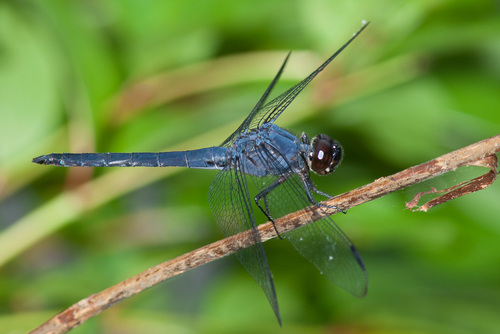
Arkansas, US
You might spot Slaty Skimmer and Common Eastern Bumble Bee.
View guide →

Iowa, US
You might spot Brown-Belted Bumble Bee and Common Eastern Bumble Bee.
View guide →

Iowa, US
You might spot Brown-Belted Bumble Bee and Common Eastern Bumble Bee.
View guide →

South Dakota, US
You might spot Scarlet Globemallow, Leadplant, and Yellow Salsify.
View guide →
Take the discovery with you
Snap it with Snappit to identify it, learn what makes it special, and add the discovery to your collection.









.jpg&width=800)



_001.jpg&width=800)




