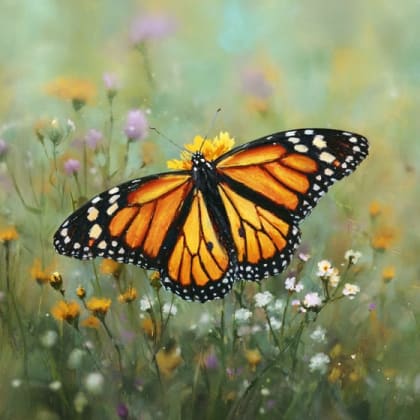





Monarch Butterfly

Lock and Dam No. 15 offers a captivating blend of engineering marvel and natural beauty.
This remarkable site, spanning the Upper Mississippi River between Rock Island, Illinois, and Davenport, Iowa, stands as the world's largest roller dam and a cornerstone of American river navigation. As the first facility constructed for the vital 9-Foot Channel Project, its unique design featuring only roller gates makes it an impressive spectacle and a key gateway for commercial and recreational vessels navigating the Mississippi. Visitors can experience the powerful forces of this working river firsthand, witnessing the intricate ballet of barges and boats as they "lock through" the system.
Beyond its industrial grandeur, Lock and Dam No. 15 is a vibrant ecological hotspot, particularly renowned for its spectacular winter Bald Eagle congregations. From January to March, hundreds of these majestic birds flock to the open waters below the dam to fish, offering unparalleled viewing opportunities from the Mississippi River Visitor Center's observation deck. Throughout the year, the site is a haven for diverse birdlife, being a critical stop along the Mississippi Flyway, attracting numerous species of waterfowl, shorebirds, and songbirds during their migratory journeys.
A visit to Lock and Dam No. 15 promises an enriching experience, combining a deep appreciation for human ingenuity with the breathtaking spectacle of nature. Whether you're captivated by the immense scale of the dam and its operations, eager to photograph soaring eagles, or simply wish to connect with the historic flow of the Mississippi, this site offers memorable moments for every visitor. Educational programs and guided tours further enhance understanding of this crucial nexus of commerce, conservation, and history. Turn your visit into a safari! Use the Snappit app to scan and log wildlife sightings here.
Construction on Lock No. 15 commenced in April 1931 and was finished by December 1932. The dam's construction followed, beginning in 1932 and concluding in May 1934, with the entire facility becoming operational on March 7, 1934. This complex was a groundbreaking project, serving as the prototype and inaugural facility for the ambitious 9-Foot Channel Project, which aimed to establish a consistent nine-foot navigation depth along the Upper Mississippi River. Its strategic location at one of the narrowest points of the Mississippi River, amidst the former Rock Island Rapids, was chosen to control water levels effectively and improve navigation. Recognizing its historical and engineering significance, Lock and Dam No. 15 was listed on the National Register of Historic Places in 2004 as the Lock and Dam No. 15 Historic District.
Watch commercial and recreational vessels lock through the dam.
* Utilize binoculars to spot Bald Eagles and other avian species.
* Explore the educational displays and gift shop at the Mississippi River Visitor Center.
* Inquire about seasonal tours, such as guided Bald Eagle or Clock Tower tours.
* Take photographs of the impressive dam structure and river scenery.
Winter (January-March): The dam's open water provides critical feeding grounds, attracting large numbers of Bald Eagles. Bundle up, as it can be very cold, but the visitor center provides warmth.
Spring (March-May): The river reopens to full commercial navigation, and myriad migratory birds return north.
Summer (June-August): A bustling period for recreational boating; guided tours of the lock and dam may be available.
Fall (September-November): Fall bird migration brings diverse species through the area, and commercial traffic remains active.
The Mississippi River Visitor Center is fully handicap accessible, offering ease of access to its exhibits and observation deck.
Observe massive towboats pushing barges and smaller recreational boats navigating the lock chamber.
From the visitor center's heated observation deck, witness Bald Eagles hunting and perching, especially in winter.
Engage with educational exhibits detailing the river's history, ecology, and the engineering of the lock and dam system.
Appreciate the unique engineering of the 1,203-foot-long roller dam, a marvel of its time.
Each card links to a full Explore page with photos, traits, and fun facts.
Start with the big picture, then zoom in to explore individual wildlife observations around this place.
Plan Rock Island Arsenal Access
** Since the Mississippi River Visitor Center is located on the active Rock Island Arsenal military installation, all adult visitors must undergo a rapid background check and obtain a pass at the Visitor Welcome Center before entry.
Bring Binoculars and Camera
These are invaluable for a close-up view of distant birds, river traffic, and to capture the impressive scale of the dam and its surroundings.
Check Visitor Center Hours
Confirm the operating hours of the Mississippi River Visitor Center, especially if you plan to visit during holidays or specific seasonal events.
Dress in Layers
The observation areas can be exposed to the elements, so layering clothing, particularly in cooler months, will enhance your comfort.
Arrive Early for Eagles
During peak Bald Eagle season (winter), arriving earlier in the day often provides better viewing opportunities before crowds gather.
Utilize Educational Resources
Take time to explore the exhibits at the Visitor Center to gain a deeper understanding of the river's ecosystem and the dam's function.
Jun 4, 2026
Photo attribution
no rights reserved
License: CC0 1.0 ↗
Image may be shown cropped inside the card frame.
Jun 4, 2026
Photo attribution
no rights reserved
License: CC0 1.0 ↗
Image may be shown cropped inside the card frame.
Jun 4, 2026
Photo attribution
no rights reserved
License: CC0 1.0 ↗
Image may be shown cropped inside the card frame.
Jun 4, 2026
Photo attribution
no rights reserved
License: CC0 1.0 ↗
Image may be shown cropped inside the card frame.
Jun 2, 2026
Photo attribution
no rights reserved
License: CC0 1.0 ↗
Image may be shown cropped inside the card frame.

Maryland, US
You might spot White-Tailed Deer and Eastern Gray Squirrel.
View guide →
.jpg)
District of Columbia, US
You might spot Eastern Gray Squirrel, Duck, and House Sparrow.
View guide →

Illinois, US
You might spot American Robin, Canada Goose, and House Sparrow.
View guide →

Virginia, US
You might spot Spotted Lanternfly and Northern Cardinal.
View guide →
Take the discovery with you
Identify the wildlife you spot, learn as you go, and keep a collection of the adventure.