





Blue Whale
Balaenoptera musculus
The blue whale is the largest animal on Earth! These gentle giants swim in the ocean and can be found in many parts of the world.
The Blue Whale is a sleek, elongated mammal with a mottled blue-gray color, often appearing pale or yellowish underneath from diatoms. Its vast size, almost flat head, and small dorsal fin set it apart from other whales.
Category
MammalsRarity
Common
Danger
1/5 · Very low
Snaps
Be the first to snap!
A blue whale calf drinks enough milk each day to fill a bathtub!
The blue whale's tongue alone can weigh as much as an elephant!
Their heart beats just 2-10 times per minute while diving deep!
They sing incredibly low-frequency songs that travel hundreds of miles!
Blue Whales can gulp vast amounts of water because of their baleen plates that help them filter out tiny krill.
Blue Whales have the loudest calls of any animal that help them communicate across hundreds of miles of ocean.
Blue Whales can dive to impressive depths because their bodies are adapted to withstand immense water pressure.
These giant whales gulp down massive amounts of tiny ocean creatures called krill.
Euphausia superba
their primary food source
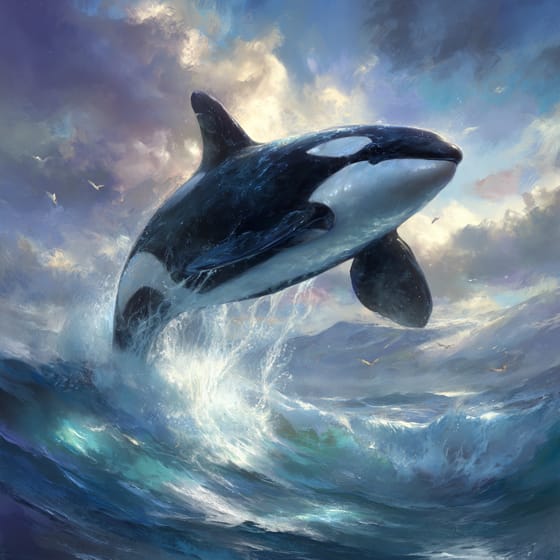
Orcinus orca
occasionally prey on calves
Cocconeis ceti
grows on skin, causing yellow tint
Coronula diadema
attaches to skin for transport
Furry describes animals possessing a dense covering of soft hair or fur.
Social animals live in organized groups, cooperating for survival benefits such as foraging, defense, and raising offspring.
Filter feeders obtain nutrients by straining suspended food particles and small organisms from water.
Describes a species whose presence and role have a disproportionately large effect on its environment.

Aquatic habitats encompass environments where organisms live predominantly in water, including oceans, rivers, lakes, and wetlands.

Giant describes organisms or objects of significantly larger size than average for their species or type.

Marine habitats encompass all saltwater environments of the Earth's oceans, supporting an immense diversity of aquatic life.

Migratory animals undertake seasonal movements from one region to another, typically in response to changes in climate or food availability.

Protected status signifies a species or area is safeguarded by legal measures and conservation efforts to prevent harm or loss.
Danger
1/5 · Very low
Blue whales are very big and live in the ocean, so it's best to admire them from a safe distance.
The easiest way to identify Blue Whale is to use the Snappit nature identifier app.
2400-3000 cm
100000-200000 kg
80-90 years
30 km/h
These giant whales gulp down massive amounts of tiny ocean creatures called krill.
Filter Feeding
1
Zoom in to split clusters and explore where this object has been snapped.
Recent snaps will appear here as new observations are added.
Take the discovery with you
Snap it with Snappit to identify it, learn what makes it special, and add the discovery to your collection.





.jpg&width=800)



.JPG&width=800)



.jpg&width=800)
