





Bos gaurus
Bos gaurus
The gaur is a large wild cow that roams the forests of Asia. They have strong bodies and can be very tall, making them one of the biggest cattle in the world!
Habitat: Forests
The Bos gaurus is the largest wild cattle, sporting a dark brown to black coat with striking white or yellowish 'stockings' on its lower legs. It has a massive, muscular body, a distinctive muscular ridge on its back, and large, curving horns that can reach impressive lengths.
Category
MammalsRarity
Common
Danger
3/5 · Moderate
Snaps
Be the first to snap!
Gaur calves are born with a beautiful light golden coat, which gradually darkens as they grow.
The gaur is the largest wild cattle species on Earth, even bigger than a domestic buffalo!
They love salt, traveling long distances to find mineral licks for essential nutrients.
They often communicate with loud roars and bellows that can be heard far away in the jungle.
Bos gaurus has powerful legs and a muscular build that helps them move easily through dense forest undergrowth and steep terrain.
Bos gaurus can detect danger using its excellent sense of smell and hearing, allowing it to stay safe from predators.
Bos gaurus has strong, sharp horns that help them defend themselves and their young against large predators.
Gaur are giant herbivores, feasting on various plants like grasses, bamboo, and juicy fruits from the forest.
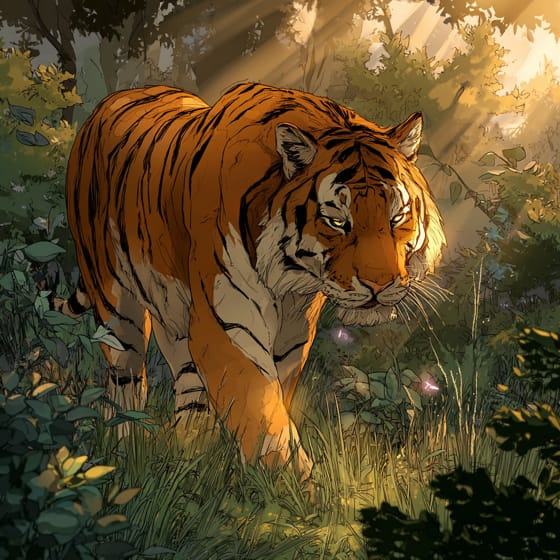
Panthera tigris
Tigers are the gaur's primary natural predator.
_cropped.jpg&width=800)
Cuon alpinus
Packs of dholes can hunt gaur calves and sick adults.
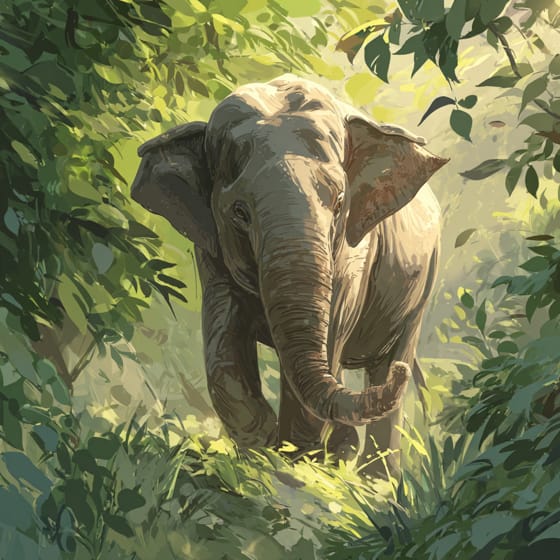
Elephas maximus
They share forest habitats and water sources peacefully.
Bambusa vulgaris
Gaur frequently graze on bamboo shoots and leaves.
Furry describes animals possessing a dense covering of soft hair or fur.
Social animals live in organized groups, cooperating for survival benefits such as foraging, defense, and raising offspring.
Characterized by having one or more hard, permanent, pointed projections on the head.
This trait characterizes organisms whose diet consists entirely or primarily of plant material.

Forest habitats are terrestrial environments dominated by dense tree cover, supporting a high diversity of plant and animal life.

Diurnal animals are primarily active during daylight hours, typically resting or sleeping at night.

This trait identifies organisms that exhibit exceptional swiftness in movement for hunting, escape, or travel.

Giant describes organisms or objects of significantly larger size than average for their species or type.

Endangered status indicates a species is at a very high risk of extinction in the wild in the near future.
No aliases listed yet.
Danger
3/5 · Moderate
Keep a safe distance from wild animals like gaurs and watch them from afar.
The easiest way to identify Bos gaurus is to use the Snappit nature identifier app.
250-330 cm
600-1500 kg
20-30 years
50 km/h
Gaur are giant herbivores, feasting on various plants like grasses, bamboo, and juicy fruits from the forest.
Forests
Grazing
Zoom in to split clusters and explore where this object has been snapped.
Recent snaps will appear here as new observations are added.
Take the discovery with you
Snap it with Snappit to identify it, learn what makes it special, and add the discovery to your collection.




.jpg&width=800)

.JPG&width=800)


.jpg&width=800)
