





Broadleaf Lupine
Lupinus latifolius
Broadleaf Lupine is a beautiful flower with big, colorful leaves and tall spikes of purple blooms. They grow in sunny places and attract butterflies and bees, making gardens look lovely and lively!
Habitat: Grasslands
The Broadleaf Lupine has tall, upright spires of dense, pea-like flowers, typically in shades of vibrant blue to purple, sometimes white. Its distinctive leaves are palmate, fanning out like fingers on a hand, making it stand out in meadows.
Category
PlantsRarity
Common
Danger
1/5 · Very low
Snaps
Be the first to snap!
Ancient civilizations once ground certain lupine seeds into flour for baking!
Did you know some lupine seeds can stay alive in the soil for decades, waiting to sprout?
Its flowers change color after pollination, telling bees which ones still have nectar!
The unique palmate leaves collect morning dew, like tiny natural water collectors.
Broadleaf Lupine has special root nodules that can convert nitrogen from the air into plant food, making the soil healthier.
Broadleaf Lupine has a strong taproot that helps it reach deep water sources, allowing it to survive during dry periods.
Broadleaf Lupine produces natural chemicals called alkaloids that make its leaves taste bad to most hungry animals.
Broadleaf Lupine's seed pods can explosively twist open, flinging seeds a short distance to spread its offspring.
Bombus vosnesenskii
collects nectar and pollen

Icaricia icarioides
caterpillars feed on leaves
Rhizobium leguminosarum
fixes nitrogen in its roots
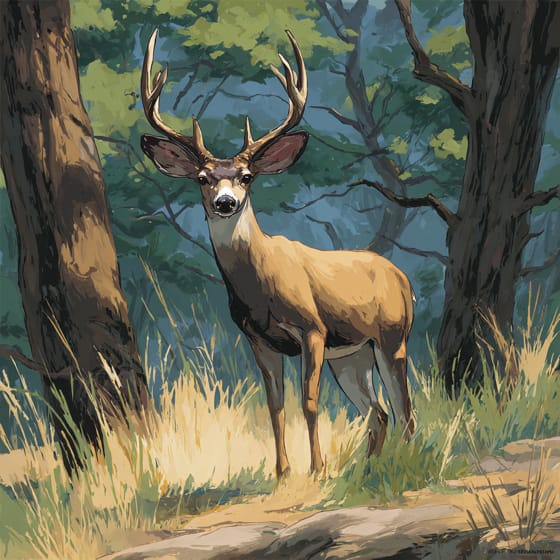
Odocoileus hemionus
browses on leaves and shoots
Deciduous plants periodically shed all their leaves, typically during autumn or dry seasons.
Flowering plants are any plants that produce flowers as part of their reproductive cycle.
Describes organisms capable of converting atmospheric nitrogen into compounds usable by plants.
Summer blooming plants produce their flowers during the summer season, often providing vibrant color when many other plants have finished.

Fragrant flowers emit a pleasant aroma, often to attract pollinators or for defense.

Colorful describes organisms or objects displaying a wide range of bright and distinct colors.

Grassland habitats are terrestrial biomes dominated by grasses and herbaceous plants, supporting a variety of grazing animals.

Describes plants that are particularly attractive and beneficial to a wide range of pollinating organisms.

Rapid growing plants exhibit accelerated growth rates, quickly increasing in size and biomass within a short period.
No aliases listed yet.
Danger
1/5 · Very low
Always look but don't touch flowers unless a grown-up says it's okay.
The easiest way to identify Broadleaf Lupine is to use the Snappit nature identifier app.
60-150 cm
30-60 cm
1-1.5 cm
Late spring to summer
No
Moderate
Perennial
Zoom in to split clusters and explore where this object has been snapped.
Recent snaps will appear here as new observations are added.
Take the discovery with you
Snap it with Snappit to identify it, learn what makes it special, and add the discovery to your collection.







.jpg&width=800)


_001.jpg&width=800)




