





Broom Snakeweed
Gutierrezia sarothrae
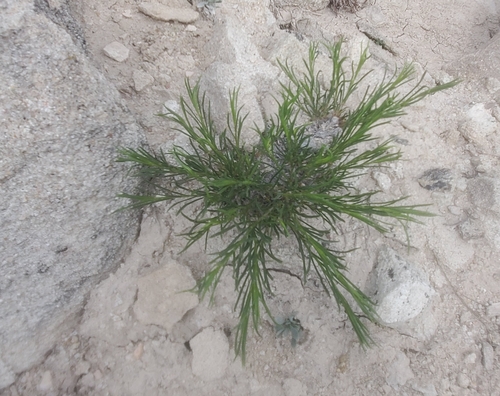
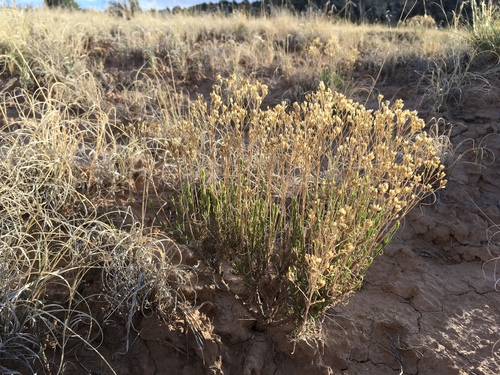
Broom Snakeweed is a tall plant with thin, green stems and small yellow flowers. It grows in dry places and is important for helping the soil stay healthy.
Habitat: Desert
The Broom Snakeweed is a bushy plant with many slender, broom-like green stems. It explodes with a dense cluster of tiny, bright yellow, daisy-like flowers, creating a golden blanket over dry landscapes in late summer and fall.
Category
PlantsRarity
Common
Danger
1/5 · Very low
Snaps
3
Called 'turpentine weed' for its strong, resinous smell when its leaves are crushed!
Its tiny yellow flowers are packed tightly, forming a brilliant golden display in dry landscapes!
Scientists study its unique chemicals for new medicines or pest control!
Tough Broom Snakeweed improves rocky soil, making it easier for other plants to grow!
Broom Snakeweed has a long taproot that can reach deep into the soil to find water, helping it survive in very dry places.
Broom Snakeweed produces special chemicals that taste bad or are toxic to many animals, protecting it from being eaten.
This plant has a strong root system that helps hold loose soil in place, preventing it from being washed or blown away.
Apis mellifera
Visits flowers for nectar and pollen.
Bombus occidentalis
Important native pollinator for its flowers.
Hesperia pahaska
Butterfly visits flowers for nectar.
Flowering plants are any plants that produce flowers as part of their reproductive cycle.
A shrub is a woody plant smaller than a tree, typically with multiple stems branching from or near the ground.
Summer blooming plants produce their flowers during the summer season, often providing vibrant color when many other plants have finished.
Medicinal plants possess chemical compounds that can be used for therapeutic purposes to treat illnesses or maintain health.

Drought-tolerant plants can survive and flourish in conditions with limited water availability.

Describes plants that are particularly attractive and beneficial to a wide range of pollinating organisms.

Desert habitats are arid regions characterized by extremely low precipitation and often extreme temperatures, supporting specialized flora and fauna.

Describes a species whose presence and role have a disproportionately large effect on its environment.
No aliases listed yet.
Danger
1/5 · Very low
Always look but don't touch plants without asking an adult, as some can be prickly.
The easiest way to identify Broom Snakeweed is to use the Snappit nature identifier app.
30-100 cm
30-60 cm
0.2-0.5 cm
Late summer to fall
No
High
Perennial
Zoom in to split clusters and explore where this object has been snapped.
May 14, 2026
Toadstool Geologic ParkPhoto attribution
(c) hr_dragonfly, some rights reserved (CC BY)
License: CC BY 4.0 ↗
Image may be shown cropped inside the card frame.
May 29, 2018
Crow Canyon Archaeological DistrictPhoto attribution
no rights reserved
License: CC0 1.0 ↗
Image may be shown cropped inside the card frame.

Colorado, US
You might spot Common Side-Blotched Lizard and Eastern Collared Lizard.
View guide →

Nebraska, US
You might spot Lark Sparrow, Rock Wren, and Scarlet Globemallow.
View guide →

New Mexico, US
You might spot Pinkflower Hedgehog Cactus and Kingcup Cactus.
View guide →

South Dakota, US
You might spot Scarlet Globemallow, Leadplant, and Yellow Salsify.
View guide →
Take the discovery with you
Snap it with Snappit to identify it, learn what makes it special, and add the discovery to your collection.








.jpg&width=800)



_001.jpg&width=800)




