





Brown Creeper
Certhia americana
The Brown Creeper is a small bird that loves to climb trees. It has a special curved beak that helps it find tiny insects hiding in the bark. You can often see it moving up tree trunks in a spiral pattern.
Habitat: Forests
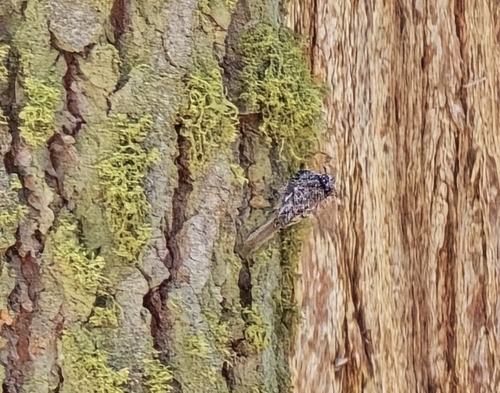
The Brown Creeper is a tiny bird with dappled brown and white plumage, resembling tree bark, making it perfectly camouflaged. It has a bright white belly and a distinctive thin, downcurved bill used for probing.
Category
BirdsRarity
Common
Danger
1/5 · Very low
Snaps
22
Brown Creepers can sleep hanging vertically on tree trunks!
Their tiny nests are often tucked behind a loose piece of tree bark.
They always climb up a tree, then fly to the bottom of the next to start again!
They use spider silk to help build their cozy, hidden nests.
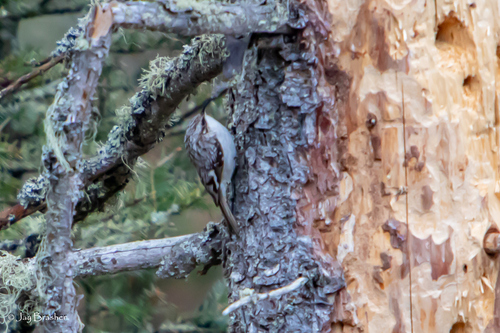
Brown Creeper can scale tree trunks with specialized claws and stiff tail feathers that help them grip and balance.
Brown Creeper has mottled brown feathers that help them disappear against tree bark, making it hard to spot.
Brown Creeper can extract tiny insects from bark crevices with its slender, downcurved bill that acts like a miniature probe.
These tiny birds primarily eat small insects and spiders they find on tree bark.

Accipiter striatus
A swift forest hawk that hunts small birds.
Pissodes strobi
Consumes this insect and its larvae from tree bark.
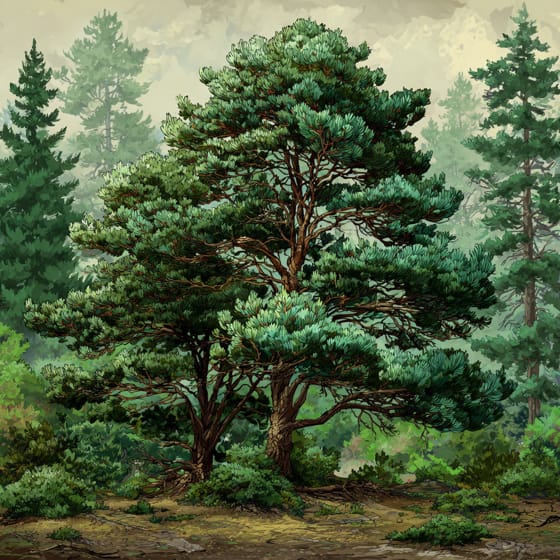
Pinus strobus
Provides essential foraging habitat and nesting locations.
Argiope aurantia
Utilizes its strong silk for weaving their compact nests.
Feathered describes animals, primarily birds, possessing a covering of feathers.
Singing animals produce complex vocalizations, often for purposes of attracting mates, defending territory, or communicating within their species.
Arboreal animals live primarily in trees, utilizing them for shelter, food, and protection from predators.
Camouflaged describes organisms that possess coloring or patterns that allow them to blend into their environment.

This trait identifies organisms whose diet primarily consists of insects and other small invertebrates.

Forest habitats are terrestrial environments dominated by dense tree cover, supporting a high diversity of plant and animal life.

Diurnal animals are primarily active during daylight hours, typically resting or sleeping at night.
No aliases listed yet.
Danger
1/5 · Very low
Enjoy watching birds from a distance and don't try to touch them.
The easiest way to identify Brown Creeper is to use the Snappit nature identifier app.
11-14 cm
17-20 cm
0.005-0.009 kg
1-7 years
30 km/h
These tiny birds primarily eat small insects and spiders they find on tree bark.
Forests
Zoom in to split clusters and explore where this object has been snapped.
Jun 2, 2026
Generals' Highway Stone BridgesPhoto attribution
(c) Dan Killam, some rights reserved (CC BY)
License: CC BY 4.0 ↗
Image may be shown cropped inside the card frame.
May 12, 2026
Tobin Harbor Historic DistrictPhoto attribution
(c) Jay Brasher, some rights reserved (CC BY)
License: CC BY 4.0 ↗
Image may be shown cropped inside the card frame.

Oregon, US
You might spot Duck, Pacific Trillium, and Wood Duck.
View guide →

Iowa, US
You might spot Common Eastern Bumble Bee and Eastern Cottontail.
View guide →

Michigan, US
You might spot Yellow Lady's Slipper and Ring-Billed Gull.
View guide →

Kentucky, US
You might spot Bird's-Eye Speedwell and Barn Swallow.
View guide →

Massachusetts, US
You might spot Autumn Olive and Eastern Skunk Cabbage.
View guide →

California, US
You might spot Checkerbloom and Fuchsiaflower Gooseberry.
View guide →
Take the discovery with you
Snap it with Snappit to identify it, learn what makes it special, and add the discovery to your collection.




.jpg&width=800)








