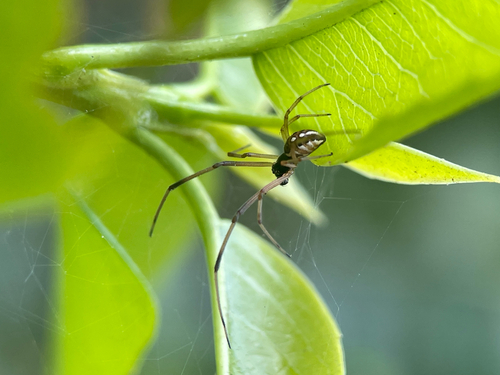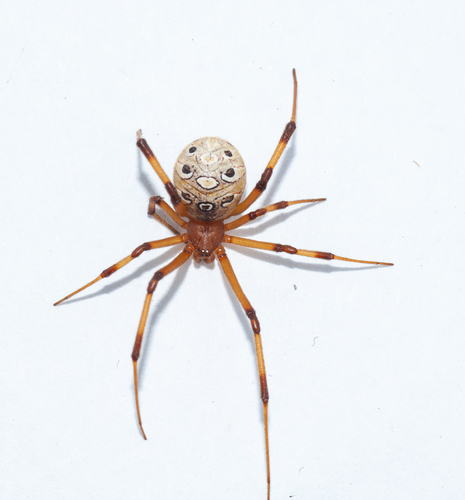


Brown Widow
latrodectus geometricus
The brown widow spider (Latrodectus geometricus) is a highly adaptable, cosmopolitan arachnid closely related to the famous black widow. Originally believed to be native to Africa or South America, this resilient species has successfully established itself in urban and suburban environments throughout tropical and subtropical regions worldwide. While they possess potent neurotoxic venom, brown widows are generally shy and non-aggressive, preferring to retreat into their messy, tangled webs when disturbed rather than confront a threat. What truly sets the brown widow apart is its incredible reproductive rate and unique, spiky egg sacs, which look like tiny, pale yellow landmines. They play a significant role in local ecosystems by consuming a wide variety of pest insects, though they also pose ecological challenges in areas where they displace native spider species, including their native black widow cousins.
Habitat: Typically found in dark, dry, sheltered environments, often preferring artificial structures such as under outdoor patio furniture, inside recessed fence panels, and within garages or sheds.
Brown widows are medium-sized spiders featuring a mottled mix of tan, grey, and dark brown on their bulbous abdomens, accented by geometric patterns and white stripes. On their underside, they display a signature hourglass-shaped marking that is a bright orange or yellow color, rather than the crimson red of a black widow. Their long, slender legs are distinctly banded with dark brown and light tan stripes. Females measure up to sixteen millimeters in body length, while the tiny, inconspicuous males are barely half that size.
Category
InvertebrateRarity
Common
Danger
1/5 · Very low
Snaps
5
Although their venom is actually more toxic drop-for-drop than that of a black widow, brown widows are far less dangerous because they inject significantly less venom and are very hesitant to bite.
Brown widows often perform 'death feigning' or thanatosis when threatened, curling their legs tightly into a ball to appear dead and escape predator attention.
Unlike the smooth, round egg sacs of black widows, the brown widow constructs highly distinctive silk sacs covered in tiny, spiky silk projections, resembling tiny landmines.
Constructs highly distinctive silk egg sacs covered in tiny, spiky projections that serve as a physical deterrent against predators and parasitic wasps.
Weaves exceptionally strong, highly irregular tangled webs with sticky drop lines that easily snag heavy, crawling insects.
Exhibits thanatosis by curling up its legs and dropping to the ground to blend in with debris when a large threat is detected.
Feeds primarily on flying and crawling insects caught in its tangled webs, including ants, beetles, and crickets.
Age differences: Spiderlings feed on tiny invertebrates like fruit flies, while mature adults tackle larger prey like beetles.
Chalybion californicum
The blue mud dauber wasp paralyzes brown widow spiders to stock its nests for its developing larvae.

Linepithema humile
Argentine ants frequently compete for territory and can swarm and prey upon brown widow spiders, especially spiderlings and egg sacs.
Latrodectus mactans
The brown widow often displaces the native southern black widow in urban habitats through competitive exclusion.
No trait badges are assigned for this object yet.
No aliases listed yet.
Collections for this object will appear here as more themes are added.
Danger
1/5 · Very low
No special safety notes yet.
The easiest way to identify Brown Widow is to use the Snappit nature identifier app.
1-2 cm
0.0001-0.0005 kg
1-2 years
Feeds primarily on flying and crawling insects caught in its tangled webs, including ants, beetles, and crickets.
Typically found in dark, dry, sheltered environments, often preferring artificial structures such as under outdoor patio furniture, inside recessed fence panels, and within garages or sheds.
Ambush
50-150
Zoom in to split clusters and explore where this object has been snapped.
Jun 17, 2026
Hakone GardensPhoto attribution
no rights reserved
License: CC0 1.0 ↗
Image may be shown cropped inside the card frame.

Georgia, US
You might spot Gulf Fritillary, Anole, and American Beautyberry.
View guide →

California, US
You might spot Western Fence Lizard and Eastern Fox Squirrel.
View guide →

California, US
You might spot Western Fence Lizard and Pacific Poison Oak.
View guide →

Florida, US
You might spot Brown Anole, White Ibis, and Anhinga.
View guide →

Florida, US
You might spot Brown Anole, Monarch, and Eastern Lubber Grasshopper.
View guide →
Take the discovery with you
Snap it with Snappit to identify it, learn what makes it special, and add the discovery to your collection.