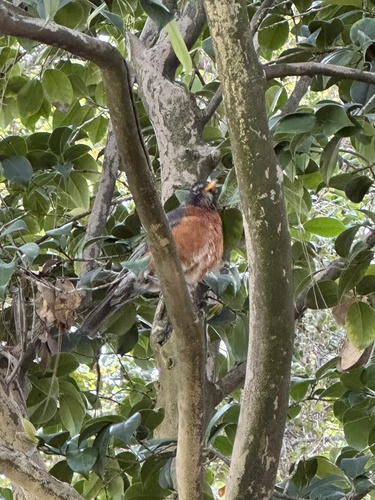
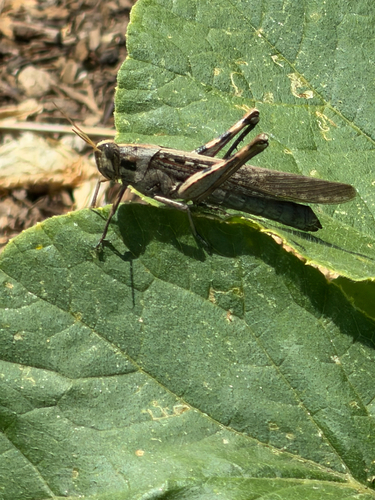
Western Fence Lizard

Step into a captivating world of spiny marvels and water-wise wonders at the Desert Garden Conservatory, a jewel within The Huntington Library, Art Collections, and Botanical Gardens in San Marino, California.
Step into a captivating world of spiny marvels and water-wise wonders at the Desert Garden Conservatory, a jewel within The Huntington Library, Art Collections, and Botanical Gardens in San Marino, California. This specialized greenhouse protects and displays an extraordinary collection of cacti and other succulents, many of which are rare or endangered and require precise environmental conditions to thrive. It serves not only as a breathtaking exhibit for visitors but also as a crucial center for conservation, research, and preserving genetic diversity for desert flora from across the globe.
Within its climate-controlled environment, the Conservatory houses over 2,200 unique plant accessions, encompassing more than 43 plant families and 1,261 distinct species and subspecies. Here, you can marvel at fascinating specimens like the ancient *Pachypodium horombense* from Madagascar, potentially the oldest plant in the conservatory, alongside the peculiar *Welwitschia mirabilis* and a vibrant array of Agaves such as *Agave attenuata 'Variegata'* and the intricate *Agave victoria-reginae*. The collection features examples from major desert regions spanning the southern United States, Mexico, South America, the Canary Islands, and South Africa, each plant telling a story of adaptation and survival.
A visit to the Desert Garden Conservatory offers a profound appreciation for the resilience and beauty of desert life, highlighting the intricate ways plants adapt to extreme conditions. The ongoing dedication to expanding access and showcasing these unique collections, including enhanced displays of stone-like *Lithops* and a growing epiphytic cactus collection, ensures an enriching and memorable experience for all. It's a place where botanical enthusiasts and casual visitors alike can discover the often-underestimated allure of the desert, leaving with a deeper understanding of plant conservation. Explore the grounds like a pro—download the Snappit app to instantly identify animals and plants.
The Desert Garden Conservatory was constructed in 1985 as a dedicated space for succulents and cacti requiring specific environmental controls. It is an integral part of the much larger Huntington Desert Garden, which itself is one of the world's most significant collections of desert plants. The genesis of the Desert Garden dates back to 1907, when Henry E. Huntington's superintendent, William Hertrich, began actively acquiring specimens from various sources, including collecting trips to the Southwest and Mexico. Despite Huntington's initial disinterest in cacti, Hertrich's persistence led to the creation of what is now a globally renowned collection spanning over 10 acres and featuring more than 5,000 species of arid-adapted plants.
Observe the incredible adaptations of desert plants, appreciate their diverse forms and textures, and learn about their origins from various arid regions worldwide. Take time to read the informative labels that provide scientific names and geographical ranges.
As an indoor conservatory, the plants inside are protected from external weather, making it a consistent experience. Outside in the main Desert Garden, spring often brings vibrant blooms, such as the spectacular yellow flowers of the Golden Barrel Cacti.
The Huntington Library, Art Collections, and Botanical Gardens are committed to accessibility. Renovations have focused on creating wider, smoother, and gently sloped pathways, with 1,300 feet of fully accessible routes planned for the Desert Garden area, improving access to the Conservatory. Accessible restrooms are also available throughout the grounds.
Don't miss the ancient *Pachypodium horombense*, the unique *Welwitschia mirabilis*, and the array of striking Agave varieties like *Agave attenuata 'Variegata'* and *Agave albopilosa*. Keep an eye out for the intriguing stone-like *Lithops* and the diverse epiphytic cactus collection.
Each card links to a full Explore page with photos, traits, and fun facts.
Start with the big picture, then zoom in to explore individual wildlife observations around this place.
Wear comfortable walking shoes as The Huntington's grounds are extensive.
Bring a camera to capture the unique textures and forms of the succulents and cacti.
Stay hydrated; while the Conservatory is indoors, the surrounding Desert Garden can be sunny.
Check The Huntington's official website for current hours, as well as any special tours or educational programs related to the Desert Garden Conservatory.
Allow extra time to explore the broader Huntington Desert Garden, which offers thousands more desert plants in an outdoor setting.
Respect the plants and their environment; avoid touching or disturbing the delicate specimens.
Jun 19, 2026
Photo attribution
(c) Adam Petrucco, some rights reserved (CC BY)
License: CC BY 4.0 ↗
Image may be shown cropped inside the card frame.
Jun 18, 2026
Photo attribution
(c) Adam Petrucco, some rights reserved (CC BY)
License: CC BY 4.0 ↗
Image may be shown cropped inside the card frame.
Jun 18, 2026
Photo attribution
(c) Adam Petrucco, some rights reserved (CC BY)
License: CC BY 4.0 ↗
Image may be shown cropped inside the card frame.
Jun 18, 2026
Photo attribution
(c) Adam Petrucco, some rights reserved (CC BY)
License: CC BY 4.0 ↗
Image may be shown cropped inside the card frame.
Jun 13, 2026
Photo attribution
(c) Matt Benjamin, some rights reserved (CC BY)
License: CC BY 4.0 ↗
Image may be shown cropped inside the card frame.

Maryland, US
You might spot White-Tailed Deer and Eastern Gray Squirrel.
View guide →
.jpg)
District of Columbia, US
You might spot Eastern Gray Squirrel, Duck, and House Sparrow.
View guide →

Illinois, US
You might spot American Robin, Canada Goose, and House Sparrow.
View guide →

Virginia, US
You might spot Spotted Lanternfly and Northern Cardinal.
View guide →
Take the discovery with you
Identify the wildlife you spot, learn as you go, and keep a collection of the adventure.