_-_Celithemis_elisa%2C_Piedmont_National_Wildlife_Refuge%2C_Juliette%2C_Georgia.jpg&width=800)





Calico Pennant
Celithemis elisa
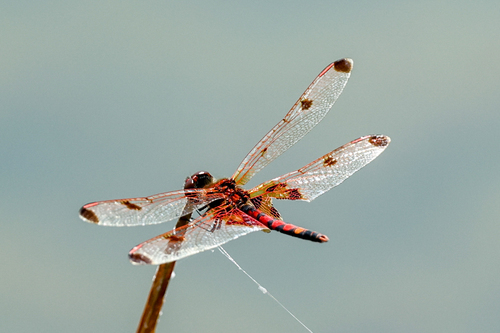
The Calico Pennant is a colorful dragonfly with bright red and yellow patterns. They love to fly around sunny areas and can often be seen resting on plants or rocks near water.
Habitat: Wetlands
The Calico Pennant is a medium-sized dragonfly with a striking pattern. Its wings are clear but marked with prominent dark brown and reddish-yellow patches, creating a distinct 'calico' or checkerboard effect. The body is typically reddish-brown with yellow markings, making it visually distinct from solid-winged species.
Category
InsectsRarity
Common
Danger
1/5 · Very low
Snaps
12
Calico Pennants can perch and bask in the sun to warm up, just like tiny lizards!
Dragonflies spend most of their life underwater as fierce aquatic predators!
Male Calico Pennants 'patrol' territories over ponds to find a mate and guard it!
These dragonflies can catch flying insects with incredible precision, even in mid-air!
Calico Pennant can dart, hover, and fly backwards because of its four independently controlled wings that help them hunt agile prey.
Calico Pennant has massive compound eyes that allow it to see almost 360 degrees, helping them spot tiny insects from far away.
Calico Pennant nymphs can quickly snatch prey with a hinged lower lip that helps them catch other aquatic creatures.
They are airborne hunters that snatch other insects right out of the sky!
Age differences: Nymphs hunt aquatic invertebrates underwater; adults hunt flying insects in the air.
.jpg&width=800)
Tyrannus tyrannus
Adult dragonflies are prey for this bird.
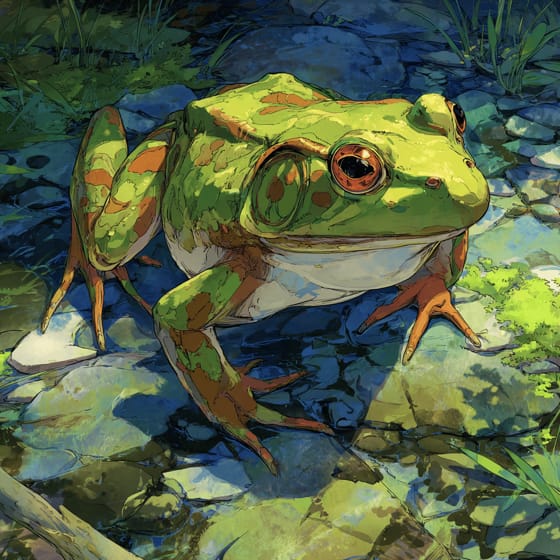
Lithobates catesbeianus
Adults and nymphs can be eaten by bullfrogs.
Aedes aegypti
Adult dragonflies prey on adult mosquitoes.
Chironomus plumosus
Adult Calico Pennants eat flying midges.
Lepomis macrochirus
Aquatic nymphs are prey for this fish.
Social animals live in organized groups, cooperating for survival benefits such as foraging, defense, and raising offspring.
Colorful describes organisms or objects displaying a wide range of bright and distinct colors.
This trait identifies organisms whose diet primarily consists of insects and other small invertebrates.
This habitat trait identifies species found in wetlands, which are areas of land saturated with water, either permanently or seasonally, including marshes, swamps, and bogs.

Diurnal animals are primarily active during daylight hours, typically resting or sleeping at night.

This trait identifies organisms that exhibit exceptional swiftness in movement for hunting, escape, or travel.

Describes organisms that transfer pollen, enabling the fertilization and reproduction of plants.
No aliases listed yet.
Danger
1/5 · Very low
Dragonflies are harmless, but it's best to watch them from a distance.
The easiest way to identify Calico Pennant is to use the Snappit nature identifier app.
45-60 mm
30-45 mm
30-90 days
35 km/h
They are airborne hunters that snatch other insects right out of the sky!
Wetlands
Pursuit
Zoom in to split clusters and explore where this object has been snapped.
Jul 14, 2025
Academy Grove Historic DistrictPhoto attribution
(c) Tom Field, some rights reserved (CC BY)
License: CC BY 4.0 ↗
Image may be shown cropped inside the card frame.

Illinois, US
You might spot Common Eastern Bumble Bee and Brown-Belted Bumble Bee.
View guide →

Ohio, US
You might spot Widow Skimmer, Eastern Pondhawk, and Bee.
View guide →

Virginia, US
You might spot Eastern Tiger Swallowtail, Fowler's Toad, and Monarch.
View guide →

Massachusetts, US
You might spot Eastern Newt and Eastern Red-Backed Salamander.
View guide →

Maryland, US
You might spot Great Blue Heron, Bald Eagle, and Eastern Box Turtle.
View guide →

Nebraska, US
You might spot Canada Goose, Blue Dasher, and Eastern Pondhawk.
View guide →
Take the discovery with you
Snap it with Snappit to identify it, learn what makes it special, and add the discovery to your collection.








.jpg&width=800)



