





California Bumble Bee
Bombus californicus
The California Bumble Bee is a fuzzy little insect that loves to buzz around flowers. They are important for helping plants grow by spreading pollen.
Habitat: Urban areas, Grasslands, Gardens
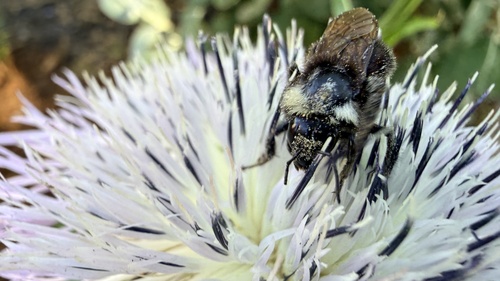
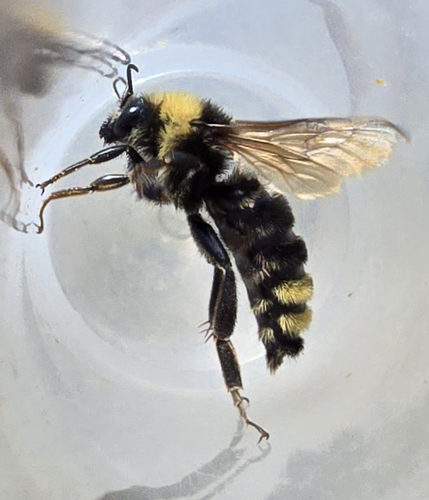
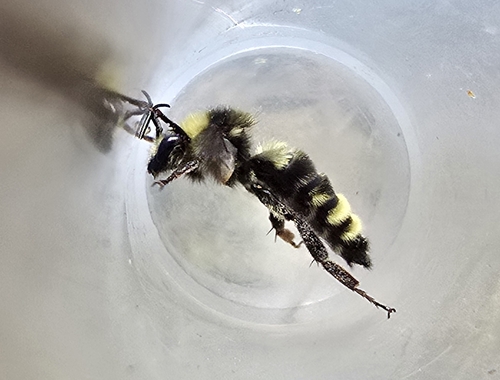
The California Bumble Bee is a medium-sized, fuzzy insect, easily recognized by its mostly black body with a distinct bright yellow band on its thorax. Many also have an orange-red patch near the tip of their abdomen, setting them apart from other black and yellow bees.
Category
InsectsRarity
Common
Danger
2/5 · Low
Snaps
12
Bumble bees can fly in cooler weather, thanks to their furry, insulated bodies!
Bumble bees visit thousands of flowers a day, making them super pollinators!
Queens can live for a whole year, laying hundreds of eggs to start new colonies!
They often sleep upside down, clinging to flowers overnight to stay safe.
California Bumble Bees can vibrate their flight muscles to shake pollen loose from flowers that other bees can't access.
California Bumble Bees can shiver their muscles to warm up, helping them forage for nectar even on chilly mornings.
California Bumble Bees have an amazing memory that helps them find the best flowers and their way back to the nest.
California Bumble Bees drink sugary nectar for energy and eat protein-rich pollen for growth.
Solidago canadensis
Provides vital nectar and pollen.

Eriogonum fasciculatum
A key nectar source in California.
Bombus flavidus
Lays eggs in their nests.
Furry describes animals possessing a dense covering of soft hair or fur.
Social animals live in organized groups, cooperating for survival benefits such as foraging, defense, and raising offspring.
Grassland habitats are terrestrial biomes dominated by grasses and herbaceous plants, supporting a variety of grazing animals.
This trait characterizes organisms whose diet consists entirely or primarily of plant material.

Describes plants that are particularly attractive and beneficial to a wide range of pollinating organisms.

Diurnal animals are primarily active during daylight hours, typically resting or sleeping at night.

Describes a species whose presence and role have a disproportionately large effect on its environment.

This habitat trait indicates species that can coexist with humans in urban and suburban environments, utilizing man-made structures and green spaces.

Describes organisms that transfer pollen, enabling the fertilization and reproduction of plants.
No aliases listed yet.
Danger
2/5 · Low
Bumble bees are usually friendly, but it's best to watch them from a distance.
The easiest way to identify California Bumble Bee is to use the Snappit nature identifier app.
25-40 mm
12-22 mm
20-365 days
20 km/h
California Bumble Bees drink sugary nectar for energy and eat protein-rich pollen for growth.
Urban areas, Grasslands, Gardens
Foraging
Zoom in to split clusters and explore where this object has been snapped.
Jun 7, 2026
San Jose Municipal Rose GardenPhoto attribution
(c) katherinef2, some rights reserved (CC BY)
License: CC BY 4.0 ↗
Image may be shown cropped inside the card frame.
Jun 3, 2026
Vasquez RocksPhoto attribution
(c) Kate Crowell Walker, some rights reserved (CC BY)
License: CC BY 4.0 ↗
Image may be shown cropped inside the card frame.
Jun 2, 2026
Los Angeles County Arboretum and Botanic GardenPhoto attribution
(c) Kate Crowell Walker, some rights reserved (CC BY)
License: CC BY 4.0 ↗
Image may be shown cropped inside the card frame.

California, US
You might spot Western Fence Lizard and California Poppy.
View guide →

Montana, US
You might spot Baker's Mariposa Lily, Yellow Beardtongue, and Elk.
View guide →

California, US
You might spot Indian Peafowl and Red-Whiskered Bulbul.
View guide →

California, US
You might spot Duck, Red-Tailed Hawk, and Double-Crested Cormorant.
View guide →
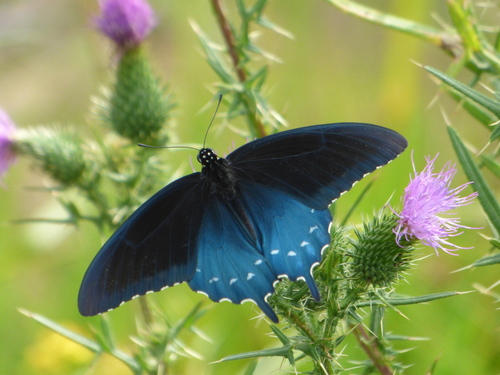
California, US
You might spot Pipevine Swallowtail, White Globe Lily, and Toyon.
View guide →

Oregon, US
You might spot Oregon Oak, Tree-Of-Heaven, and Garter Snake.
View guide →
Take the discovery with you
Snap it with Snappit to identify it, learn what makes it special, and add the discovery to your collection.





.jpg&width=800)



