





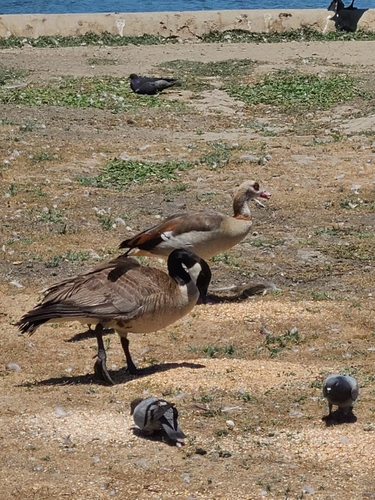
Duck

Los Encinos State Historic Park offers a serene escape into California's rich past.
Los Encinos State Historic Park offers a serene escape into California's rich past. This five-acre oasis in the heart of the San Fernando Valley preserves the historic Rancho Los Encinos, showcasing well-preserved 19th-century structures and a lush landscape fed by natural springs. It provides a unique window into the diverse cultures that shaped early California, from its Indigenous origins to its Spanish, Mexican, and French Basque influences.
Visitors can explore the historic De la Ossa Adobe, a nine-room home built in 1849, featuring period furnishings that transport you to Californio life. The impressive two-story Garnier Building, constructed in 1872, once served as a bunkhouse and now houses interpretive exhibits detailing the rancho's history. Don't miss the picturesque, guitar-shaped duck pond, fed by a continuous natural spring, which is home to various waterfowl like ducks and geese, and offers excellent birdwatching opportunities amidst ancient oak trees.
This park is a captivating destination for history enthusiasts and nature lovers alike, offering a peaceful retreat from the bustling city. Engage with living history demonstrations, enjoy a leisurely picnic under the shade of the oaks, or simply stroll along the paths that connect its historic buildings and tranquil natural features. Los Encinos State Historic Park truly brings California's multifaceted heritage to life, making it a memorable experience for all ages. Wondering what that bird or insect is? Find out on your visit using the Snappit nature app.
The site of Los Encinos State Historic Park was originally the village of Siutcanga, inhabited by the Tongva people for thousands of years, who relied on the abundant natural springs for water. The name "Los Encinos," meaning "the oaks," reflects the Tongva dialect for "place of the oak." In 1769, the Portolá Expedition passed through, naming the valley "El Valle de Santa Catalina de Bononia de Los Encinos." Following the secularization of the California missions, the land eventually became Rancho Los Encinos, a significant travel route between Los Angeles and Santa Barbara. Vincente de la Osa built the iconic nine-room adobe in 1849. Later, French Basque brothers Eugene and Phillipe Garnier purchased the rancho in 1868, adding the two-story limestone building and constructing the unique guitar-shaped duck pond. The state of California acquired the remaining 4.7-acre parcel in 1949, preserving it as a State Historic Park.
Take free self-guided tours of the adobe (pending staff availability) or schedule a guided tour in advance. Enjoy birdwatching around the pond, have a picnic in designated areas, and explore the tranquil paths. Attend "Heritage Days" on the third Sunday of each month for live history demonstrations.
Spring/Fall: Ideal for outdoor activities and comfortable exploration. Wildflowers bloom in spring.
Summer: Prepare for hot, dry weather.
Winter: Mild with occasional rain, which may limit outdoor activities.
Special Events: The park hosts "Living History Days" (often the third Sunday of each month), "Cultural Festivals," and "Holiday Celebrations" in December.
The park features accessible parking and restrooms. Pathways throughout the grounds allow visitors to explore historic structures and the spring-fed pond. The De la Ossa Adobe is generally accessible, and an accessible picnic site (Gaggle Grove) is available.
Explore this historic nine-room adobe with period furnishings and exhibits.
A two-story limestone building, now functioning as the visitor center and housing historical exhibits.
Observe the continuously flowing natural spring and the picturesque, guitar-shaped pond with its resident waterfowl.
A reconstructed shop that hosts live demonstrations on the third Sunday of each month.
Each card links to a full Explore page with photos, traits, and fun facts.
Start with the big picture, then zoom in to explore individual wildlife observations around this place.
Call or email ahead to confirm guided or self-guided adobe tour availability.
Visit on the third Sunday of the month for live blacksmith demonstrations and "Heritage Days" events.
Bring a picnic to enjoy the designated picnic areas under the shade of the ancient oak trees.
Wear comfortable shoes for walking the pathways, as the grounds are compact and easily explored on foot.
Bring binoculars for birdwatching around the duck pond.
Street parking is available, but be mindful of posted time limits (e.g., 2 hours).
Jun 7, 2026
Photo attribution
(c) Mariana Vee, some rights reserved (CC BY)
License: CC BY 4.0 ↗
Image may be shown cropped inside the card frame.
Jun 7, 2026
Jun 7, 2026
Jun 5, 2026
Jun 5, 2026

Maryland, US
You might spot White-Tailed Deer and Eastern Gray Squirrel.
View guide →
.jpg)
District of Columbia, US
You might spot Eastern Gray Squirrel, Duck, and House Sparrow.
View guide →

Illinois, US
You might spot American Robin, Canada Goose, and House Sparrow.
View guide →

Virginia, US
You might spot Spotted Lanternfly and Northern Cardinal.
View guide →
Take the discovery with you
Identify the wildlife you spot, learn as you go, and keep a collection of the adventure.























.jpg&width=800)

