





California Buckwheat
Eriogonum fasciculatum
California Buckwheat is a small, bushy plant with pretty white or yellow flowers. It grows in sunny places and helps provide food for butterflies and bees!
Habitat: Desert
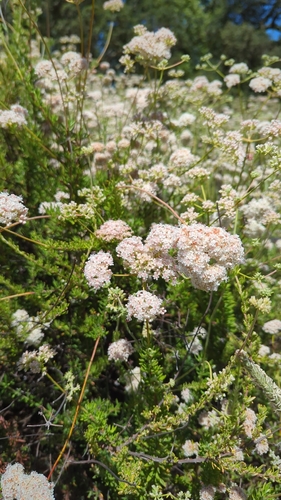
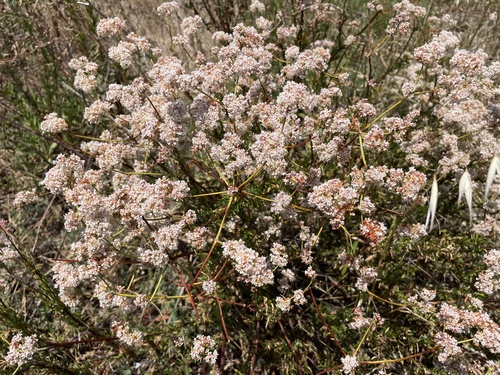
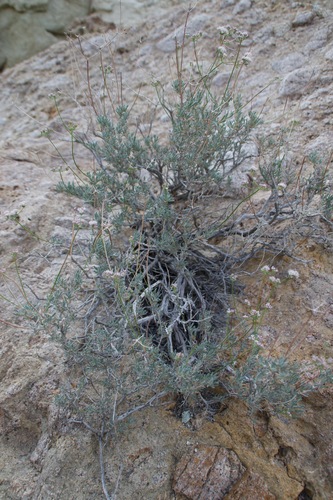
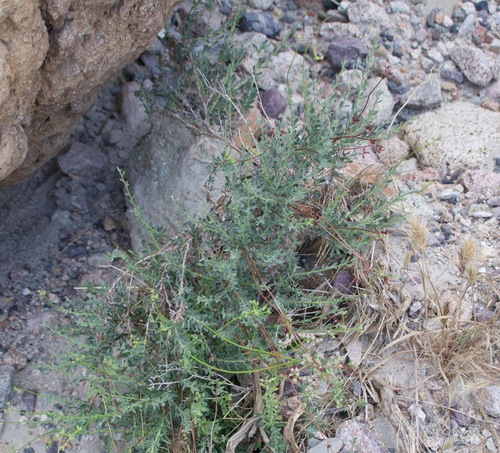
The California Buckwheat is a low-growing, evergreen shrub with small, narrow, grayish-green leaves. Its dense clusters of tiny flowers emerge creamy white, gradually aging to distinct rusty pink or reddish hues, making it easily spotted in dry landscapes.
Category
PlantsRarity
Common
Danger
1/5 · Very low
Snaps
35
Its tiny seeds were once ground into flour by native Californian tribes for food!
Many types of native bees and butterflies depend on its nectar and pollen exclusively!
This plant provides food and shelter for hundreds of different insect species!
You might find this tough plant growing on steep, rocky hillsides where little else can survive!
California Buckwheat can thrive in very dry conditions thanks to its deep roots and water-saving fuzzy leaves.
Its flower clusters change from white to rusty red, signaling when pollen and nectar are available to pollinators.
This plant has strong, fibrous roots that hold soil in place, helping to prevent it from washing away.
California Buckwheat can quickly re-sprout from its base after a wildfire, helping ecosystems recover.
Apis mellifera
Provides essential nectar and pollen
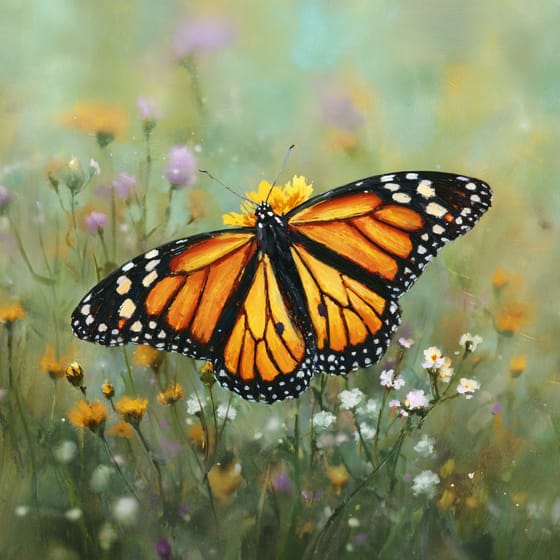
Danaus plexippus
A vital nectar source for adults
Bombus vosnesenskii
Frequent visitor gathering nectar

Melozone crissalis
Seeds are a food source for this bird
Flowering plants are any plants that produce flowers as part of their reproductive cycle.
Cluster flowers are inflorescences where individual flowers are arranged closely together on a common stem.
A shrub is a woody plant smaller than a tree, typically with multiple stems branching from or near the ground.
Summer blooming plants produce their flowers during the summer season, often providing vibrant color when many other plants have finished.

Fragrant flowers emit a pleasant aroma, often to attract pollinators or for defense.

Drought-tolerant plants can survive and flourish in conditions with limited water availability.

Describes plants that are particularly attractive and beneficial to a wide range of pollinating organisms.

Desert habitats are arid regions characterized by extremely low precipitation and often extreme temperatures, supporting specialized flora and fauna.

Describes a species whose presence and role have a disproportionately large effect on its environment.
No aliases listed yet.
Danger
1/5 · Very low
Always look but don't touch plants without asking an adult first.
The easiest way to identify California Buckwheat is to use the Snappit nature identifier app.
50-200 cm
50-200 cm
0.2-0.5 cm
Late spring to fall
Yes
None
Perennial
Zoom in to split clusters and explore where this object has been snapped.
Jun 6, 2026
Luther Burbank Home and GardensPhoto attribution
(c) Daveozric, some rights reserved (CC BY)
License: CC BY 4.0 ↗
Image may be shown cropped inside the card frame.
Jun 6, 2026
ProfessorvillePhoto attribution
(c) Cricket Raspet, some rights reserved (CC BY)
License: CC BY 4.0 ↗
Image may be shown cropped inside the card frame.
Apr 9, 2026
Rainbow BasinPhoto attribution
(c) Donald Hampton, some rights reserved (CC BY-SA)
License: CC BY-SA 4.0 ↗
Image may be shown cropped inside the card frame.
Apr 9, 2026
Rainbow BasinPhoto attribution
(c) Donald Hampton, some rights reserved (CC BY-SA)
License: CC BY-SA 4.0 ↗
Image may be shown cropped inside the card frame.

California, US
You might spot California Poppy and Common Side-Blotched Lizard.
View guide →

California, US
You might spot Western Fence Lizard and California Brittlebush.
View guide →

California, US
You might spot Peridot Sweat Bee and Western Fence Lizard.
View guide →

California, US
You might spot Western Fence Lizard, Duck, and California Brittlebush.
View guide →

California, US
You might spot Sunburst Anemone, Ochre Sea Star, and Striped Shore Crab.
View guide →

California, US
You might spot Western Fence Lizard, Eastern Fox Squirrel, and Duck.
View guide →
Take the discovery with you
Snap it with Snappit to identify it, learn what makes it special, and add the discovery to your collection.







.jpg&width=800)


_001.jpg&width=800)




