





California Tortoiseshell
Nymphalis californica
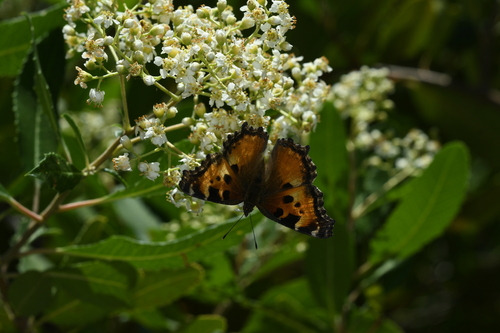
The California Tortoiseshell is a beautiful butterfly with orange and black patterns on its wings. It loves to flutter around flowers and is often seen in gardens and meadows.
Habitat: Grasslands
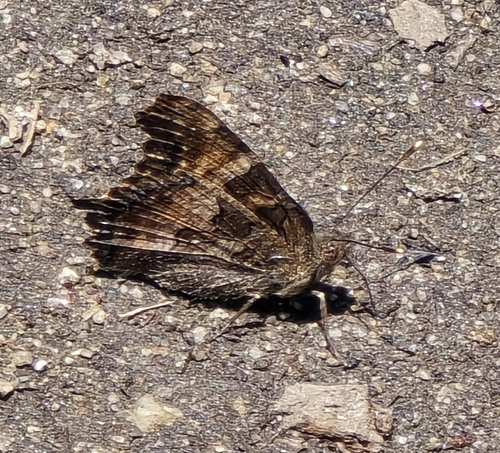
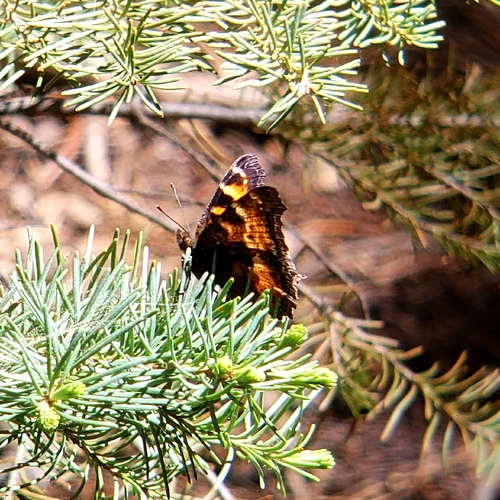
The California Tortoiseshell has striking orange-red wings adorned with black spots and thick black borders, often with a yellow-orange submarginal band. Its underside is a mottled brown, which makes it distinct from other orange butterflies like the Monarch due to its intricate black markings and cryptic underside.
Category
InsectsRarity
Common
Danger
1/5 · Very low
Snaps
41
Adults can sip tree sap, rotting fruit, or even animal droppings for nutrients!
Its larvae feast exclusively on Ceanothus, also known as California Lilac.
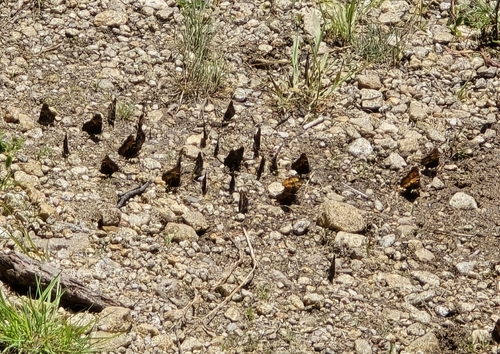
Mass migrations of these butterflies can involve millions of individuals!
They often emerge in huge numbers after wildfires, when host plants thrive.
California Tortoiseshell can fly hundreds of miles because of strong wings that help them find new habitats and food sources.
California Tortoiseshell has a unique ability to hibernate as an adult butterfly because of special adaptations that help them survive cold winters.
California Tortoiseshell can hide from predators because of its mottled brown underside wings that help them blend into tree bark when resting.
California Tortoiseshell larvae can munch on host plant leaves because of specialized mouthparts that help them grow quickly.
Young caterpillars munch leaves, while adult butterflies prefer sweet nectar, tree sap, and sometimes even rotting fruit!
Age differences: Larvae eat only specific host plant leaves, while adults seek out nectar, tree sap, and decaying fruits.
Ceanothus integerrimus
Its caterpillars feed exclusively on these leaves.

Quercus chrysolepis
Adults often overwinter in its protective bark crevices.

Cyanocitta stelleri
Birds like jays prey on both adults and caterpillars.
Solidago californica
Adults drink nectar, helping to spread its pollen.
Colorful describes organisms or objects displaying a wide range of bright and distinct colors.
Grassland habitats are terrestrial biomes dominated by grasses and herbaceous plants, supporting a variety of grazing animals.
This trait characterizes organisms whose diet consists entirely or primarily of plant material.
Describes plants that are particularly attractive and beneficial to a wide range of pollinating organisms.

Diurnal animals are primarily active during daylight hours, typically resting or sleeping at night.

Migratory animals undertake seasonal movements from one region to another, typically in response to changes in climate or food availability.

Describes organisms that transfer pollen, enabling the fertilization and reproduction of plants.
No aliases listed yet.
Danger
1/5 · Very low
Butterflies are gentle creatures, but it's best to watch them from a distance.
The easiest way to identify California Tortoiseshell is to use the Snappit nature identifier app.
45-76 mm
20-30 mm
30-270 days
15 km/h
Young caterpillars munch leaves, while adult butterflies prefer sweet nectar, tree sap, and sometimes even rotting fruit!
Grasslands
Foraging
Zoom in to split clusters and explore where this object has been snapped.
Jun 3, 2026
Generals' Highway Stone BridgesPhoto attribution
(c) Dan Killam, some rights reserved (CC BY)
License: CC BY 4.0 ↗
Image may be shown cropped inside the card frame.
Jun 3, 2026
Generals' Highway Stone BridgesPhoto attribution
(c) Dan Killam, some rights reserved (CC BY)
License: CC BY 4.0 ↗
Image may be shown cropped inside the card frame.
May 30, 2026
Hakone GardensPhoto attribution
(c) lazarus, some rights reserved (CC BY)
License: CC BY 4.0 ↗
Image may be shown cropped inside the card frame.
May 21, 2026
Folsom City Zoo SanctuaryPhoto attribution
(c) Hawk T., some rights reserved (CC BY)
License: CC BY 4.0 ↗
Image may be shown cropped inside the card frame.
Jun 30, 2019
Manzanita Lake Naturalist's Services Historic DistrictPhoto attribution
(c) Cristhian Mace, some rights reserved (CC BY)
License: CC BY 4.0 ↗
Image may be shown cropped inside the card frame.

California, US
You might spot Warrior's Plume and Purple Owl's-Clover.
View guide →

California, US
You might spot Great Blue Heron, Western Gull, and Coyote.
View guide →

California, US
You might spot Western Fence Lizard and Pacific Poison Oak.
View guide →

California, US
You might spot Pipevine Swallowtail and Western Fence Lizard.
View guide →

Oregon, US
You might spot White Pasqueflower and Clark's Nutcracker.
View guide →

Oregon, US
You might spot Rough-Skinned Newt and Isabella Tiger Moth.
View guide →
Take the discovery with you
Snap it with Snappit to identify it, learn what makes it special, and add the discovery to your collection.






.jpg&width=800)



