





Steller's Jay
Cyanocitta stelleri
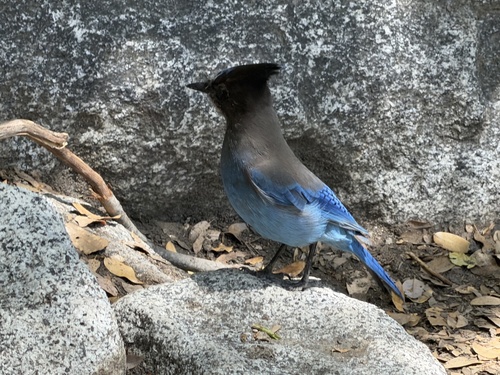
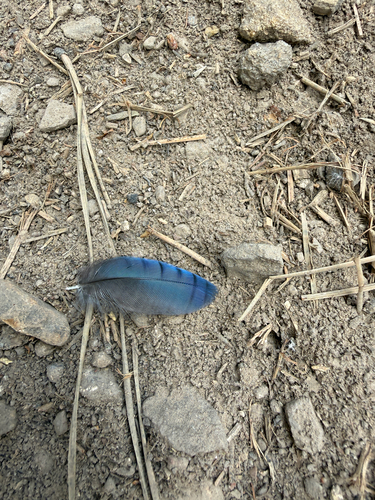
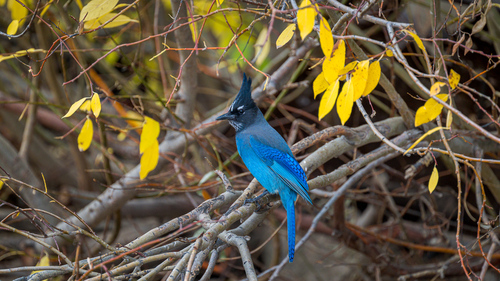
Steller's Jays are beautiful birds with bright blue feathers and a black crest on their heads. They love to make loud, cheerful calls and can often be seen hopping around in trees.
Habitat: Forests
The Steller's Jay has a striking crested head that is deep black or dark brownish-gray, contrasting sharply with its vibrant blue body and wings. Its darker upper half fades into bright blue, making it easily distinguishable from other jays.
Category
BirdsRarity
Common
Danger
1/5 · Very low
Snaps
65
A Steller's Jay's crest can fluff up or flatten to show if it's excited, curious, or nervous.
Steller's Jays accidentally plant countless trees by burying seeds they forget to eat!
These bold birds sometimes raid other birds' nests, eating eggs or even tiny hatchlings!
They belong to the Corvidae family, making them clever cousins to intelligent crows and ravens.
Steller's Jays can imitate other birds, mammals, and even human sounds, which helps them communicate or trick predators.
Steller's Jays have an excellent memory for hiding food like seeds and nuts, helping them survive lean seasons.
Steller's Jays can use small sticks or other items to probe for food, showing incredible problem-solving skills.
Steller's Jays have varied alarm calls to warn others about specific threats, keeping their community safe.
Steller's Jays are clever omnivores, feasting on a wide range of foods from seeds and nuts to insects and small eggs.
Quercus garryana
Provides acorns, a crucial food source, and nesting sites.
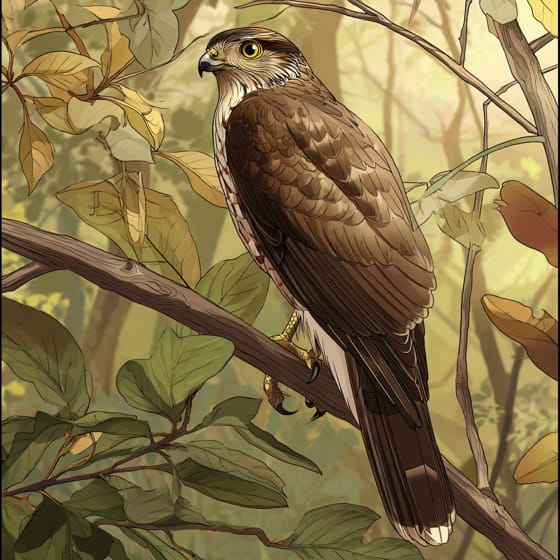
Accipiter cooperii
A common predator that preys on Steller's Jays.
Pinus ponderosa
Offers cover, nesting sites, and edible seeds.
Dendroica occidentalis
Steller's Jays are known to raid nests for eggs and nestlings.
.jpg&width=800)
Sciurus niger
Competes for shared food resources like acorns and nuts.
Crested describes animals possessing a prominent tuft of feathers, hair, or skin on their head.
Social animals live in organized groups, cooperating for survival benefits such as foraging, defense, and raising offspring.
This trait identifies organisms whose diet includes both plant and animal matter.
Singing animals produce complex vocalizations, often for purposes of attracting mates, defending territory, or communicating within their species.

Colorful describes organisms or objects displaying a wide range of bright and distinct colors.

This trait describes organisms that manipulate external objects to achieve a specific goal.

Forest habitats are terrestrial environments dominated by dense tree cover, supporting a high diversity of plant and animal life.

Diurnal animals are primarily active during daylight hours, typically resting or sleeping at night.

Describes a species whose presence and role have a disproportionately large effect on its environment.
No aliases listed yet.
Danger
1/5 · Very low
Enjoy watching birds from a distance and don't try to touch them.
The easiest way to identify Steller's Jay is to use the Snappit nature identifier app.
30-34 cm
43-48 cm
0.1-0.14 kg
9-16 years
48 km/h
Steller's Jays are clever omnivores, feasting on a wide range of foods from seeds and nuts to insects and small eggs.
Forests
Zoom in to split clusters and explore where this object has been snapped.
Jun 2, 2026
Yosemite ValleyPhoto attribution
(c) Brian Finzel, some rights reserved (CC BY-SA)
License: CC BY-SA 4.0 ↗
Image may be shown cropped inside the card frame.
May 26, 2026
Main Avenue Historic DistrictPhoto attribution
(c) Michelle Pustka, some rights reserved (CC BY)
License: CC BY 4.0 ↗
Image may be shown cropped inside the card frame.
Oct 12, 2025
St. ElmoPhoto attribution
(c) Shiva Shenoy, some rights reserved (CC BY)
License: CC BY 4.0 ↗
Image may be shown cropped inside the card frame.

Utah, US
You might spot Common Golden-Mantled Ground Squirrel and Steller's Jay.
View guide →

Utah, US
You might spot Common Golden-Mantled Ground Squirrel and Steller's Jay.
View guide →

US
You might spot Bald Eagle, Common Raven, and Salmonberry.
View guide →

Montana, US
You might spot Bighorn Sheep and Mountain Goat.
View guide →

California, US
You might spot Western Fence Lizard and Pacific Poison Oak.
View guide →
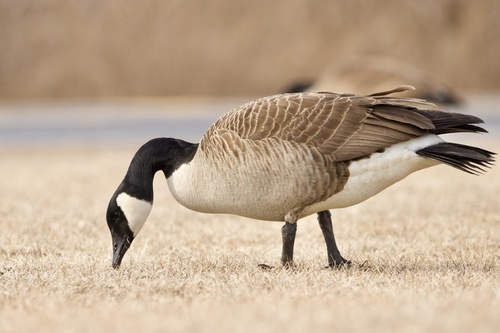
Nevada, US
You might spot Canada Goose, Antelope Bitterbrush, and Steller's Jay.
View guide →
Take the discovery with you
Snap it with Snappit to identify it, learn what makes it special, and add the discovery to your collection.




.jpg&width=800)








