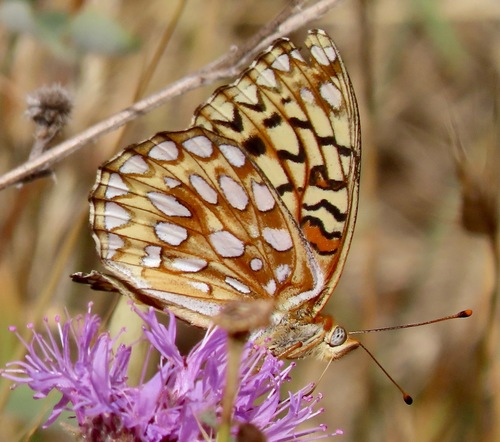





Callippe Fritillary
Argynnis callippe
The Callippe Fritillary is a beautiful butterfly with orange and black wings. It flutters around meadows and fields, bringing joy to everyone who sees it.
Habitat: Meadows and fields
The Callippe Fritillary is a medium-sized butterfly with bright orange-brown wings adorned with distinct black spots and veins. Its underwings are particularly striking, often featuring large, shimmering silver-white spots. This makes it visually different from many other fritillaries which may have more muted underwing patterns.
Category
InsectsRarity
Common
Danger
1/5 · Very low
Snaps
Be the first to snap!
Did you know fritillary caterpillars only eat violet leaves? Wow!
Female fritillaries lay their tiny eggs one by one near host plants.
Its underwings sparkle like jewels with shiny silver spots!
This butterfly can fly many miles seeking new flower patches.
Callippe Fritillary can reach deep into flowers with its long proboscis to sip nectar, which helps them refuel their flight.
Callippe Fritillary females can find specific violet plants, which are the only food their caterpillars can eat to grow.
Callippe Fritillary has striking silver spots on its underwings that might help confuse predators or signal they are unappetizing.
Adults sip nectar from flowers, while caterpillars munch exclusively on violet leaves!
Age differences: As caterpillars, they eat only violet leaves. As adults, they feed exclusively on flower nectar.
Viola adunca
Host plant for larvae.
Cirsium vulgare
Adults visit for nectar.

Asclepias speciosa
Adults visit for nectar.

Cyanocitta stelleri
A common bird predator.
Aerial creatures spend a significant portion of their lives airborne, utilizing flight for various activities such as hunting, migration, or nesting.
Colorful describes organisms or objects displaying a wide range of bright and distinct colors.
Grassland habitats are terrestrial biomes dominated by grasses and herbaceous plants, supporting a variety of grazing animals.
This trait characterizes organisms whose diet consists entirely or primarily of plant material.
Describes plants that are particularly attractive and beneficial to a wide range of pollinating organisms.
Diurnal animals are primarily active during daylight hours, typically resting or sleeping at night.
Describes organisms that transfer pollen, enabling the fertilization and reproduction of plants.
No aliases listed yet.
Danger
1/5 · Very low
Always watch butterflies from a distance and don't try to catch them.
Compare the wing outline, spots, bands, eyespots and wing edges. The underside can look completely different from the top. Check for tails, the antennae and where the markings sit instead of relying on color alone. Butterfly Identifier: upload a photo and compare the visible details.
50-70 mm
25-35 mm
14-28 days
10 km/h
Adults sip nectar from flowers, while caterpillars munch exclusively on violet leaves!
Meadows and fields
Foraging
Zoom in to split clusters and explore where this object has been snapped.
Recent snaps will appear here as new observations are added.
Take the discovery with you
Snap it with Snappit to identify it, learn what makes it special, and add the discovery to your collection.