





Canyon Wren
Catherpes mexicanus
The Canyon Wren is a small, lively bird with a beautiful, cheerful song. It loves to hop around rocky areas and can often be seen flitting between boulders in search of food.
Habitat: Mountain regions
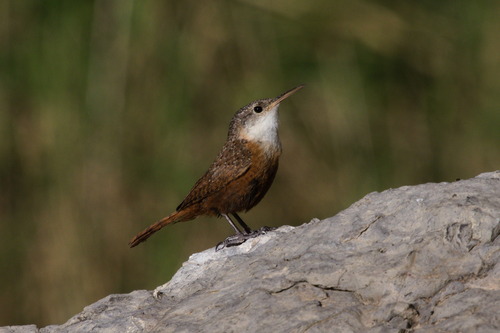
The Canyon Wren has a flattened, reddish-brown body with a grey head, a distinctive long, slender, slightly curved bill, and a clean white throat and breast that contrasts with finely barred rufous flanks. Its overall coloration provides excellent camouflage against rocky canyon walls.
Category
BirdsRarity
Common
Danger
1/5 · Very low
Snaps
4
Canyon Wrens can squeeze into tiny rock cracks, disappearing from sight quickly!
Their amazing song sounds like water flowing and famously descends in pitch!
These birds often bob their tails up and down like a mechanical toy!
They lay pure white eggs that are speckled with reddish-brown dots!
Canyon Wrens can expertly climb sheer rock faces and navigate narrow crevices because of their strong legs and claws, helping them find food and shelter.
Canyon Wrens have a unique, cascading song that reverberates through canyons, helping them communicate and claim territory in vast rocky landscapes.
Canyon Wrens have a long, slender, slightly curved bill that helps them probe deep into cracks and crevices to extract hidden insects and spiders.
Canyon Wrens have reddish-brown plumage with speckled flanks that blends perfectly with rocky environments, helping them hide from predators.
This bird eats small bugs and spiders it finds by carefully exploring cracks in rocks.
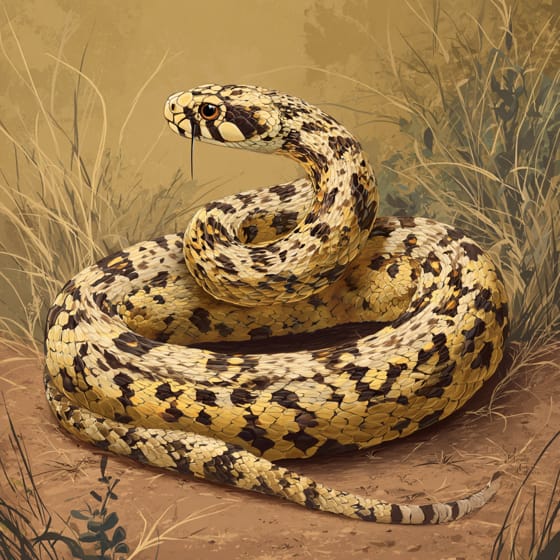
Pituophis catenifer
Snakes may prey on nests or fledglings.
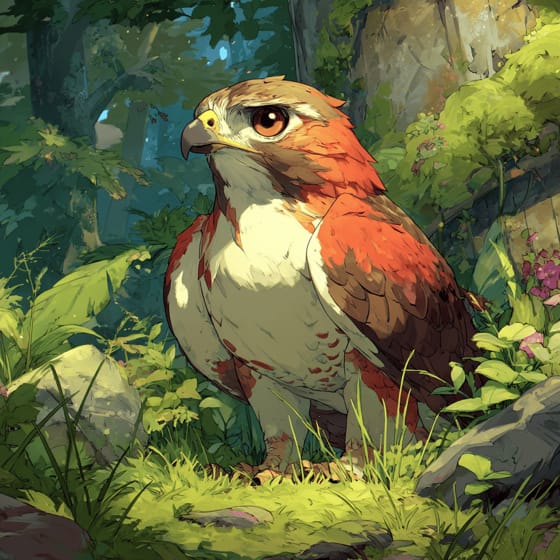
Buteo jamaicensis
Raptors are common predators in their habitat.
Formica fusca
Actively forages for ants within rocky terrain.
Tegenaria domestica
Hunts for spiders hidden in rocky crevices.
Feathered describes animals, primarily birds, possessing a covering of feathers.
Social animals live in organized groups, cooperating for survival benefits such as foraging, defense, and raising offspring.
Singing animals produce complex vocalizations, often for purposes of attracting mates, defending territory, or communicating within their species.
Colorful describes organisms or objects displaying a wide range of bright and distinct colors.

This trait identifies organisms whose diet primarily consists of insects and other small invertebrates.

This habitat trait identifies species found in mountainous regions, characterized by high elevation, steep slopes, and varying climate zones.

Diurnal animals are primarily active during daylight hours, typically resting or sleeping at night.
No aliases listed yet.
Danger
1/5 · Very low
Enjoy watching birds from a distance and be quiet so you don't scare them away.
The easiest way to identify Canyon Wren is to use the Snappit nature identifier app.
14-15 cm
19-22 cm
0.009-0.018 kg
2-7 years
35 km/h
This bird eats small bugs and spiders it finds by carefully exploring cracks in rocks.
Mountain regions
Zoom in to split clusters and explore where this object has been snapped.
May 5, 2026
Rancho EstellePhoto attribution
(c) Mike Ostrowski, some rights reserved (CC BY-SA)
License: CC BY-SA 4.0 ↗
Image may be shown cropped inside the card frame.

Arizona, US
You might spot Northern Cardinal, Engelmann's Hedgehog Cactus, and Queen.
View guide →

Colorado, US
You might spot Common Side-Blotched Lizard and Eastern Collared Lizard.
View guide →

Arizona, US
You might spot Saguaro and Graham's Nipple Cactus.
View guide →

US
You might spot Mexican Palo Verde, Ocotillo, and Giant Reed.
View guide →
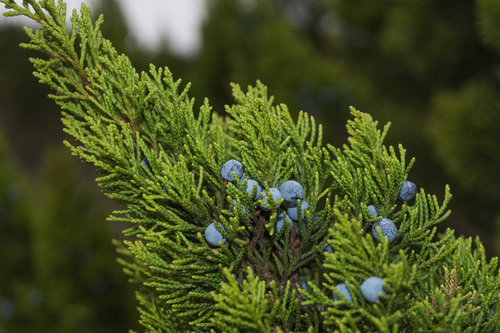
Texas, US
You might spot Ashe Juniper, Texas Bluebonnet, and Texas Live Oak.
View guide →
Take the discovery with you
Snap it with Snappit to identify it, learn what makes it special, and add the discovery to your collection.




.jpg&width=800)








