.jpg&width=800)





Carolina Mantis
Stagmomantis carolina
The Carolina Mantis is a cool insect known for its long body and big eyes. It can be green or brown and loves to hang out in gardens, waiting to catch its food!
Habitat: Gardens
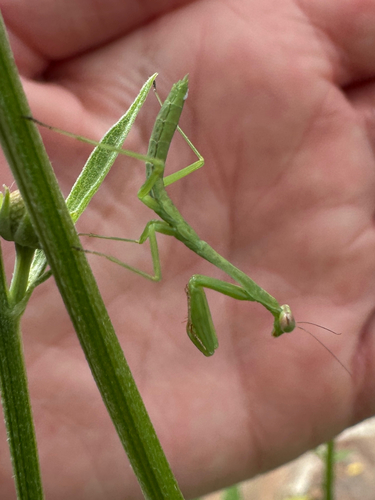
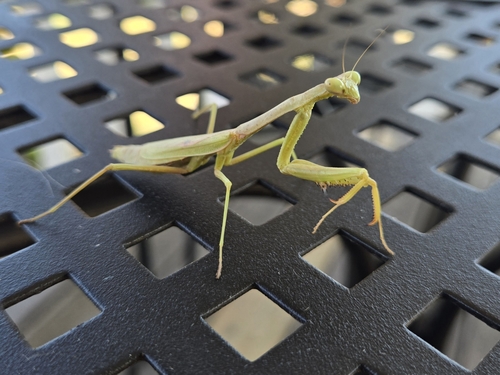
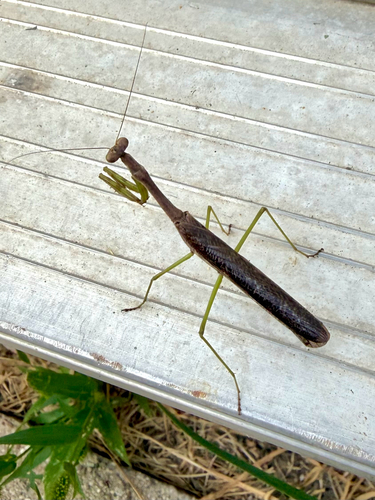
The Carolina Mantis is typically brown, grey, or green, often mottled for camouflage. It has a slender body, a triangular head with large eyes, and powerful, spiny forelegs held in a 'praying' position.
Category
InsectsRarity
Common
Danger
2/5 · Low
Snaps
33
Mantises have a single ear located on their underside, between their legs!
Some cultures believed mantises could show you the way home if you were lost!
Their eyes have an optical illusion, making them appear to stare at you!
These amazing hunters will even tackle small frogs or lizards!
Has powerful, spiny forelegs that can snap shut incredibly fast, allowing them to snatch unsuspecting insects mid-flight.
Can rotate its head almost 300 degrees without moving its body, helping them scan for prey and predators from all angles.
Lays eggs in a protective, foamy case called an ootheca, which hardens to shield young from harsh weather and predators.
These fierce hunters mostly eat other insects, using their quick front legs.
Age differences: Young mantises eat tiny insects, growing to catch larger prey.
Musca domestica
Carolina Mantis catches flies with its quick reflexes.

Gryllus pennsylvanicus
Crickets are a common meal for mantises in meadows.
Anolis carolinensis
Lizards may prey on mantises, especially younger ones.
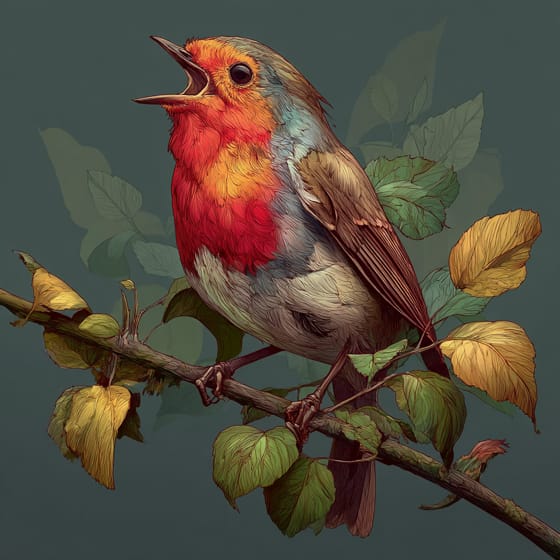
Turdus migratorius
Birds will sometimes eat adult mantises in gardens.
Solitary animals live alone for most of their lives, only interacting with others for mating or parental care.
Camouflaged describes organisms that possess coloring or patterns that allow them to blend into their environment.
This trait identifies organisms whose diet primarily consists of insects and other small invertebrates.
An ambush predator hunts by patiently waiting and concealing itself, then launching a sudden attack when unsuspecting prey comes within range.

This trait identifies organisms whose diet consists entirely or primarily of animal tissue.

Diurnal animals are primarily active during daylight hours, typically resting or sleeping at night.

This trait identifies organisms that exhibit exceptional swiftness in movement for hunting, escape, or travel.

This habitat trait indicates species that can coexist with humans in urban and suburban environments, utilizing man-made structures and green spaces.
No aliases listed yet.
Danger
2/5 · Low
Look but don't touch! Some insects can bite or sting.
The easiest way to identify Carolina Mantis is to use the Snappit nature identifier app.
50-70 mm
30-60 mm
150-200 days
8 km/h
These fierce hunters mostly eat other insects, using their quick front legs.
Gardens
Ambush
Zoom in to split clusters and explore where this object has been snapped.
Jun 14, 2026
American Baptist CollegePhoto attribution
(c) bookfinch, some rights reserved (CC BY)
License: CC BY 4.0 ↗
Image may be shown cropped inside the card frame.
Oct 13, 2025
Commerce Street Residential Historic DistrictPhoto attribution
(c) respecttheknob, some rights reserved (CC BY)
License: CC BY 4.0 ↗
Image may be shown cropped inside the card frame.
Sep 21, 2025
Brookfield ZooPhoto attribution
(c) Jessica W., some rights reserved (CC BY)
License: CC BY 4.0 ↗
Image may be shown cropped inside the card frame.

Tennessee, US
You might spot House Sparrow, Northern Mockingbird, and Gulf Fritillary.
View guide →

South Carolina, US
You might spot American Alligator, Anole, and Great Blue Heron.
View guide →

Alabama, US
You might spot American Beautyberry, White-Tailed Deer, and Peppervine.
View guide →
.jpg)
Virginia, US
You might spot Great Blue Heron and Canada Goose.
View guide →

North Carolina, US
You might spot Northern Cardinal, Carolina Wren, and Tufted Titmouse.
View guide →

South Carolina, US
You might spot Brown Pelican, Boat-Tailed Grackle, and Great Egret.
View guide →
Take the discovery with you
Snap it with Snappit to identify it, learn what makes it special, and add the discovery to your collection.








.jpg&width=800)




